

Serger vs Sewing Machine: Compare Options (serger vs sewing machine)
The simplest way to think about it is this: a sewing machine is for construction, and a serger is for finishing. The right choice really hinges on whether you're building a project from the ground up or looking to give it that durable, professional-looking edge.
Comparing Your Two Main Options
Trying to decide between a serger and a sewing machine can seem tricky at first, but they have very different jobs. Imagine your sewing machine as the all-purpose workhorse in your sewing room. It does the heavy lifting—stitching seams, putting in zippers, making buttonholes, and adding decorative topstitching. It's the one tool you truly can't live without for creating a garment or a quilt from scratch.
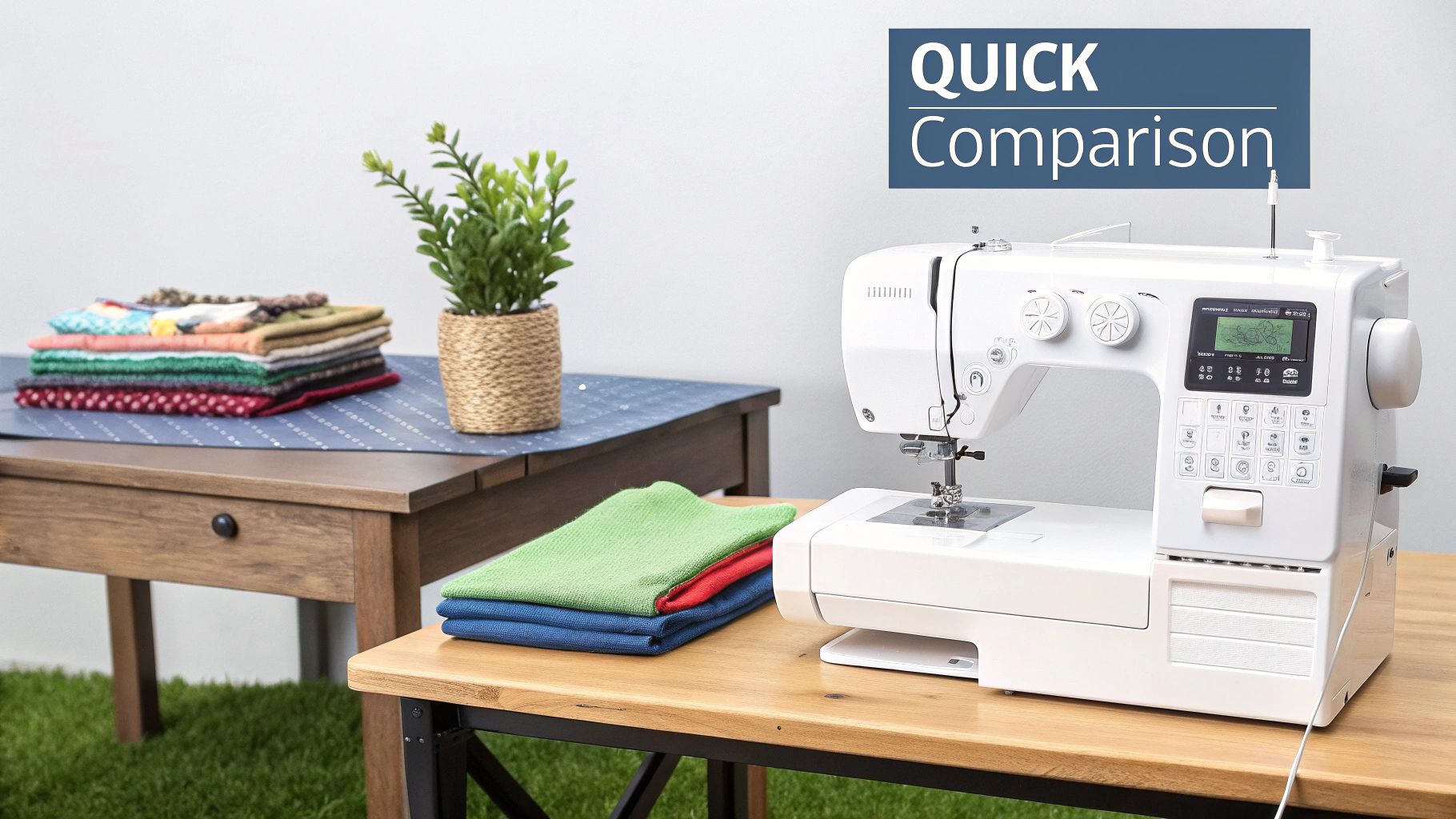
On the other hand, a serger—which you'll often hear called an overlocker here in Canada—is more of a specialist. Its main goal is to sew a seam, trim the excess fabric, and overcast the edge all in one super-fast step. This is what creates those clean, stretchy, and incredibly durable seams you see on store-bought knitwear like t-shirts and leggings.
The bottom line: A sewing machine builds the project, and a serger perfects it. You can absolutely get by without a serger, but you can't construct a whole project using only a serger.
Serger vs Sewing Machine At a Glance
To really see the differences side-by-side, a quick comparison helps. This table breaks down the core functions of each machine so you can quickly see which one fits what you want to do.
| Feature | Sewing Machine | Serger (Overlocker) |
|---|---|---|
| Primary Function | Construction and assembly | Finishing seams and edges |
| Best For | Joining fabric, topstitching, buttonholes, zippers, quilting | Creating professional, stretchable seams on knits and wovens |
| Stitch Types | Straight, zigzag, decorative stitches, buttonholes | Overlock, flatlock, rolled hem |
| Fabric Handling | Excellent with woven fabrics; can handle knits with special needles/stitches | Masters knit and stretchy fabrics; also finishes wovens beautifully |
| Speed | Moderate, up to 1,000 stitches per minute | Very fast, often 1,300-1,700 stitches per minute |
| Key Feature | Single needle and bobbin system for versatile construction | Multiple threads (2-5) and a cutting blade for clean edges |
| Beginner Friendliness | Essential starting point to learn fundamental sewing skills | A secondary machine best for intermediate sewists or those specializing in knits |
In the end, this isn't about one machine being "better" than the other. They're just different tools for different tasks that actually work together beautifully.
A sewing machine gives you the creative freedom and versatility you need for just about any project, making it the must-have first purchase for anyone starting out. A serger is that next-level investment you make when you're ready to sew faster and get stronger, more polished results—especially if you've fallen in love with sewing knit fabrics.
Understanding the All-Purpose Sewing Machine
If you're just getting into the world of sewing, the traditional sewing machine is your starting point. Think of it as the indispensable workhorse of your craft room. It handles the A-to-Z of putting a project together, making it the one machine you absolutely need. While a serger is a fantastic specialist, your sewing machine is the versatile generalist you just can’t do without.
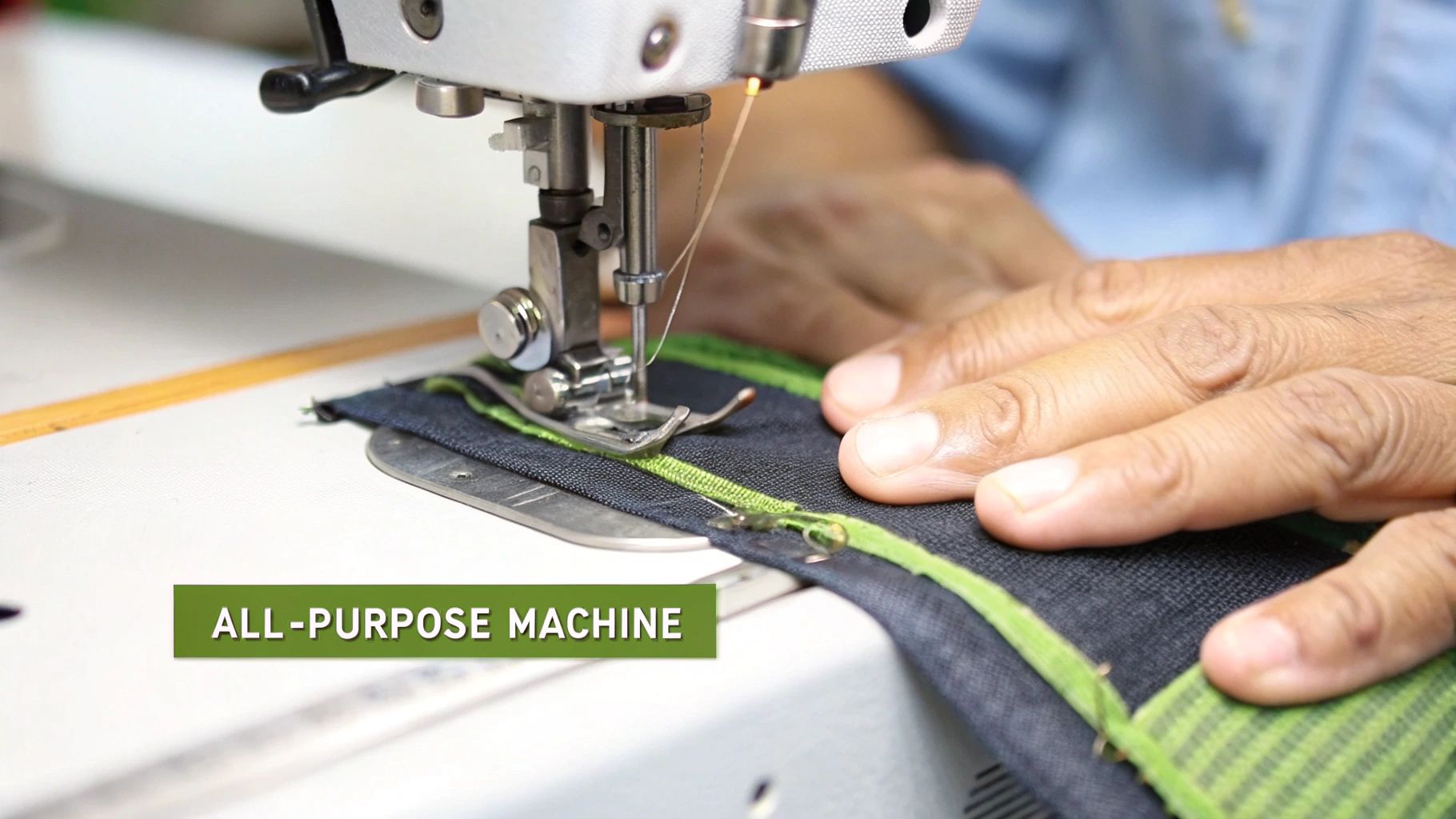
At its core, a sewing machine's main job is construction. It uses one needle and a bobbin to create a lockstitch—that strong, secure seam that holds fabric pieces together. This is the fundamental function that lets you build everything from a simple tote bag to a complex tailored jacket.
But its construction skills go way beyond just joining two pieces of fabric. A sewing machine is built for the kind of precision and detail work that a serger simply isn't designed to handle.
Core Construction Capabilities
Unlike a serger, which is all about finishing edges, a sewing machine truly shines when it comes to the detailed tasks that bring a project to life. This incredible versatility is its greatest strength.
Here are a few key jobs only a sewing machine can do:
- Topstitching: Adding those visible stitches on the outside of a garment for decoration or reinforcement, like on jean pockets.
- Buttonholes: Creating perfect, reinforced slits for buttons—a vital step for shirts, dresses, and trousers.
- Zippers: Precisely inserting zippers for closures on everything from bags to jackets.
- Hems: Turning up and securing the bottom edge of garments and curtains for a clean, flat finish.
- Quilting: Stitching through multiple layers of fabric and batting to create beautiful, intricate patterns.
A sewing machine is the only tool that can take you from a flat piece of fabric to a fully functional, three-dimensional item. It handles the beginning, middle, and end of the construction process.
This wide-ranging ability is powered by its diverse range of stitches. Even the most basic models offer stitches that give you both strength and creative freedom, a major difference when you compare a serger vs sewing machine.
A World of Stitches
The stitch selection is what really unlocks a sewing machine's creative potential. Every stitch has a specific purpose, letting you match your technique to the fabric and the project. A serger might have a few specialized stitches for seaming and finishing, but a sewing machine gives you a much broader toolkit for complete fabrication.
Here are a few common sewing machine stitches and what they're for:
- Straight Stitch: The absolute workhorse for all basic seams, topstitching, and quilting. You can adjust its length for different fabric weights.
- Zigzag Stitch: A multi-talented stitch used to finish raw edges (so they don't fray), sew stretchy fabrics, and create decorative appliqué.
- Blind Hem Stitch: Creates a nearly invisible hem on trousers and skirts, giving you that polished, professional look.
- Decorative Stitches: Many machines come with built-in patterns like scallops, leaves, or geometric shapes to add a personal touch to any project.
For beginners looking to get a solid grasp of these skills, a reliable mechanical machine is a fantastic place to start. A model like the Brother JX2417 mechanical sewing machine offers all the core stitches and user-friendly features you need to build confidence and tackle a huge variety of projects.
Ultimately, the sewing machine is the true heart of any sewing room. It’s where your ideas take shape, where precise construction happens, and where all the creative details come together. While a serger gives you speed and a polished finish, the sewing machine provides the essential versatility to build your projects from the very first seam to the final button.
The Serger: Your Secret to a Professional Finish
Think of a sewing machine as the builder of your projects. The serger—which you might also hear called an overlocker here in Canada—is the expert finisher. It's not meant to replace your sewing machine; it’s the perfect partner that elevates your projects from looking "homemade" to looking "store-bought." Its whole design is built around one main goal: creating clean, durable seams with incredible speed.
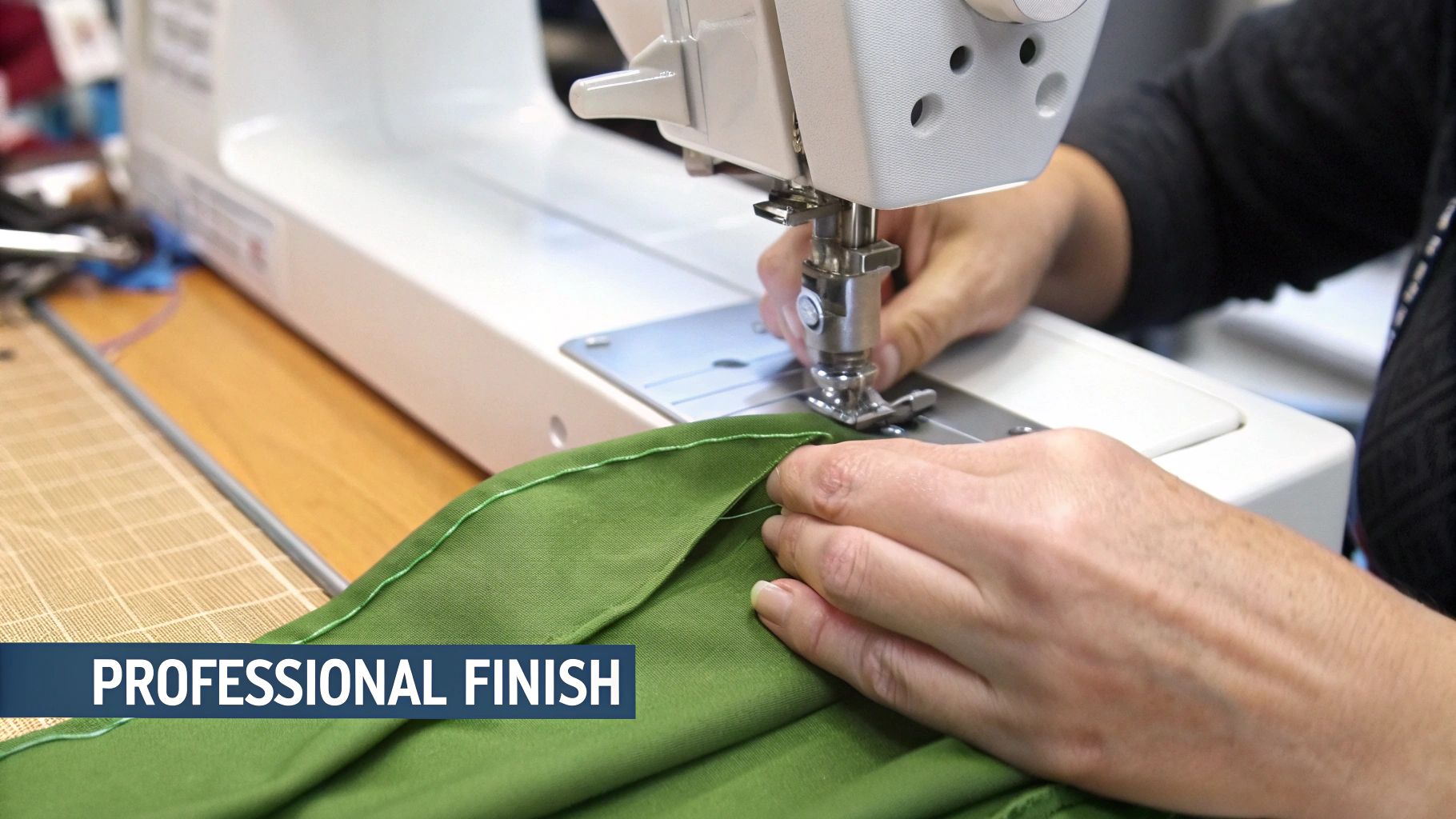
The real magic of a serger is how much it does in a single pass. As you feed the fabric through, it stitches a seam, trims away the excess fabric with a tiny blade, and wraps the raw edge in thread—all at once. This single action creates a finished seam that won't fray and is tough as nails.
This one feature makes a massive difference in how your garments look and how long they last. It’s the reason the seams on your favourite t-shirt or yoga pants can stretch without ever popping.
Built for Stretch and Speed
When it comes to the serger vs sewing machine debate, the serger’s superpower is handling knit and stretchy fabrics. The looped stitches it creates are naturally flexible, so they move and stretch with the fabric instead of fighting against it. This simple fact prevents the popped seams that can happen when you use a regular sewing machine on knits.
Speed is the other game-changer. Sergers can fly, finishing seams up to three times faster than a standard sewing machine. For anyone who wants to create garments quickly without cutting corners on quality, from a home-based business to a passionate hobbyist, that efficiency is a huge plus.
A serger doesn't just sew faster; it finishes smarter. By trimming and enclosing the seam in one step, it eliminates extra finishing work, saving you valuable time and delivering a superior result.
This is why a serger is the go-to machine for projects like:
- Activewear: Making leggings, sports tops, and swimwear with seams that can handle all the stretching and movement you throw at them.
- T-shirts and Sweatshirts: Putting together knit garments with strong, flexible seams that look like they came right off the rack.
- Baby Clothes: Working with soft, stretchy fabrics for onesies and PJs, creating comfortable seams that won’t irritate sensitive skin.
- Rolled Hems: Creating beautifully delicate, decorative edges on napkins, scarves, and formalwear.
Understanding the Threads
A sewing machine uses one needle thread and one bobbin thread. A serger, on the other hand, uses multiple threads—usually three, four, or even five—to create its signature overlock stitch. Each thread setup, or configuration, has a different job.
- 3-Thread Overlock: This is a great basic setup for finishing the edges of woven fabrics to prevent fraying. It's also used to create delicate, narrow rolled hems. It gives a clean finish but isn't the strongest for holding seams together.
- 4-Thread Overlock: This is the workhorse configuration and the one you'll probably use most often. It creates a strong, stretchy seam that's perfect for both constructing and finishing knit garments in one step. It includes an extra "safety stitch" for reinforcement.
- 5-Thread Overlock: You'll find this on more advanced sergers. It combines a 2-thread chain stitch with a 3-thread overlock, creating an incredibly tough seam like the ones you see on the inside of your jeans. It's ideal for heavy-duty projects.
For those ready to jump into this level of professional finishing, a solid machine like the Kobe MO-6814 Overlock Serger is built for serious speed and durability. It truly shows what a dedicated serger can bring to your sewing room. In short, a serger is a specialist that excels at creating strong, clean, and stretchy seams at high speed.
A Detailed Stitch-by-Stitch Comparison
If you put a sewing machine and a serger side-by-side, the first thing you'll notice is the difference in the stitches they make. It’s the most fundamental distinction between them. While both machines join fabric, how they do it and what those stitches are for are worlds apart.
A sewing machine uses just two threads—one from the needle and one from a bobbin below—to create a lockstitch. This is a strong, stable, and flat stitch, making it perfect for the basic construction of just about anything. It’s the workhorse stitch that builds everything from the straight seams of a dress to the perfect corners of a quilt block.
A serger, on the other hand, doesn't even have a bobbin. It uses multiple threads, usually three or four on a home machine, that loop together around the edge of the seam. This creates an overlock stitch that neatly encases the raw fabric, stopping it from fraying while giving the seam a whole lot of stretch.
The Bottom Line: A sewing machine’s lockstitch is all about construction. A serger’s overlock stitch is for finishing and flexibility, creating a seam that moves with you.
Core Mechanics: The Blade and the Bobbin
The most striking difference is the serger's built-in blade. This little knife works in tandem with the needles, trimming the seam allowance down to a perfect, consistent width just before the threads wrap around the edge. This all-in-one action is what gives you that clean, professional finish in one go.
A sewing machine just doesn't have a blade. To finish a seam, you have to do it in stages: sew the seam, grab your scissors to trim it, and then go back over the raw edge with a zigzag or overcast stitch. It works, but it’s definitely a slower process.
Then there's the threading. A sewing machine, with its simple needle-and-bobbin setup, is pretty easy to get the hang of. A serger, with its multiple thread paths and loopers, has a bit of a reputation for being tricky. Modern machines have made it much easier with things like colour-coded guides and air-threading, but there's still a bit of a learning curve for beginners.
Fabric Handling: Where Each Machine Excels
How these machines handle different fabrics is a huge part of the story. Their unique stitches make them specialists for certain materials.
Sewing Machine Strengths: Woven Fabrics
Your sewing machine is the master of stable, woven fabrics like cotton, linen, and denim. Its feed dogs guide the material smoothly, and the lockstitch provides the strong, no-stretch seams these fabrics need.
- Precision: It lets you do precise topstitching, turn sharp corners, and sew perfect curves.
- Control: You have total control to stop, start, and pivot exactly where you want.
Serger Strengths: Knit and Stretchy Fabrics
This is where a serger really comes into its own. For knits, jerseys, and anything with stretch, it's a game-changer. It has a feature called differential feed, which lets you adjust the speed of the front and back feed dogs separately. This is what stops you from getting those dreaded wavy, stretched-out seams.
- Flexibility: The overlock stitch stretches right along with the fabric, so you don't have to worry about threads popping.
- Efficiency: It sews and finishes a strong, flexible seam in a single pass.
This is why, if you look at professional garment making, you'll see both machines working together. As noted by industry analysts at datausa.io, sewing machines are the go-to for general assembly, while sergers are essential for finishing edges and seaming knits, especially where speed is key.
A Head-to-Head Speed Comparison
When it comes to pure speed, it's no contest. The serger wins, hands down.
A standard home sewing machine usually runs at about 800 to 1,000 stitches per minute. This is a comfortable speed that gives you the precision you need for detailed work.
An entry-level serger, however, can easily hit 1,300 to 1,700 stitches per minute. That incredible speed, combined with the fact that it trims and stitches at the same time, makes it a powerhouse for finishing seams. If you're making a bunch of knit t-shirts, a serger can cut your sewing time in half.
Of course, that speed comes at a price. You lose a bit of fine control. You can't easily sew tight curves, pivot at sharp corners, or backstitch on a serger. It's built to go forward, and go fast, making it the champion for long, straight seams but not the best pick for intricate details.
Choosing the Right Machine for Your Project
So, which machine do you actually need? The whole serger vs. sewing machine debate really boils down to a single question: What do you want to sew? Picking the right tool for the job is the secret to getting beautiful results without wanting to pull your hair out.
Let’s think of it this way. A paintbrush gives you the precision for detailed work, while a paint roller covers a huge wall quickly and evenly. Both are fantastic tools, but you wouldn't use a roller for a delicate portrait. It’s the same with sewing; your sewing machine and serger are specialists for different kinds of tasks.
When Your Sewing Machine Is the Star
For any project that needs precision, structure, and fine-detail work, your trusty sewing machine is the absolute star of the show. Its ability to create a strong lockstitch, turn sharp corners, and handle all the little fiddly bits is something a serger just isn't built to do.
Your sewing machine is the go-to for:
- Quilting: Getting those quilt blocks to line up perfectly requires the pinpoint accuracy only a sewing machine can offer.
- Tailored Garments: Think about a structured blazer or a pair of fitted trousers. They rely on darts, facings, and carefully pressed seams—all jobs for a sewing machine.
- Zippers and Buttonholes: These are fundamental parts of garment construction, and they are exclusively sewing machine territory.
- Topstitching and Decorative Touches: That signature topstitching on a pair of jeans or the fancy stitches on a pillow? That’s all sewing machine magic.
When your project is all about straight lines, sharp corners, and building the core structure, your sewing machine is the essential tool. It lays the foundation.
Where a Serger Truly Shines
A serger really comes into its own when you're working with stretchy fabrics or when you need a super clean, durable finish. Its amazing ability to stitch, trim the seam allowance, and overcast the edge all in one go makes it a beast for certain projects, especially clothing.
For example, if you're thinking about making your own hoodie from scratch, knowing what each machine does best is key.
A serger is the perfect choice for:
- Knitwear: T-shirts, leggings, and comfy knit dresses need seams that can stretch right along with the fabric. A serger's overlock stitch gives you that built-in flexibility, so you don't hear that dreaded pop of a thread breaking.
- Swimwear and Activewear: These garments take a lot of abuse and need incredibly strong, stretchy seams to handle all that movement. A serger is non-negotiable here.
- Finishing Seams on Woven Fabrics: To get that professional, store-bought look on the inside of a blouse or skirt, a serger gives you a clean, fray-proof edge that’s way more durable than a zigzag stitch from your sewing machine.
Projects That Need Both Machines
Honestly, the very best results often come from letting both machines work together. So many professional-quality garments use the strengths of each tool to create something that looks flawless, both inside and out.
A perfect example is making a great pair of jeans. You’d use your sewing machine for all the heavy construction—building the pockets, putting in the zipper fly, and adding all that classic topstitching. Then, you'd grab your serger to finish off the raw edges inside, preventing any fraying and giving it a clean, tough finish that will stand up to wash after wash.
Another one? A beautifully made knit dress might have its main seams sewn on a serger for stretch, but the hem could be finished on a specialized coverstitch machine, like the Kobe W562 Industrial Coverstitch, to get that perfect, ready-to-wear t-shirt hem.
Making the Final Decision: Do You Need Both?
So, how do you decide between a serger and a sewing machine? It really all comes down to what you want to create. After looking at what each machine does best, the choice should be feeling a lot less confusing. The real question isn't which machine is "better"—it's about which one fits your sewing journey right now.
If you're just starting out, the advice is simple: start with a quality sewing machine. There's no substitute for it. Learning the core skills of sewing—like setting in a sleeve, putting in a zipper, or topstitching a perfect collar—is something only a sewing machine can teach you.
When to Add a Serger to Your Setup
Once you've got the hang of your sewing machine, you'll start to notice little signs that it might be time to bring a serger into the family. Think of it as expanding your toolkit, not replacing your go-to machine.
You’ll know it’s time to invest in a serger if you find yourself nodding along to these points:
- You're sewing a lot of knits. If your dream projects involve t-shirts, leggings, or swimwear, a serger is a game-changer. It creates those stretchy, durable seams that a sewing machine just can't match.
- You want to sell your makes. For anyone running a small sewing business, speed and a professional look are everything. A serger speeds up your process immensely and gives your items that clean, store-bought finish customers love.
- You're obsessed with a perfect finish. Are you tired of zigzagging raw edges? If you want the inside of your garments to look as beautiful as the outside, a serger is exactly what you need.
This flowchart can help you visualize where your projects fall.
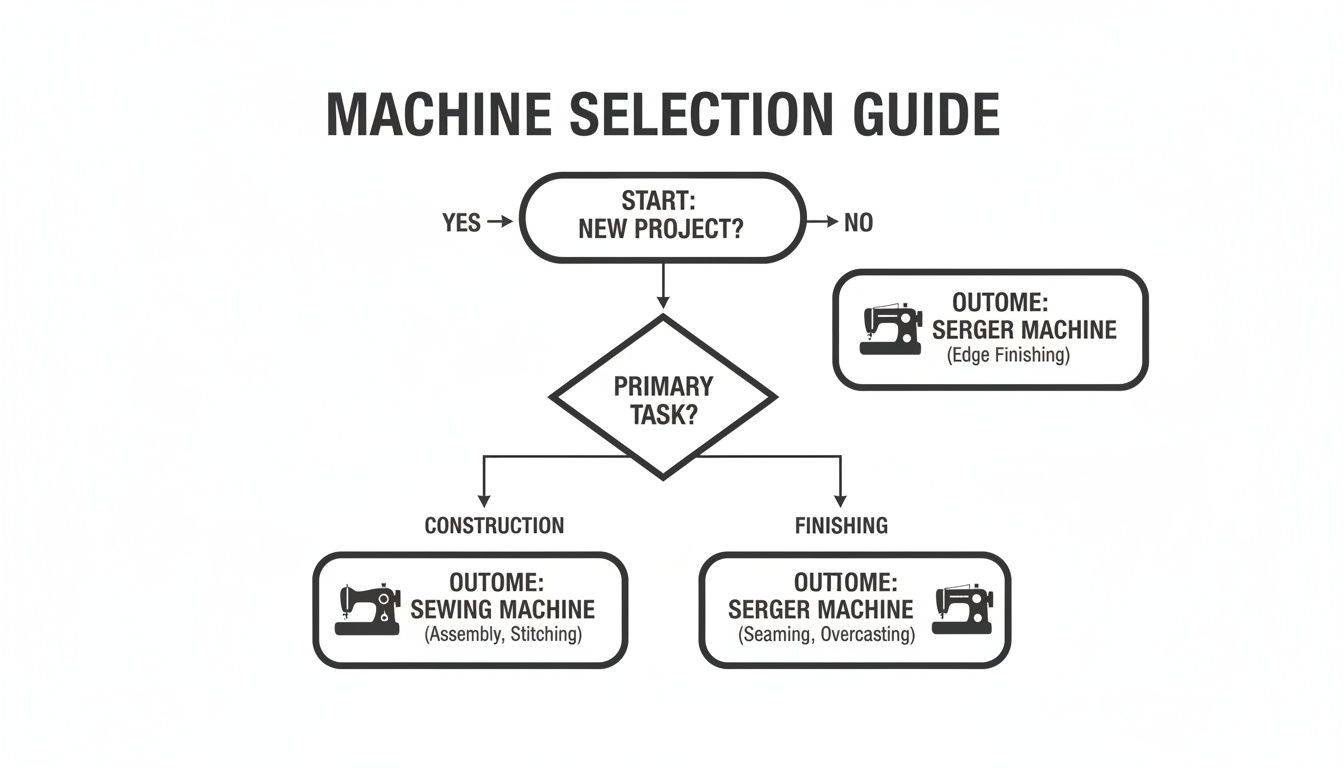
As you can see, the heavy lifting of construction belongs to the sewing machine, while the serger is the master of finishing and seaming knits.
Owning both machines really unlocks your full creative potential. The sewing machine builds the house, and the serger comes in to do the expert finishing work that makes it last.
Making a Confident Investment
The best way to think about it is that these machines are partners. Your sewing machine will always be your workhorse for construction, details, and creativity. A serger is the specialist you call in for speed, strength, and that flawless, professional edge.
For anyone new to the craft, the path is clear. Start with a reliable sewing machine from a brand you can trust. Get comfortable, build your skills, and let your confidence grow.
Then, when your projects start calling for more speed or you decide to dive into the wonderful world of knits, you'll be ready to add a serger. You'll see for yourself how beautifully the two work together, giving you the right tool for every single step of your sewing adventures.
A Few Lingering Questions
Even after a side-by-side look, you might still be mulling over a few things. Let's tackle some of the most common questions we get from sewers just like you.
Can I Ditch My Sewing Machine for a Serger?
In a word, no. A serger is an incredible specialty machine, but it’s not meant to replace your trusty sewing machine. Think of it as the ultimate companion.
A serger can't do the basics like sew a zipper, make a buttonhole, or even topstitch. You'll always need your sewing machine for the core construction of most projects.
Are Sergers Really That Hard to Thread?
Sergers definitely have a reputation for being a bit intimidating, and threading is usually the culprit. Juggling multiple threads for loopers and needles looks complicated, but it’s gotten so much easier.
Modern sergers are designed to help you out:
- Most have colour-coded threading guides printed right on the machine, showing you exactly where each thread goes.
- Some models even have air-threading, which magically shoots the threads through the loopers with a puff of air. It’s a game-changer.
Honestly, it just takes a little practice. After a few times, you'll get the hang of it and it'll become second nature.
Don't let the threading scare you off. A little patience up front unlocks a machine that saves you a ton of time and gives your projects, especially knits, that professional, store-bought finish.
Do I Need to Spend a Fortune on a Serger?
Not at all! While the fancy, high-end models come with all the bells and whistles, a good-quality, entry-level serger from a brand you trust will give you beautiful, sturdy seams.
For most home sewing, a solid 3/4 thread serger is all you need to perfectly finish your wovens and construct knit garments.
At All About Sewing, our team has spent over 25 years helping people find the right machine for their craft. If you have more questions, check out our hand-picked collection of sergers and sewing machines online or stop by our shop in Barrie for some friendly, expert advice.


