

Finding Your Perfect Stitch The Ultimate Guide to the Best Sewing Machine Brands
If you’ve started looking for a new sewing machine, you've probably seen names like BERNINA, Brother, and JUKI pop up again and again. They’re popular for a reason—they build quality, reliable machines. But the "best" brand isn't a one-size-fits-all title. It really comes down to what you want to create.
Are you a quilter who lives for perfect stitches? A home sewer who wants easy-to-use features? Or maybe you're starting a business and need a machine that can keep up?
Your Guide to Choosing the Best Sewing Machine Brand
Welcome to the wonderful world of sewing! With so many fantastic brands out there, picking the right machine can feel a bit overwhelming. This guide is here to cut through the noise and help you find your perfect creative partner.
We’re not looking for the single "best" brand overall. Instead, we’re going to match a brand’s unique strengths to your personal sewing goals. Whether you’re just hemming a pair of trousers, piecing an ambitious quilt, or launching your own production line, there's a machine out there made just for you.
Aligning Brands with Your Sewing Style
The first step is to think about what you’ll be doing most. Every brand has a specialty, a niche where they truly shine.
Here’s a quick look at how some of the top names stack up:
- For Precision and Longevity: If you demand flawless stitch quality and a machine built to last a lifetime, look no further than BERNINA. Their Swiss engineering is legendary among serious quilters and artisans.
- For User-Friendly Technology: Brother is a master at creating intuitive, computerized machines packed with helpful features. They’re a fantastic choice for hobbyists and anyone just starting their embroidery journey.
- For Industrial Power and Speed: When you need a workhorse, you need a JUKI. Known for their incredible durability and high-speed performance, these machines are built to handle heavy-duty fabrics and non-stop work.
The most important thing isn't the name on the machine, but how that brand's design and engineering fit with what you do, your skill level, and your budget. A beginner doesn't need an industrial monster, and a professional quilter will quickly feel limited by a basic model.
To give you a bird's-eye view, here's a simple table summarizing what each major brand is known for.
Quick Guide to Top Sewing Machine Brands and Their Specialties
This table breaks down the leading brands to help you quickly see which ones might be the right fit for your sewing ambitions.
| Brand | Best For | Price Range | Key Strength |
|---|---|---|---|
| BERNINA | Quilting, heirloom sewing, artisans | Premium | Unmatched stitch precision and build quality |
| Brother | Home sewing, embroidery, beginners | Budget-friendly to Mid-range | Feature-rich and user-friendly technology |
| JUKI | Industrial, upholstery, high-volume sewing | Mid-range to Industrial | Power, speed, and exceptional durability |
| PFAFF | Garment sewing, quilting | Mid-range to Premium | The exclusive IDT™ dual-feed system |
| Husqvarna Viking | Tech-savvy sewers, embroidery | Mid-range to Premium | Innovative software and high-tech features |
| Handi Quilter | Longarm quilting | Premium | Dedicated longarm machines and frames |
| Ricoma | Commercial embroidery businesses | Commercial | Multi-needle embroidery power and speed |
Of course, a table only tells part of the story. As we go through this guide, we’ll dive deeper into each brand. And once you've found your machine, getting comfortable with some essential sewing techniques is the best way to feel confident and ready to bring your ideas to life.
Defining Your Creative Needs Before You Buy
Before you even start looking at shiny new machines and comparing brands, the most important first step is to figure out what kind of sewing you actually want to do. Think of it like buying a car—you wouldn't pick a two-seater sports car for a family camping trip. The same idea applies here. Your projects, your current skill level, and what you hope to achieve will point you toward your perfect machine.
If you jump straight into comparing brand names without thinking about your own needs, you're setting yourself up for frustration. You could end up overspending on a complicated machine with features you'll never touch, or—just as bad—buy a basic model that you outgrow in a few months. Having a clear idea of your goals makes sure you invest in a machine that feels like a partner in your creativity, not a roadblock.
Mechanical vs Computerised Machines
One of the first big decisions you'll face is whether to get a mechanical or a computerised machine.
A mechanical machine is what most people picture when they think of a classic sewing machine. You operate it with manual knobs and dials to change stitches and settings. They’re built like tanks, are incredibly durable, and are fantastic for learning the ropes of sewing, from simple mending to putting together your first garment.
A computerised machine, on the other hand, is a bit more modern. It uses an LCD screen and push-buttons to select from a huge library of stitches and functions. These models often come with handy automated features like one-step buttonholes and automatic needle threaders, offering a level of precision that can make more complex projects feel a lot easier.
This little decision tree can help you see how your priorities might lead you to one type of machine or another.
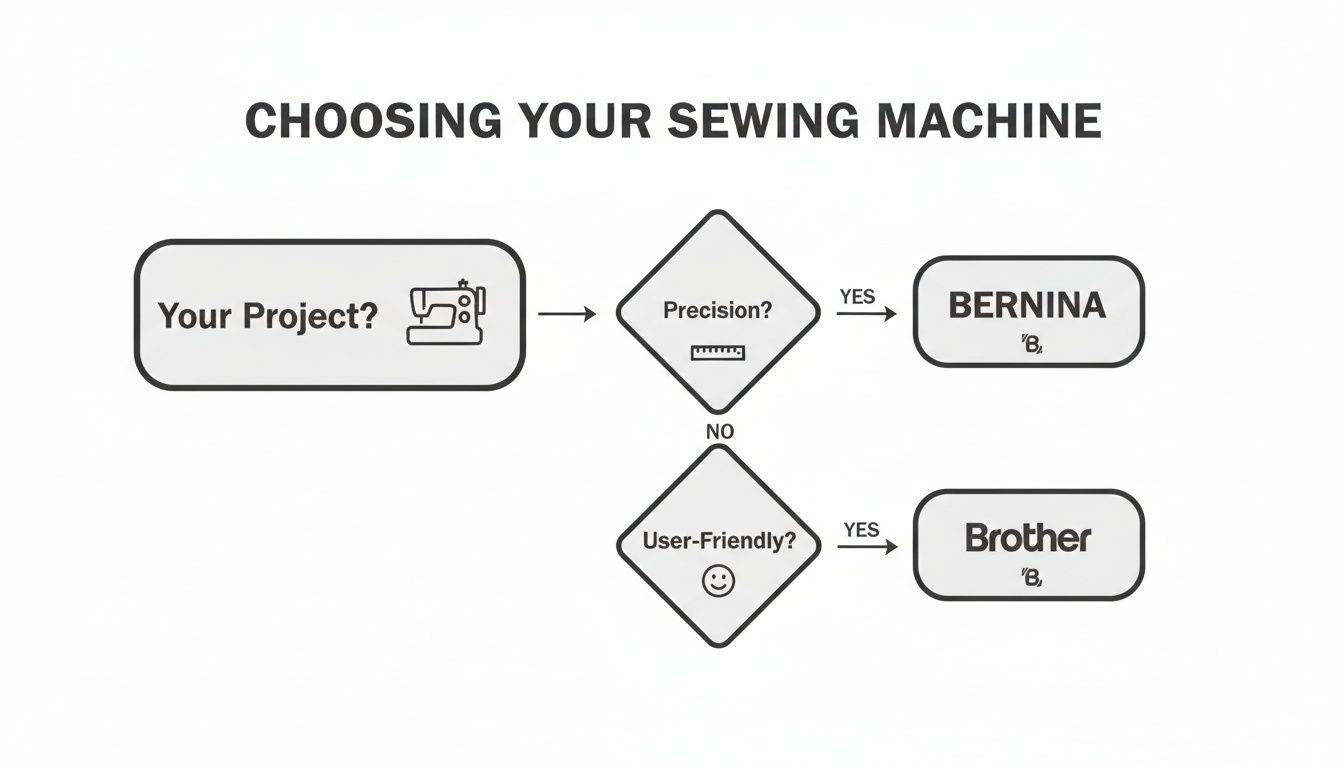
As you can see, if pinpoint precision is your top priority, you might lean towards a brand like BERNINA. But if you're looking for a machine that’s packed with user-friendly features, Brother is often a great place to start.
Assess Your Primary Sewing Projects
Alright, let's get down to the fun part. What do you actually dream of making? Your answer here is the key to unlocking which features are must-haves versus nice-to-haves.
-
Garment Making: If you see yourself sewing your own wardrobe, you'll want a machine with a solid set of utility stitches, an easy-to-use buttonhole function, and a free arm for getting around tight spots like cuffs and sleeves. You’ll also want to think about how you'll finish your seams—our guide on a serger vs a sewing machine can help with that.
-
Quilting: For all the quilters out there, throat space is king. That’s the open area between the needle and the machine's body, and you need plenty of it to wrangle big quilts. A walking foot for even fabric feeding, a high stitches-per-minute (SPM) rate, and a sturdy extension table are also at the top of the list.
-
Embroidery and Decoration: Is decorative stitching your jam? You'll need a dedicated embroidery machine or a combination model. As you think about your projects, consider if you'll need advanced custom embroidery capabilities, because that will definitely narrow down your brand options.
-
Heavy-Duty Work: If you're planning to tackle tough materials like denim, canvas, or upholstery fabric, you need a workhorse. Look for a machine with a powerful motor, a full metal frame for stability, and the muscle to handle thicker threads and needles without skipping a beat.
Taking a moment to be honest about what you want to create is the single most important thing you can do. It cuts through the noise of the market and turns an overwhelming number of choices into a short, manageable list of real contenders. When you focus on function first, you ensure the machine you bring home is one that will empower your creativity for years to come.
A Look at the Top Brands for Home Sewing and Quilting
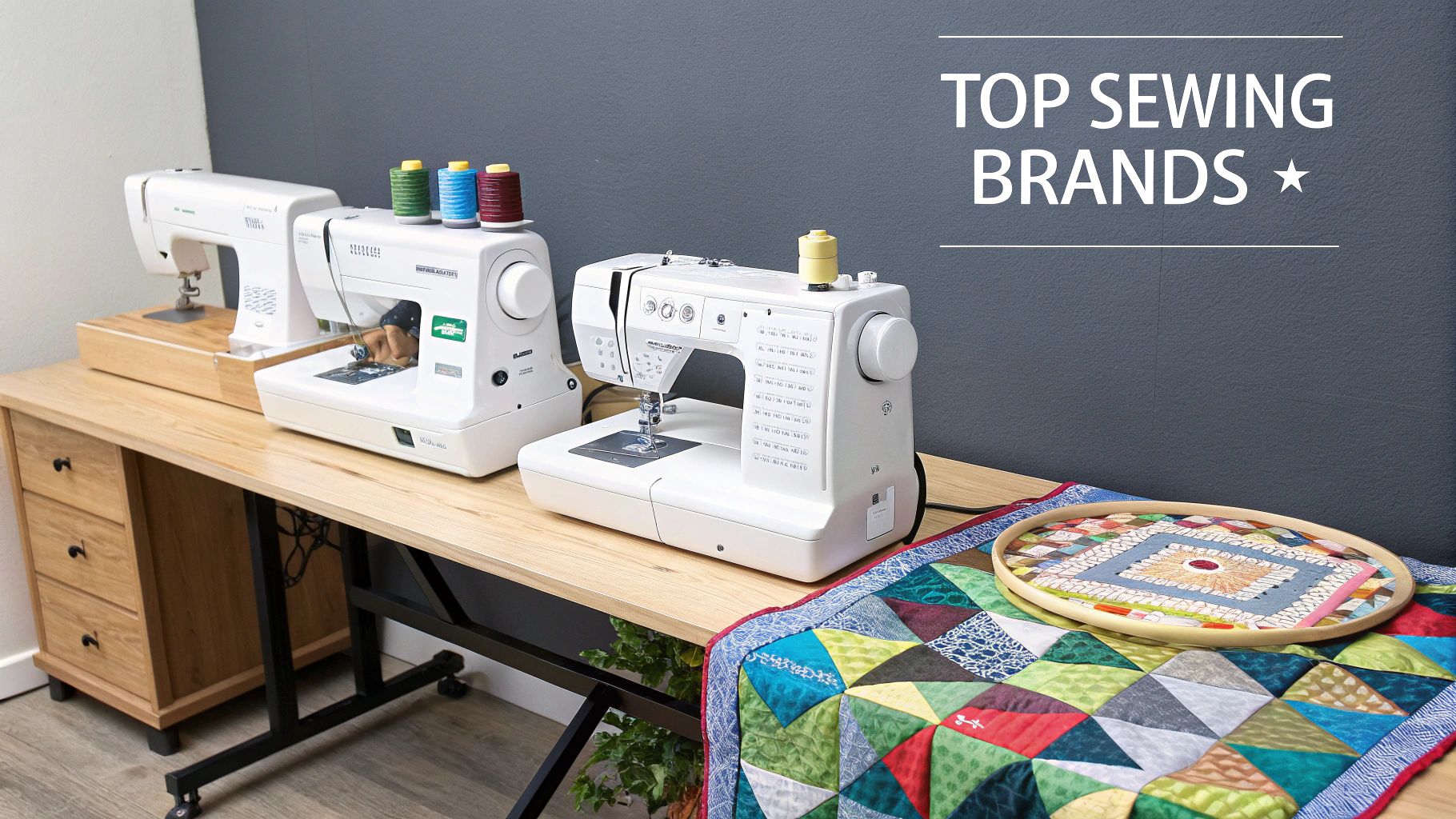
When you're sewing at home, your machine is your most important partner. Whether you’re piecing a beautiful quilt, tailoring your own clothes, or adding a personal touch with embroidery, you need a machine that can keep up. The best brands for home use have mastered the art of blending serious power with designs that are a joy to use.
Let's dive into the names that hobbyists and dedicated home sewers have come to trust for their reliability and special features. After all, home sewing is a massive world of its own. One person might need a whisper-quiet machine for piecing intricate quilt blocks late at night, while another is looking for a feature-packed model to finally try their hand at machine embroidery. The right brand for you will feel less like a tool and more like an extension of your own creativity.
BERNINA: The Swiss Standard for Precision
For sewers who treat their craft like an art form, owning a BERNINA is often the dream. Backed by a long history of Swiss engineering, these machines are famous for their flawless stitch quality and incredibly durable, all-metal construction. Simply put, they are built to be passed down through generations.
This unwavering commitment to quality makes BERNINA a top choice for serious quilters and anyone creating heirloom pieces. They rave about features like the exclusive BERNINA Stitch Regulator (BSR), a game-changer that guarantees perfectly even stitches when you’re free-motion quilting. That kind of precision gives you the confidence to tackle those big, complex projects you’ve been dreaming about.
While BERNINAs come with a premium price tag, owners will tell you it's a long-term investment in their craft. You're not just buying a machine; you're getting a reliable partner celebrated for its performance and longevity.
Brother: The Leader in User-Friendly Innovation
Brother has earned its spot in the sewing community by making high-tech features surprisingly easy to use. Their computerized machines are well-known for their intuitive controls, bright LCD touchscreens, and a whole host of automated functions that just make sewing simpler.
This approach makes Brother a fantastic starting point for beginners or hobbyists who want powerful features without a frustratingly steep learning curve. Many of their most popular models are combination sewing and embroidery machines, opening up a whole new world of personalization. Imagine adding a custom monogram to a set of towels or a cute design to a kid's backpack—Brother makes that happen right out of the box.
- Who is it for? Beginners, hobbyists, and anyone curious about embroidery.
- Signature Feature: User-friendly computerized interfaces and affordable combo machines.
- Price Point: Budget-friendly to mid-range.
Their reputation for dependability, paired with a huge library of built-in stitches and designs, offers incredible value and gives you plenty of room to grow your skills.
The right brand does more than just stitch; it inspires you to try new things. Whether it's the flawless precision of a BERNINA encouraging you to tackle a show-stopping quilt or the intuitive embroidery functions of a Brother sparking a new personalization hobby, the machine should fuel your passion.
PFAFF: Perfect Fabric Control for Garment Sewers
The name PFAFF is practically synonymous with one groundbreaking feature: the Integrated Dual Feed Technology, or IDT™ System. This isn't your average walking foot. It's a built-in system that grips and feeds the fabric from both the top and the bottom at the same time.
What does that mean for you? Perfectly matched seams, every single time. It's a lifesaver for garment makers who work with finicky fabrics like silk, satin, or slippery rayons. Quilters love it too, as it stops layers from shifting while piecing. This amazing fabric control takes so much of the frustration out of working with challenging materials. If you’re curious about their decorative side, our deep dive into PFAFF embroidery machines shows off their creative power.
Husqvarna Viking: High-Tech Features for Modern Creators
With its Scandinavian design roots, Husqvarna Viking appeals to the tech-savvy sewer. This brand is always pushing the boundaries, integrating cutting-edge features and software that can turn a sewing machine into a true creative command centre.
Their machines often include exclusive functions like the Sewing Advisor™, which automatically sets the best stitch, length, and tension for whatever fabric you tell it you're using. For anyone who loves seeing technology and traditional crafts come together, Husqvarna Viking offers an exciting, forward-thinking sewing experience.
Ultimately, picking from these top-tier brands comes down to what you love to create. By matching a brand’s signature strength to your personal sewing style—be it BERNINA’s precision, Brother’s accessibility, PFAFF’s fabric control, or Husqvarna Viking’s tech—you’ll find a machine that not only gets the job done but also inspires your very next project.
Power and Precision for Industrial and Small Business Needs
When sewing goes from a creative pastime to a full-fledged business, the rules of the game change. So does the equipment. The relaxed pace of home sewing just can't keep up with the demands of production, where speed, power, and rock-solid reliability are everything. This is where industrial and commercial machines step in, built not for doing a little bit of everything, but for doing one thing exceptionally well, over and over again.
These machines are the true workhorses of the sewing world, powering everything from apparel manufacturing to custom embroidery shops. Think of it this way: a home sewing machine is like your trusty family car—it's versatile and great for running all sorts of errands. An industrial machine, on the other hand, is a purpose-built courier van. It’s designed to run all day, every day, doing its one specific job faster and more reliably than any all-purpose vehicle ever could.
JUKI: Dominating the Production Floor
For decades, JUKI has been a titan in the industrial world, famous for its powerhouse lockstitch machines that are the backbone of countless factories. These machines are engineered for a single purpose: to sew a perfect, strong straight stitch at mind-boggling speeds, often hitting over 5,000 stitches per minute.
You can feel the difference right away. They’re built with heavy-duty metal frames, beefy motors, and parts made to withstand the grind of an eight-hour workday without breaking a sweat. This is what allows them to plow through tough materials like leather, canvas, and thick layers of denim like it’s nothing. For a small business making tote bags or custom upholstery, a JUKI isn’t just a nice-to-have—it’s a fundamental investment in quality and efficiency. You can see this level of performance in models like the Rugged 9000N-D4 industrial sewing machine, which is built precisely for this kind of demanding work.
Ricoma: Powering the Custom Apparel Business
If your business is all about custom apparel, hats, and promotional gear, then Ricoma is a name you need to know. They are a leader in multi-needle embroidery machines, which are a whole different beast from the single-needle models you find at home. Instead of stopping to change thread for every colour, a Ricoma machine has multiple needles—often 10, 15, or even more.
This setup is an absolute game-changer for production. You can thread each needle with a different colour before you even start, and the machine will seamlessly switch between them to complete intricate, vibrant designs without any help from you. It slashes production time and gives a small shop the confidence to take on big, complex orders.
For an embroidery business, a multi-needle machine isn't a luxury; it's the engine of profitability. It transforms a time-consuming craft into a streamlined production process, allowing a small operation to compete on a commercial level.
Handi Quilter: Mastering Professional Longarm Quilting
In the specialized world of professional quilting, Handi Quilter is the gold standard. They make longarm quilting machines that completely flip the script on how a quilt is sewn. With a regular machine, you wrestle the bulky quilt under the needle. With a longarm, the machine’s head glides effortlessly over the quilt, which is stretched neatly on a large frame.
This gives the quilter incredible freedom and control to create stunning, flowing patterns across even the biggest quilts. Handi Quilter machines are celebrated for their buttery-smooth motion, robust build, and brilliant features like stitch regulation, which keeps every single stitch perfectly even, no matter how fast or slow you move. For anyone serious about turning their passion for quilting into a business, Handi Quilter provides the specialized tool needed to create breathtaking, gallery-worthy work.
Whether it’s JUKI’s raw power, Ricoma’s automated efficiency, or Handi Quilter’s artistic precision, the lesson is the same: choosing the best brand means matching the machine’s purpose-built power to your business goals.
Finding the Right Support and Service for Your Machine
Buying a sewing machine is a big deal. It’s a long-term investment in your creativity, and the support you get after you buy is just as important as the bells and whistles on the machine itself. When you’re weighing your options, you're not just picking a product; you're picking a partner for your sewing journey. Things like warranty, how easy it is to find parts, and customer service can make or break your experience for years to come.
Thinking about this stuff beforehand saves you a world of frustration later. A machine with amazing features is no good if you can't get it fixed or find a replacement foot when you need one. This whole support system is what turns a good purchase into a great one.
The Importance of Warranty and Parts
A solid warranty is your first line of defence. It’s the company's handshake, promising they stand behind their work. But don't just glance at the number of years; dig into the details.
- Mechanical vs. Electrical: You’ll often see tiered coverage. A brand might offer 25 years on the heavy metal frame but only one or two years on the electronic boards or labour costs.
- Parts Availability: What good is a lifetime warranty if the parts you need are no longer made? Brands with a long legacy, like BERNINA or PFAFF, tend to be much better at keeping parts available for older models.
This is where buying from an authorized dealer really shines compared to a big-box store. A specialty dealer has a direct line to the manufacturer, making it much easier to track down that one specific part to get your machine running perfectly again.
A great sewing machine is a partnership between you and the brand. The warranty and dealer support are the terms of that partnership, ensuring your creative tool remains in peak condition for the long haul.
Why Local Dealer Support Matters
Sure, you might save a few bucks buying from a random online seller, but the value you get from a local, authorized dealer is priceless. A good dealer offers a level of expertise and personal service that you just can't find online. They become your go-to hub for all things sewing.
This relationship is your ticket to keeping your machine in top form. A brand-trained technician, for instance, knows exactly how to service the complex computerized parts of a Husqvarna Viking or fine-tune the IDT™ System on a PFAFF. A general repair shop might not have that specialized know-how.
Keeping Your Machine in Peak Condition
Just like your car needs a regular oil change, your sewing machine needs routine maintenance. It’s non-negotiable if you want it to last. Simple tune-ups prevent small annoyances from snowballing into major, expensive repairs. All that dust, lint, and tiny thread bits can build up and wreak havoc on tension discs and other moving parts, leading to wonky stitches and unnecessary wear.
Here’s what a great dealer relationship brings to the table:
- Authorized Servicing: Technicians are trained by the manufacturer to work on your specific machine. They use genuine parts, which keeps your machine running like new and protects your warranty.
- Expert Advice: Stumped by a tricky fabric or a feature you can't figure out? A quick visit or phone call to your dealer gets you a reliable answer from someone who knows their stuff.
- Hands-On Classes: Many dealers, including us here at All About Sewing, offer machine mastery classes. These are designed to help you get comfortable and confident with everything your new machine can do.
In the end, choosing one of the best sewing machine brands is also about choosing their support network. A brand that invests in its local dealers is investing in your success. It’s this three-way partnership—between you, the brand, and the dealer—that makes sure your machine remains a trusted creative partner for countless projects down the road.
Frequently Asked Questions About Sewing Machine Brands
Diving into the world of sewing machines can feel a bit overwhelming, and it's natural to have questions. As you start comparing different brands and models, trying to find that perfect fit, a few common queries always pop up. Let's walk through some straightforward answers to help you feel completely confident in your choice.
Which Sewing Machine Brand Is Best for a Complete Beginner?
If you're just starting your sewing journey, you can't go wrong with brands like Brother or Janome. They've really mastered the art of building machines that are easy to use and not the least bit intimidating, all without a hefty price tag.
Many of their entry-level computerized models come with fantastic helpers like automatic needle threaders and simple speed controls. These features let you build your skills without getting frustrated. Plus, their reputation for being reliable and the sheer amount of online tutorials and community support out there make the learning process so much smoother.
Do I Really Need an Expensive Machine for Quality Sewing?
Honestly? Absolutely not. While a top-tier brand like BERNINA offers incredible precision and a luxurious sewing experience, you can create beautiful, professional-quality projects on a well-cared-for entry-level machine.
The key ingredients for quality sewing are a consistent stitch and proper tension, and you can find that on many budget-friendly models. What an expensive machine gives you is efficiency, more specialized features, and the promise of a longer lifespan. But at the end of the day, it's your skill and practice that truly elevate your work.
The machine is just a tool; you're the artist. A reliable, basic machine in skilled hands will always outperform a top-of-the-line model that isn't being used to its full potential.
What Is the Difference Between a Home and Industrial Sewing Machine?
The biggest differences boil down to three things: speed, durability, and specialization. Think of a home sewing machine as a versatile multi-tool, designed to handle a whole range of different tasks at a comfortable pace.
An industrial machine, like one from JUKI, is a pure specialist. It’s built to do one thing—like a perfect straight stitch—and do it at lightning-fast speeds for eight hours a day, every day. They’re constructed with heavy-duty metal parts for unbelievable durability but don’t have the variety of decorative stitches or features you’d find on a home model.
How Often Should I Service My Sewing Machine?
For a home machine that sees moderate use, a professional tune-up every one to two years is a great rule of thumb. However, if you sew almost every day or work with fabrics that produce a lot of lint (like fleece or flannel), you’ll want to bring it in for a service once a year.
Keep in mind, this is separate from the regular cleaning you should be doing at home, like clearing out the bobbin area and changing your needle often. For industrial machines that are constantly running, they'll need more frequent professional check-ups to keep them in peak condition.
At All About Sewing, we don’t just sell machines—we build relationships. Our experts are here to help you choose, maintain, and truly master the perfect machine for your creative goals. Explore our collection of the world's best brands at https://all-about-sewing-canada.myshopify.com.


