

Screen Printing vs Embroidery A Complete Comparison Guide
When you're deciding between screen printing and embroidery, the right choice really boils down to what you're making, the fabric you're using, and the look you're going for. If you need a big batch of t-shirts with a bold, colourful design, screen printing is almost always the answer. But for a durable, professional finish on thicker items like hats or polos, especially in smaller numbers, embroidery is tough to beat.
Choosing Your Customization Method: A Quick Comparison
Picking the right way to decorate apparel can feel like a tough call. But once you get a handle on what each method does best, the choice becomes a lot clearer. The classic screen printing vs. embroidery debate isn't about which one is better in general—it's about which one is better for your project. Your design's complexity, the garment itself, and your budget are the key factors that will point you in the right direction.
Think of screen printing as a process where ink is pushed through a stencil onto fabric. This makes it perfect for creating large, vibrant graphics on smooth materials. It’s incredibly cost-effective for big runs because the initial setup costs get spread out over many items. It's the go-to for event t-shirts, band merch, and any promotional gear with detailed artwork.
Embroidery, on the other hand, is all about stitching a design directly into the fabric with thread. This creates a textured, raised look that feels premium and is exceptionally durable. That high-end feel makes it the top choice for corporate logos on polos, sturdy workwear, and branded hats. It’s at its best with simpler logos and text, especially on thicker or more structured fabrics.
To get you started, here’s a quick summary of their core differences.
Screen Printing vs. Embroidery At a Glance
This table gives you a snapshot of each method's strengths and weaknesses, helping you make a quick initial assessment before we get into the finer details.
| Feature | Screen Printing | Embroidery |
|---|---|---|
| Best For | Large, detailed, multi-colour designs and bulk orders. | Logos, text, and simpler designs on smaller orders. |
| Ideal Fabrics | Cotton, polyester blends, and other smooth, lightweight materials. | Heavier fabrics like fleece, denim, piqué, and hats. |
| Look & Feel | Smooth, vibrant ink layer that becomes part of the fabric. | Textured, raised, and professional stitched design. |
| Cost Structure | Lower per-unit cost on large runs; setup cost per colour. | Higher per-unit cost; pricing based on stitch count. |
| Durability | Very durable but can crack or fade over many years. | Exceptionally durable; often outlasts the garment itself. |
| Design Complexity | Excellent for photorealistic images and colour gradients. | Limited detail; not suitable for gradients or photos. |
Seeing them side-by-side makes it clear that your project's specific needs will guide your choice. Now, let’s dig deeper into what makes each process tick.
How Each Decoration Process Actually Works
To really get to the heart of the screen printing vs. embroidery debate, you need to understand how a design actually makes it onto a piece of fabric. Even though both end up as custom apparel, their methods couldn't be more different. One is an art of ink and layers, the other a craft of thread and dimension.
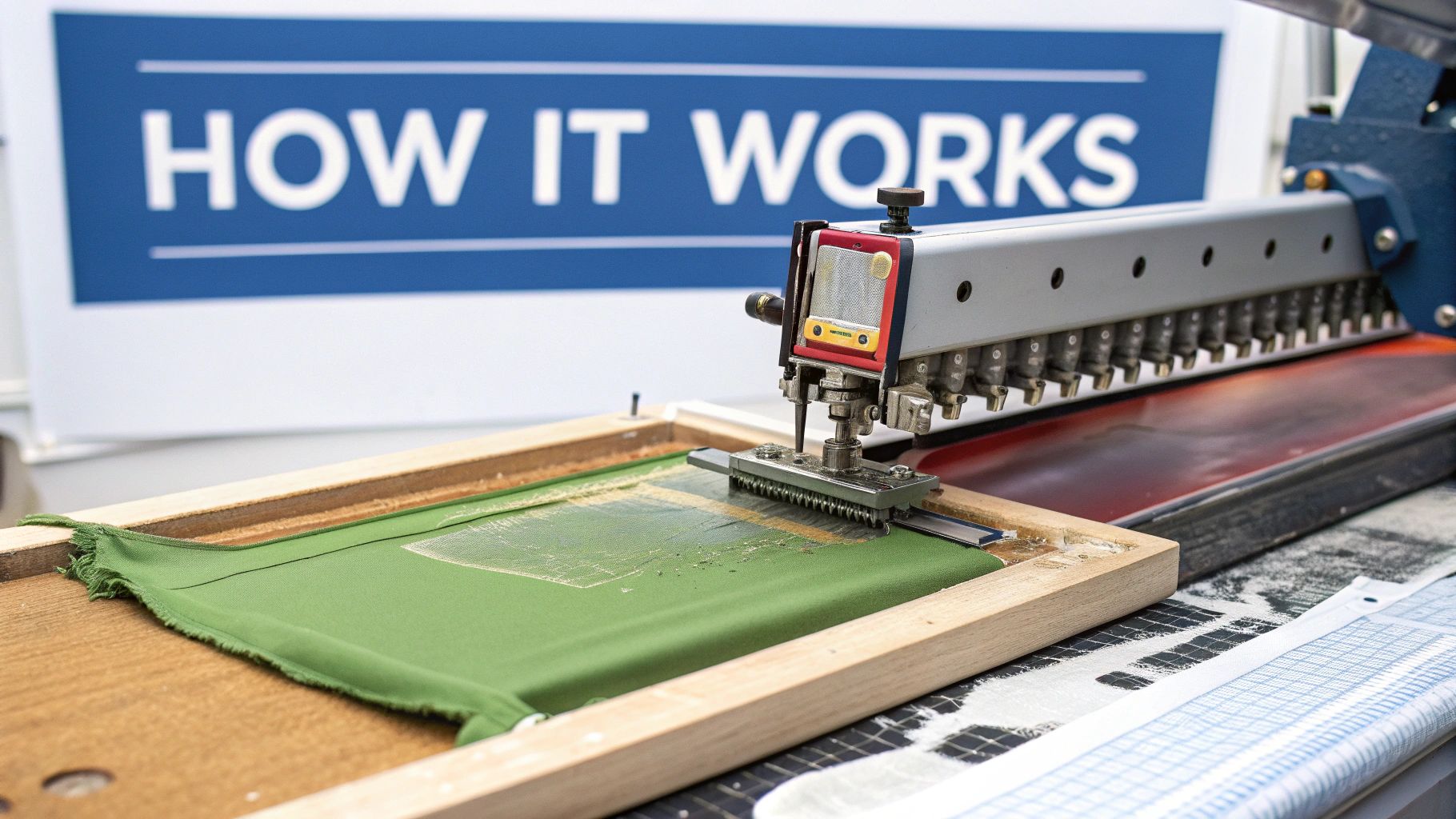
Think of screen printing as a very refined stencilling method. It all starts with creating a unique mesh screen for every single colour in your design. An emulsion is spread over the screen, and your design is used to block UV light during exposure. This hardens the emulsion everywhere except where your graphic is, creating a perfect stencil.
Your T-shirt or bag is laid flat, the screen is placed over it, and ink is pushed across with a squeegee. The ink only passes through the open parts of the stencil, transferring the image onto the fabric. You repeat this for every colour, using a new screen each time. To finish, the garment runs through a massive dryer to cure the ink, making it a permanent part of the fabric.
The Embroidery Machine Process
Embroidery, on the other hand, sews the design right into the fabric with some seriously impressive machinery. The whole process kicks off with digitizing. This is where your artwork is translated into a special digital file that tells the embroidery machine exactly what to do—mapping out every single stitch, thread colour, and stitch type.
Once the file is ready, the garment is stretched taut in a hoop and locked into the machine. The machine then follows the digital blueprint with incredible speed and precision, using needles to stitch the design. What you get is a raised, textured design that you can feel, giving it a premium, high-quality finish.
Key Takeaway: Screen printing lays ink on top of the fabric, creating a smooth, flat graphic. Embroidery stitches thread into the fabric, resulting in a dimensional, tactile design with a distinct texture and sheen.
Knowing how these two work is the key to choosing the right one. The layer-by-layer nature of screen printing is why it's so great for big orders with multiple colours. In contrast, the stitch-by-stitch work of embroidery explains why it's the top choice for durable, classic logos on thicker items like hats and jackets.
Breaking Down the Cost: A Practical Guide
When you're weighing screen printing against embroidery, your budget often has the final say. But it's not as simple as one being "cheaper" than the other. The real key is understanding how each one is priced, because their cost structures are worlds apart. The biggest factor, by far, is your order quantity.
Screen printing has a lot of prep work. You have to create a separate screen for every single colour in your design. This initial setup takes time and money, but you only have to do it once. Because of that, the more shirts you print, the more that setup cost gets spread out, and the price per shirt drops like a rock.
Embroidery works differently. Its price is almost entirely based on stitch count—literally, how many stitches it takes to sew your design. A big, detailed logo needs a lot of stitches and takes longer for the machine to run, which drives up the cost for each item. This pricing stays pretty steady whether you’re ordering ten pieces or a hundred.
The "Under 100" Guideline
In the custom apparel world, we have a handy rule of thumb: for any order under 100 pieces, embroidery is usually your most budget-friendly option. Why? The setup is much simpler. We just need to digitize your design file, which is far less involved than creating a bunch of physical screens. This helps you dodge the high initial fees that can make small screen printing jobs so expensive.
This is especially true if your design is colourful. A six-colour design in screen printing means paying for six separate screens. With embroidery, the machine just swaps thread colours, which has a much smaller effect on the final price.
But once your order size starts to climb, the math changes completely. After you pass that 100-piece mark, screen printing’s efficiency really starts to pay off. That setup cost, now spread across hundreds of garments, becomes a tiny part of the overall price. For big runs, screen printing is the clear winner. The cost dynamics in Canada's custom apparel industry really hinge on this principle, from small home-based businesses to large-scale operations.
For example, a 100-shirt order might run you $5-$7 per unit with screen printing. Bump that order up to 500 units, and the price could fall to just $3 a shirt. Meanwhile, an embroidered equivalent might stay put at $10-$15 per unit, no matter how many you order. You can explore more about these pricing dynamics and see how they can affect your project's budget.
Real-World Pricing Scenarios
Let's look at a couple of common projects to see how this plays out in the real world.
Scenario 1: The Charity Fun Run
- The Job: 250 t-shirts with a two-colour event logo on the front.
- The Breakdown: This is a textbook bulk order. The setup cost for two screens is easily absorbed when divided by 250 shirts.
- The Winner: Screen Printing. The cost per shirt will be way lower than embroidery, making it the only logical choice for a big promotional event.
Scenario 2: The Local Cafe Uniform
- The Job: 15 polo shirts with a small company logo on the left chest.
- The Breakdown: This is a small, professional order. The setup fees for screen printing would make each polo ridiculously expensive.
- The Winner: Embroidery. Since the cost is based on stitch count, it's perfect for a small team. Plus, you get a premium, long-lasting finish that’s ideal for workwear.
Key Takeaway: Don't just ask, "Which is cheaper?" Instead, ask, "Which is cheaper for my specific order size?" The answer almost always comes down to how many you need.
At the end of the day, the scale of your project will point you in the right direction. A small, personal project gets great value from embroidery's simple pricing, while a massive campaign can take full advantage of screen printing's amazing cost-efficiency.
Comparing Design Capabilities and Fabric Suitability
The complexity of your design and the type of fabric you're working with are two of the biggest deciding factors when weighing screen printing against embroidery. One method is a master of intricate, colourful detail, while the other creates bold, textured designs that literally stand out. Getting this match right is the key to a project you'll be proud of.
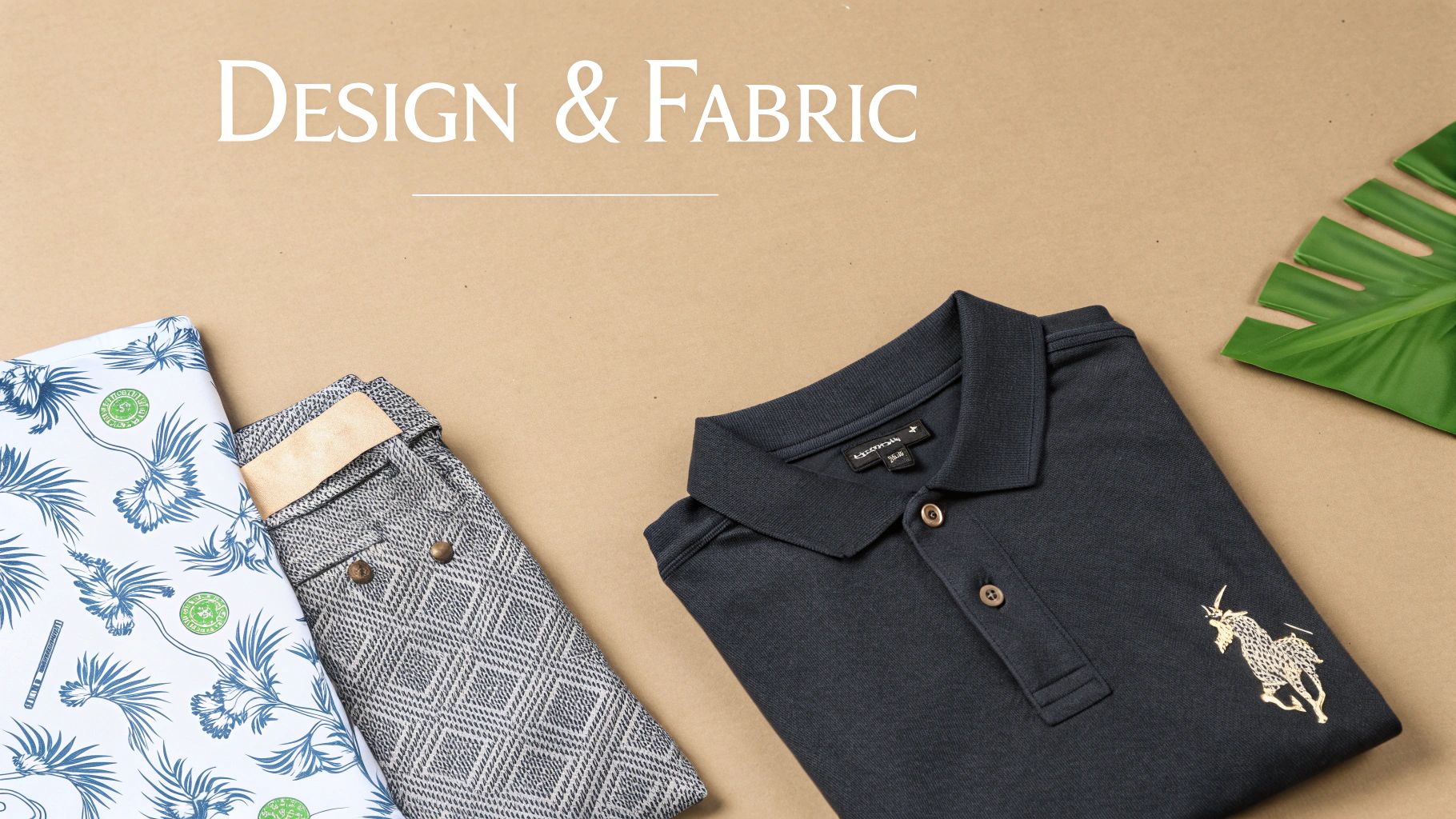
When it comes to graphical complexity, screen printing is the clear winner. Because it applies layers of ink, it can handle fine lines, subtle colour gradients, and even photorealistic images with impressive clarity. This makes it the obvious choice for band t-shirts, artistic apparel, and any design that needs a wide colour palette or intricate details.
The ink settles right into the fabric, becoming part of the garment. This technique works best on materials with a smooth, tight weave that gives the ink a perfect canvas to lay down on.
Fabric Compatibility for Screen Printing
The success of a screen print really comes down to the fabric's surface. A smooth, flat surface is going to give you the sharpest, most vibrant results.
- 100% Cotton: This is the gold standard. Its natural fibres absorb ink beautifully, leading to rich, deep colours and a soft finish.
- Cotton/Polyester Blends: These are also fantastic choices. Blends like 50/50 or tri-blends are hugely popular for their softness and durability, and they take ink very well.
- Canvas and Other Smooth Weaves: Think tote bags and aprons. These materials provide a stable, flat surface that's perfect for detailed graphics.
On the flip side, screen printing doesn't play well with heavily textured or fleecy fabrics. An uneven surface messes with the stencil, causing the ink to print unevenly and lose all its crispness. If you try to screen print on a thick fleece jacket or a ribbed piqué polo, you’ll likely end up with a blurry, patchy mess.
Embroidery’s Strengths with Texture and Professionalism
Embroidery comes at it from a completely different angle. It uses thread to stitch a design directly into the fabric, which creates a raised, three-dimensional effect. It feels substantial and looks incredibly professional. This technique is at its best when creating crisp logos, bold text, and designs made of solid blocks of colour.
That dimensional quality is precisely why embroidery is the go-to for corporate branding on polo shirts, tough workwear, and classic hats. It adds a premium feel that a flat ink print just can't match. Since it involves stitching, it’s also robust enough for a much wider range of fabric weights and textures.
Embroidery adds perceived value through its tactile, dimensional finish. It’s not just seen; it’s felt. This makes it the superior choice for creating a lasting, high-end impression for brands and organizations.
Fabric Versatility for Embroidery
Where screen printing struggles, embroidery often shines. Its ability to handle thick and textured materials is one of its biggest advantages.
- Piqué Knits: The classic polo shirt fabric is a perfect partner for embroidery. The stitches sit cleanly on top of that textured weave.
- Fleece and Outerwear: Heavy-duty materials like fleece, denim, and canvas are ideal. The strong stitches won't get lost in the thick fabric.
- Hats and Structured Items: For structured caps and beanies, embroidery is really the only practical choice for a clean, durable design.
But embroidery has its own kryptonite. The dense stitching can be too much for very lightweight or delicate fabrics, like a thin jersey t-shirt. The weight of the embroidered patch can cause the fabric to pucker and pull, ruining the garment’s natural drape and creating an uncomfortably stiff spot. Trying to replicate soft gradients or photorealistic detail is also next to impossible with thread—you just can't blend the colours seamlessly.
How Long Will Your Design Last? A Look at Durability and Care
When you’re investing in custom apparel, you want it to look great not just on day one, but for years to come. The durability of your design is a massive part of that equation. In the showdown between screen printing and embroidery, we're really comparing two different philosophies of wear and tear: one becomes part of the fabric, while the other adds a tough, textured layer on top.
A well-done screen print is much tougher than you might think. The process involves curing the ink at high temperatures, which creates a strong chemical bond with the fabric's fibres. This allows the design to stretch and move with the garment, giving it a soft, integrated feel. If you care for it properly, a quality screen print can easily last for years, often just fading gracefully as the shirt ages.
Embroidery, on the other hand, is in a class of its own when it comes to sheer resilience. It involves stitching durable polyester or rayon threads directly into the material. The result is a design that stands up incredibly well to washing, friction, and the general abuse of daily life. In fact, an embroidered logo will almost always outlast the garment it’s sewn on, making it the clear winner for uniforms, workwear, and anything that needs to be extra rugged.
Lifespan in the Real World
Think about how the garment will actually be used. A promotional tee for a weekend festival doesn't need to survive a decade of washing. For that, a screen print is perfect and will stay bright through dozens of wash cycles. Its main enemies are high heat in the dryer, which can make the ink crack, and harsh detergents that can speed up fading.
Now, picture a polo shirt for a landscaping crew or a jacket for construction staff. These items need to handle a lot more. This is where embroidery’s physical strength truly shines. The threads won't peel or crack, and their colour holds up exceptionally well. The only real risk is snagging—a sharp corner could catch a thread and pull it—but with professional digitizing, that’s pretty rare.
The Bottom Line: Screen printing’s durability depends on how well the ink bonds with the fabric. Embroidery's durability comes from the raw strength of the thread stitched into it. For pure, long-term toughness, embroidery always comes out on top.
Making Your Custom Apparel Last
No matter which method you choose, a little TLC goes a long way. Both are built to last, but following a few simple care guidelines can dramatically extend the life of your custom garments.
Keeping Screen-Printed Items Looking Fresh:
- Wash Inside Out: This is the easiest trick in the book. It protects the print from rubbing against other clothes in the wash.
- Go Cold: Wash in cold water to keep the ink’s colour vibrant and prevent it from degrading over time.
- Low Heat is Your Friend: High heat is the number one enemy of a screen print. Hang it to dry if you can, or use the lowest tumble dry setting.
- Skip the Harsh Stuff: Avoid bleach and aggressive detergents, as they can break down the ink and cause it to fade prematurely.
Caring for Your Embroidered Gear:
- Wash Wisely: While embroidery is tough, it's still a good idea to wash it with similar fabrics to minimize friction.
- Watch Out for Snags: Try not to wash embroidered pieces with items that have zippers, hooks, or other hardware that could catch on the threads.
- Iron from the Back: If you need to press the garment, flip it inside out. Ironing directly on the embroidery can melt the threads and ruin their sheen.
- No Bleach: Just like with screen prints, bleach can discolour and weaken the embroidery threads.
By keeping these differences in mind, you can pick the perfect decoration method to match your project's needs and ensure your design looks fantastic for as long as possible.
Making the Right Choice for Your Project
So, how do you decide between screen printing and embroidery? It really just boils down to context. Each method shines in different scenarios, and the best choice is all about your project's goals, who you're making it for, and the message you want to send. It's not just about what looks cool; it's about the purpose behind the piece.
To help you nail that final decision, let's walk through some real-world examples. This should help you connect the dots between what you need and which technique will deliver the best results.
When Screen Printing Is the Clear Winner
The biggest wins for screen printing are speed and cost, especially when you're making a lot of something. This makes it the hands-down champion for big projects where a bold, eye-catching design is the goal. If your project sounds like one of these, screen printing is almost certainly the way to go.
- Large-Scale Events: Think charity runs, music festivals, or big community get-togethers. When you need to get hundreds of identical t-shirts made quickly without breaking the bank, screen printing's low per-item cost on bulk orders is impossible to beat.
- Promotional Giveaways: For trade shows and marketing campaigns, you need a smart, affordable way to get your brand out there. Screen-printed tees and tote bags are classic for a reason—they create memorable swag that fits the budget.
- Complex, Colourful Artwork: If your design is a photograph, has tons of fine detail, or features smooth colour gradients, screen printing is the only way to really do it justice. It can capture that level of visual complexity with fantastic precision.
Here in Canada, you can see this trend play out clearly. Screen printing is king for bulk orders, especially in business hubs like Ontario where local sports teams and small clothing brands lean on its efficiency. It's the most popular decoration method in Canada for orders of 50+ items, which is perfect for the teams, charity events, and corporate functions we see all the time. You can learn more about how Canadian businesses choose their decoration methods from others in the industry.
When to Choose Embroidery for a Premium Finish
Embroidery offers a completely different kind of value—one that’s all about professionalism, longevity, and a high-end feel. That textured, three-dimensional quality adds a touch of class that ink just can't match.
You’ll want to lean toward embroidery when your goals are a bit different:
- Corporate Branding: For staff uniforms, client gifts, or jackets for the leadership team, an embroidered logo on a polo or jacket just screams quality and professionalism. It helps create a polished, unified brand image.
- Durable Workwear: In fields that are tough on clothes, like construction or hospitality, embroidery is a must. The stitching is incredibly tough—it often outlasts the garment itself—and holds up to daily wear and tear and heavy-duty washing.
- High-End Personalized Gifts: When you're creating custom hats, cozy fleece blankets, or premium bags for a special occasion, you want a premium touch. Embroidery adds a sense of permanence and value that makes an item feel truly special.
This decision tree helps visualize one of the most important questions: how much does long-term durability matter for what you're making?
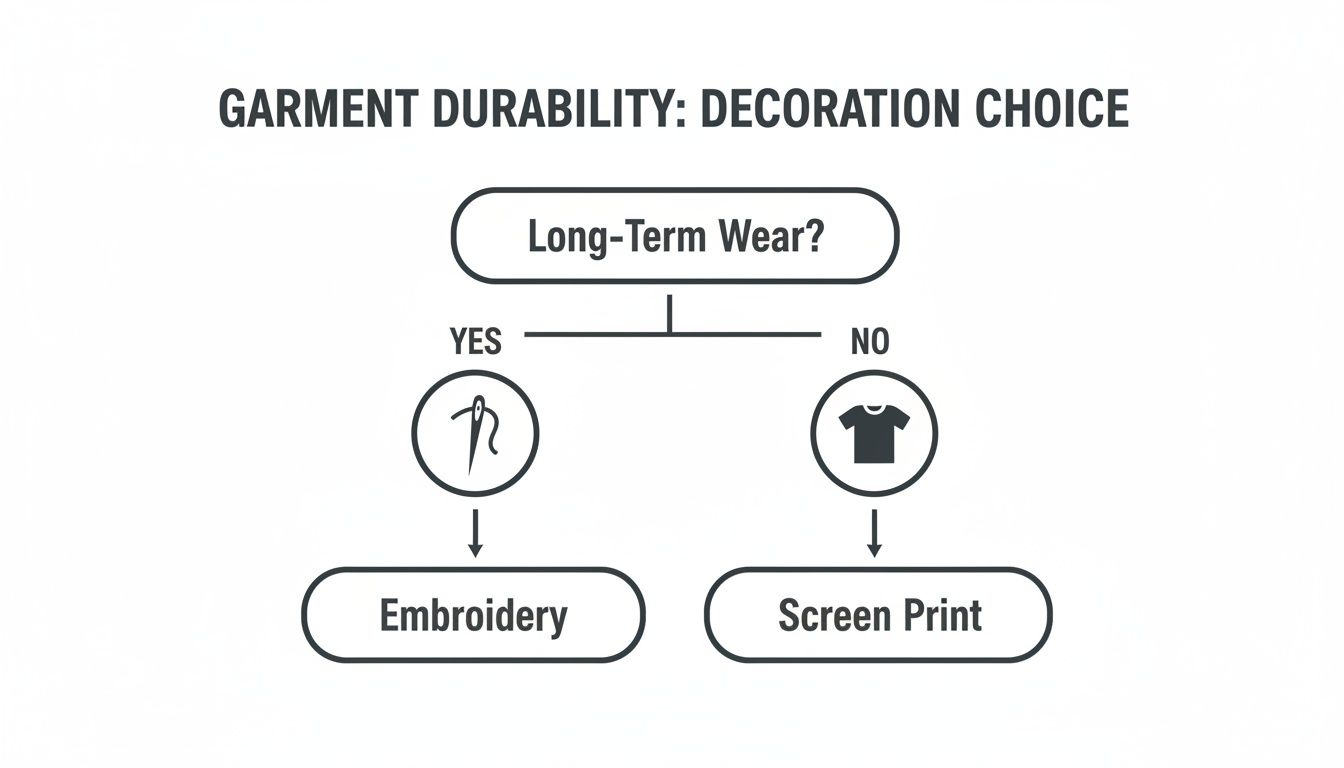
As you can see, if you need something to last and withstand a lot of use—like workwear or team uniforms—embroidery is the superior choice, hands down.
Key Insight: Don't just think about the design; think about the person wearing it and the environment they'll be in. A screen-printed shirt is perfect for a one-day event, but an embroidered jacket is an investment in a long-term professional identity.
A Quick Decision-Making Checklist
Still feeling a little stuck? Just run your project through this quick checklist. The method that gets the most checkmarks is probably your winner.
Choose Screen Printing if:
- You're ordering more than 50 of the same item.
- Your budget is tight, and you need a low cost per piece.
- Your design has lots of colours, fine details, or gradients.
- You're decorating lighter fabrics like t-shirts, hoodies, or tote bags.
- You need a large batch produced quickly.
Choose Embroidery if:
- You're ordering fewer than 50 items.
- You're aiming for a professional, high-end, and premium look.
- The design is a simpler logo or just text.
- You're working with thicker items like hats, polos, jackets, or fleece.
- Durability is the single most important factor.
By looking at your project through these practical lenses—from event giveaways to professional workwear—the choice in the screen printing vs embroidery debate becomes much clearer. It’s all about matching the technique to your goal to create custom apparel that not only looks great but also does its job perfectly.
Frequently Asked Questions
When you're diving into custom apparel, a few questions always pop up, especially when choosing between screen printing and embroidery. Here are some straightforward answers to help you lock in your decision and make sure you pick the perfect technique for your project.
Can You Combine Screen Printing and Embroidery?
You sure can! A mixed-media approach is actually a brilliant way to create standout, high-end garments. It lets you play to the strengths of both methods. A classic example is putting a big, colourful screen-printed design on the back of a hoodie and adding a small, sharp embroidered logo on the chest.
This strategy gives you the best of both worlds: the visual pop of a print and the premium, professional feel of embroidery. Just remember that you're paying for two separate setup and application processes, so it's going to cost more than sticking to a single method.
Which Method Is Better for Detailed Designs?
It really comes down to the kind of detail you’re after. If your design involves photorealistic images, smooth colour gradients, or super fine lines, screen printing is the clear winner. It can capture visual details that are just not possible with thread.
On the other hand, if you need small, clean text or a crisp corporate logo, embroidery often delivers a sharper, more defined result. The trade-off is that extremely tiny letters can be hard to read when stitched, while screen printing can sometimes lose its sharpness on fabrics with a heavy texture.
Simply put, screen printing is the champion of complex visuals and colour blending. Embroidery is the master of crisp, tactile definition for logos and text.
How Does Fabric Choice Impact the Decision?
Your choice of fabric is a huge factor here. Screen printing really shines on smooth, lighter-weight materials where the ink can lay down flat and even. It's the go-to for standard t-shirts, sweatshirts, and canvas tote bags made from cotton or polyester blends.
Embroidery, however, is much more adaptable. It’s perfect for thicker, textured, or plush fabrics that screen printing can struggle with. Think fleece, denim, piqué knits (like you see on polo shirts), and heavy-duty canvas—embroidery works beautifully because the stitches aren't bothered by the fabric’s surface.
Which Process Is Faster for a Large Order?
Once you get past the initial setup, screen printing is dramatically faster for big jobs. The printing process itself is incredibly efficient, letting you knock out hundreds of garments in a surprisingly short amount of time. If you have a deadline for a high-volume order, it’s the obvious choice.
Embroidery is a much slower, item-by-item process. The machine has to physically stitch the design onto each garment one at a time. So, if you need a huge batch of custom apparel turned around quickly, screen printing will almost always get it done faster.
Whether you're kicking off a new project or looking to upgrade your gear, All About Sewing has the machines, accessories, and expert advice to make your creative ideas happen. Explore our wide selection of embroidery machines and supplies today. Learn more at https://all-about-sewing-canada.myshopify.com.


