

Best Sewing Machines for Quilting: Top Picks and Guides
Think of your quilting machine as more than just a tool; it's your creative partner. When you're searching for the best sewing machines for quilting, you'll often see names like BERNINA, PFAFF, and JUKI pop up, and for good reason. They build machines with the generous throat space, powerful motors, and pinpoint stitch control that quilters truly need to bring their ideas to life.
Your Guide to the Perfect Quilting Machine
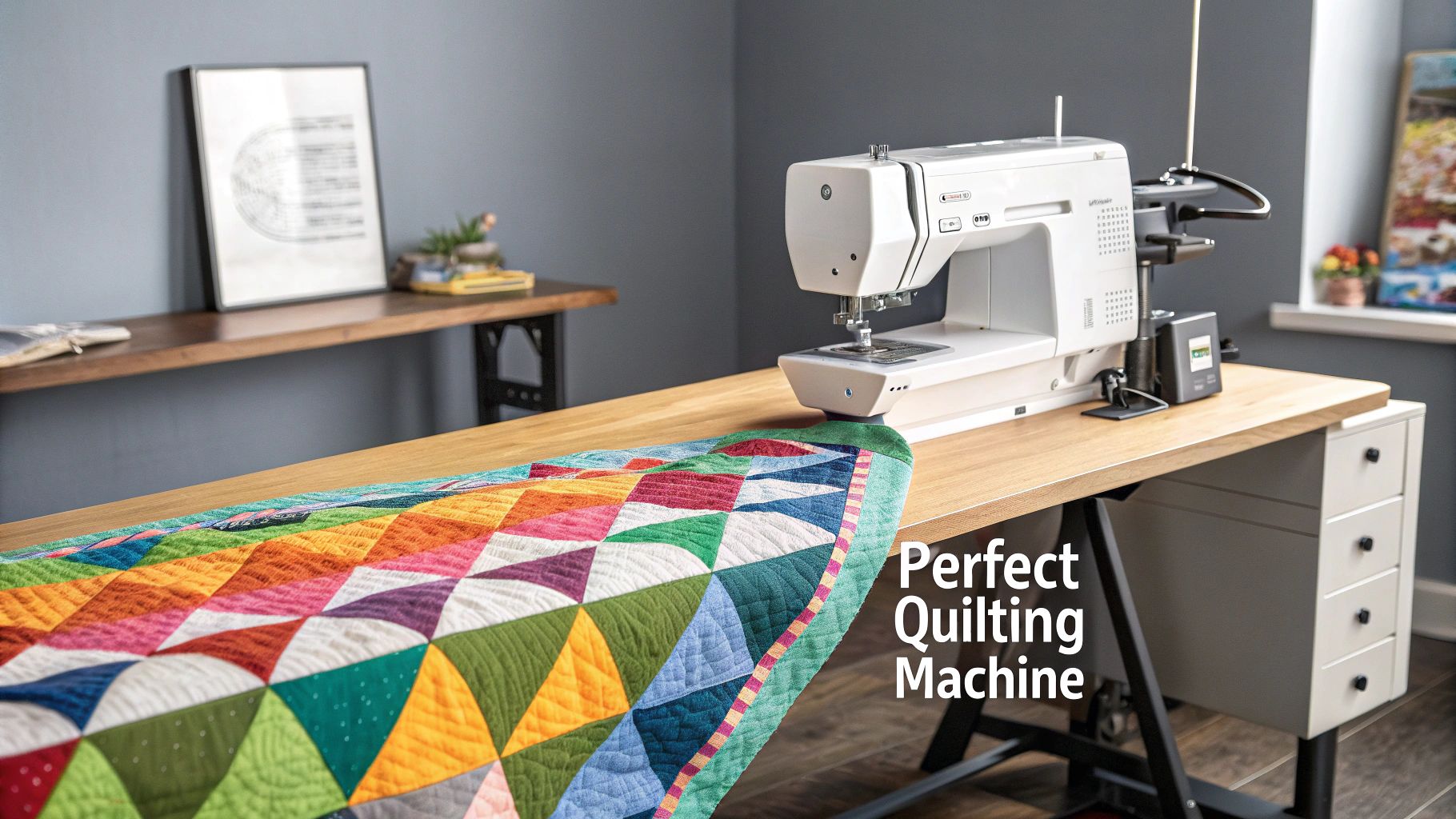
Choosing a sewing machine is a big deal for any sewist, but for a quilter, the stakes are even higher. It’s not just about stitching a few seams together. You need a reliable workhorse that can handle precise, tiny pieces one minute and then wrestle the bulk of a king-sized quilt sandwich the next.
This guide is here to cut through the noise and help you find the right machine, whether you're just starting your first simple nine-patch block or you're ready to tackle stunning, free-motion masterpieces.
Think of this as your personal roadmap. We'll walk through the features that turn a good sewing machine into a great quilting machine, making sure you feel confident in your choice. The goal is to find a machine that not only gets the job done but inspires you to create for years to come.
Why Your Machine Matters
The right machine is the difference between a joyful, creative flow and a frustrating afternoon spent battling skipped stitches and bunched-up fabric. For quilters, a few key features are non-negotiable:
- Expansive Throat Space: This is the open area to the right of the needle. The more space you have, the easier it is to maneuver big projects without everything getting crammed and wrinkled.
- Powerful Motor: A strong motor is essential for punching through multiple layers of fabric and batting without straining or slowing down. It gives you that smooth, consistent power you need.
- Precision Stitch Control: Look for features like stitch regulation, which automatically keeps your stitches even and uniform, especially when doing free-motion work. It's a total game-changer for quality.
The Canadian quilting scene is buzzing with energy. Market reports from 2025 estimate that of the 9–11 million quilters in North America, Canadians represent about 5% of that—that's hundreds of thousands of us! What's really exciting is that the same report noted 18% of quilters were new to the craft, a huge jump from the year before.
This new wave of quilters is driving the demand for modern machines packed with helpful quilting features. We'll help you understand exactly what to look for so your investment truly supports your passion.
For a broader look at some fantastic all-around models, you might also want to check out our guide on the best sewing machines available in Canada. We're here to help you navigate all the options and find the perfect match for your quilting journey.
What to Look For in a Quilting Machine
Not just any sewing machine can stand up to the unique challenge of quilting. Sure, a basic model might get you through piecing some blocks together, but a true quilting machine is a different beast altogether. It's built to wrangle bulky layers, deliver pinpoint accuracy, and really let your creativity flow.
Think of these features as your personal quilting toolkit. Each one is designed to solve a specific problem that every quilter, from beginner to pro, runs into. Let's walk through the non-negotiables that separate a good machine from a great one.
Give Yourself Some Room: The Importance of Throat Space
Have you ever tried to stuff a fluffy queen-sized duvet into a small washing machine? That’s exactly what it feels like to quilt on a machine with a tiny throat space—the open area between the needle and the machine's tower.
This space, sometimes called the harp, is your work surface. A generous throat gives you the room to roll, fold, and guide your quilt without the fabric bunching up and fighting you every inch of the way. For someone just starting, an 8-inch throat is a decent place to begin. But for quilters with their sights set on larger projects, 10-12 inches (or even more) on a domestic machine is a dream.
Why It Matters: A large throat space is probably the single most important feature for a quilting machine. It's the difference between a smooth, enjoyable process and a frustrating wrestling match with your fabric.
A Motor That Can Handle the Layers
A quilt isn't just one piece of fabric; it's a "sandwich" made of three distinct layers: your pieced top, the fluffy batting in the middle, and the backing fabric. Punching a needle through all that thickness, time and time again, requires some serious muscle.
That's where a powerful motor comes in. A weak motor will whine and struggle, giving you skipped stitches and uneven tension. Over time, it can even burn out. A strong, sturdy motor, however, will power through dense seams and multiple layers without breaking a sweat, giving you smooth, consistent stitches from start to finish.
Flawless Fabric Feeding
There's nothing more disheartening than sewing a long, beautiful seam only to find that the top layer of fabric has crept forward, creating tiny puckers and throwing your points out of alignment. This happens because standard sewing machines only pull the bottom layer of fabric through.
This is where a top-notch feed system becomes a quilter's best friend.
- Standard Feed Dogs: These are the little teeth under the needle that pull the bottom fabric.
- Dual Feed / Walking Foot: The gold standard for quilting. This system engages a set of "walking" feet from above that work in perfect time with the bottom feed dogs.
By gripping and moving both the top and bottom layers of fabric together, a dual-feed system practically eliminates shifting and puckering. It ensures your patchwork and quilt layers stay perfectly aligned, which is absolutely crucial for precision work.
Stitch Control and Regulation: Your Secret to Perfection
In quilting, consistency is king. From piecing intricate blocks to laying down those final decorative stitches, you want every stitch to be perfect. Modern quilting machines offer some incredible technology to make this happen, and the most coveted feature is stitch regulation.
Think of it like cruise control for your needle. When you’re doing free-motion quilting (where you're steering the fabric yourself), a stitch regulator uses tiny sensors to match the machine's speed to the movement of your hands. Move the fabric fast, and the machine stitches faster. Slow down for a tricky curve, and the machine slows down right with you.
The result? Gorgeous, evenly spaced stitches that look incredibly professional, no matter how much your speed fluctuates. It’s a feature that can take years of practice to master manually, but stitch regulation gets you there in minutes.
The Little Things That Make a Big Difference
Beyond the big-ticket items, a few key conveniences can completely change your quilting experience. These aren't just bells and whistles; they’re smart features that save time, cut down on frustration, and keep you in the creative zone.
- Needle Up/Down: This simple button lets you choose whether the needle stops in the fabric or out of it. Stopping with the needle down is a must-have for pivoting perfectly at corners.
- Automatic Thread Cutter: A true game-changer. With one tap of a button or your heel, the machine snips both the top and bobbin threads for you. No more reaching for scissors after every single seam.
- Knee Lift: This is like having a third hand. A lever you press with your knee lifts the presser foot, leaving both of your hands free to position and guide your quilt.
When you put all these features together, they create a seamless workflow that lets you focus on what really matters: bringing your beautiful quilting projects to life.
Domestic vs Long-Arm Quilting Machines
Every quilter eventually hits a fork in the road. Do you stick with a powerful domestic machine, or do you take the plunge and invest in a long-arm? It’s a big decision, one that shapes how you quilt, what you can create, and even how your sewing room is set up.
The real difference comes down to one simple thing: what moves.
With a domestic machine, the needle is stationary, and you do all the work of moving the quilt sandwich underneath it. Think of it like trying to write your name by holding a pen still and moving a giant piece of paper around under the tip.
A long-arm system flips that completely. The quilt is stretched flat and still on a huge frame, and you move the machine’s sewing head over the fabric. This is much more like drawing with a pen on a stationary canvas—it gives you a totally different kind of control and freedom, especially for those big, sweeping designs.
The Domestic Machine Approach
Most of us start our quilting journey on a domestic machine. And for good reason! The best ones for quilting are essentially souped-up versions of the machines we already know and love, built with a bigger throat space, a stronger motor, and features designed for thick layers. They’re the jacks-of-all-trades, perfect for piecing, quilting, and any other sewing project you can dream up.
The main challenge with quilting on a domestic machine is wrangling the quilt itself. You have to bunch, roll, and stuff all that fabric through the machine’s arm, which can feel like a wrestling match with a king-size project. Still, because you’re already familiar with how a sewing machine works, the learning curve for quilting this way is pretty gentle. It’s a fantastic route for anyone quilting for fun or focusing on smaller projects like lap quilts and wall hangings.
Exploring the Long-Arm Quilting System
A long-arm machine is a different beast altogether. It’s a highly specialized tool, with a sewing head mounted on a massive frame—often 10 to 14 feet long—that holds your quilt perfectly taut. One of the best parts? This setup means you don’t have to spend hours pinning or spray-basting your quilt sandwich. That alone is a huge time-saver.
Now, the trade-off is significant. A long-arm requires a major investment in both money and space. You’ll need a dedicated room or at least a very large, clear area to house it. This is a serious commitment, best suited for quilters who plan to finish a lot of large quilts with professional-looking results or even start their own quilting business. The ability to glide the machine across the fabric opens up a whole new world of creative possibility for intricate, free-flowing patterns.
A long-arm doesn't just make quilting faster; it fundamentally changes how you create. You stop managing the fabric and start conducting the stitches, guiding the needle with fluid, painterly motions across your quilt.
This quick guide can help you figure out which path might be right for you.
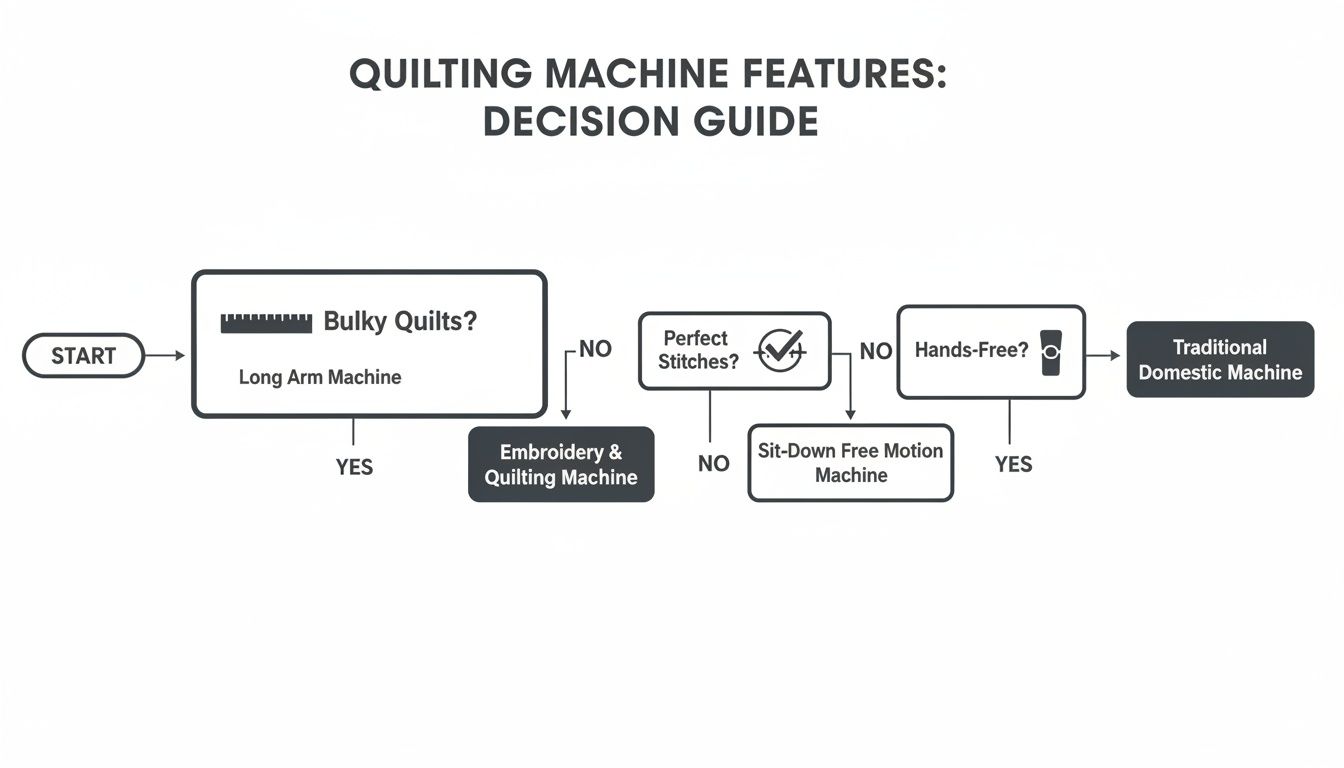
As you can see, the path to your perfect machine becomes clearer when you think about your biggest needs—whether that’s fighting quilt bulk or getting flawless, computer-guided stitches.
Domestic Machine vs Long-Arm System at a Glance
To make this choice a little easier, let's put the two options side-by-side. This table breaks down the key differences between a top-tier domestic machine and a dedicated long-arm system.
| Feature | Domestic Sewing Machine | Long-Arm Quilting System |
|---|---|---|
| Quilting Method | You move the fabric under the needle. | You move the machine head over the fabric. |
| Space Required | Sits on a standard sewing table or in a cabinet. | Needs a large, dedicated room (often 12 ft+). |
| Project Size | Great for small to large quilts, but tough on king-size. | Handles any size with ease, especially queen and king. |
| Learning Curve | Gentle; it builds on your existing sewing skills. | Steeper; you have to learn a whole new way of moving. |
| Budget | $1,500 - $10,000+ | $10,000 - $40,000+ |
| Primary Use | Versatile: piecing, quilting, and general sewing. | Specialized: built almost exclusively for quilting. |
So, what's the verdict? It all comes down to your personal quilting goals. A feature-packed domestic machine offers incredible flexibility and is a perfect partner for the passionate hobbyist. A long-arm, on the other hand, is a powerful investment for the quilter who is serious about finishing big projects with unmatched speed and artistry.
Finding a Machine That Matches Your Skill Level
Think of choosing your first quilting machine like buying your first car. You don't need a high-performance race car with a baffling dashboard. What you really need is something reliable, safe, and easy to handle. When it comes to the best sewing machines for quilting, there’s no such thing as "one-size-fits-all." Matching the machine to your skill level is the key to investing wisely without feeling overwhelmed.
This way, you get exactly what you need to grow your skills, without paying a premium for advanced features you won't touch for years. Let's walk through what to look for at each stage of your quilting journey.
Machines for the Beginner Quilter
When you're just starting out, your biggest goals are learning to piece accurately and getting comfortable quilting simple, straight lines. Simplicity and reliability are your two best friends here. A machine that’s cluttered with hundreds of decorative stitches and complicated digital menus can actually hold you back.
Instead, look for a machine that absolutely masters the basics. You want a solid workhorse that delivers a perfect straight stitch every time, feeds fabric evenly, and doesn't require an engineering degree to operate. This will build your confidence and let you focus on your craft, not on wrestling with your equipment.
Here are the key features a beginner-friendly quilting machine should have:
- Intuitive Controls: Look for clearly labelled buttons and a simple screen. You should be able to change your stitch length or pick a stitch without having to consult the manual every five minutes.
- Automatic Needle Threader: Honestly, this is a non-negotiable sanity-saver. It saves you time and spares your eyes, getting you to the fun part—sewing—much faster.
- Speed Control Slider: This feature lets you set a maximum sewing speed. Think of it like putting a governor on an engine; it helps you sew slowly and accurately, even if you haven't quite mastered the foot pedal.
- Good Lighting: Bright LED lights that illuminate the needle area make a huge difference. It’s so much easier to see what you’re doing and sew those precise seams.
Stepping Up for the Intermediate Quilter
After you've got the fundamentals down, you'll start to feel the limitations of a basic machine. You're probably tackling bigger quilts, wanting to experiment with free-motion quilting, and getting more ambitious with your projects. It’s time for a machine that can keep up with your growing skills.
At this stage, you'll want to prioritize features that give you more creative freedom and can handle larger projects with ease. The investment is definitely higher, but the payoff is a much smoother and more capable quilting experience.
For the intermediate quilter, the right machine feels less like a tool and more like a creative partner. It anticipates your needs and removes technical barriers, letting you focus on design and artistry.
Key upgrades for the intermediate quilter include:
- Generous Throat Space: This is the ultimate game-changer. Moving from a standard 5–7 inch throat to one that's 9 inches or more makes quilting larger projects infinitely less frustrating.
- Advanced Feed System: Look for machines with integrated dual-feed systems (like you’d find on many BERNINA or PFAFF models). These systems grip both the top and bottom fabric layers for perfectly matched seams without any shifting.
- A More Robust Motor: A stronger motor can handle faster speeds and punch through thicker layers without complaining. You'll get much smoother results on dense quilts.
- Specialty Presser Feet: A good machine at this level should come with a walking foot, a ¼” piecing foot, and a free-motion (or darning) foot right out of the box.
The Professional and Advanced Quilter's Machine
For the advanced quilter or aspiring professional, this is more than just a hobby—it's a serious craft. You demand precision, speed, and absolute durability. You're likely working on very large or intricate quilts, maybe even for clients or competitions, and you need a machine that can perform for hours on end without a single hiccup.
These machines are a significant investment, but they offer commercial-grade performance. They are specialized tools built to do one thing exceptionally well: create high-quality quilts as efficiently as possible. This is where the line between high-end domestic machines and dedicated long-arm systems starts to blur.
For this tier of quilter, the Canadian market is strong. Between 2016 and 2024, Canada’s share of the North American quilt and bedding market has held steady, accounting for an estimated 19.7% of revenue. This stable, high-value market means Canadian retailers prioritize stocking the very machines that advanced quilters need from top-tier brands like BERNINA, Handi Quilter, and JUKI.
Essential features for the advanced quilter are:
- Stitch Regulation: This incredible technology ensures your stitches are perfectly uniform during free-motion quilting by coordinating the machine's speed with your hand movements. It's a must-have for a professional finish.
- High-Speed Stitching: Look for machines that can hit 1,000 stitches per minute or more. This power lets you finish large projects much faster.
- Industrial-Grade Build: A heavy-duty metal frame is crucial. It reduces vibration at high speeds, which leads to more accurate stitches and a much longer machine life.
- Large Bobbins: Bigger bobbins are a small but mighty feature. They let you quilt for longer stretches without having to stop and wind a new one.
Ultimately, choosing from the best sewing machines for quilting means being honest about where you are in your journey. For more guidance on specific models, you might be interested in our deep dive into the best sewing machine brands and what makes each unique. When you match your machine to your skills, you set yourself up for quilting success.
Essential Accessories and Machine Care
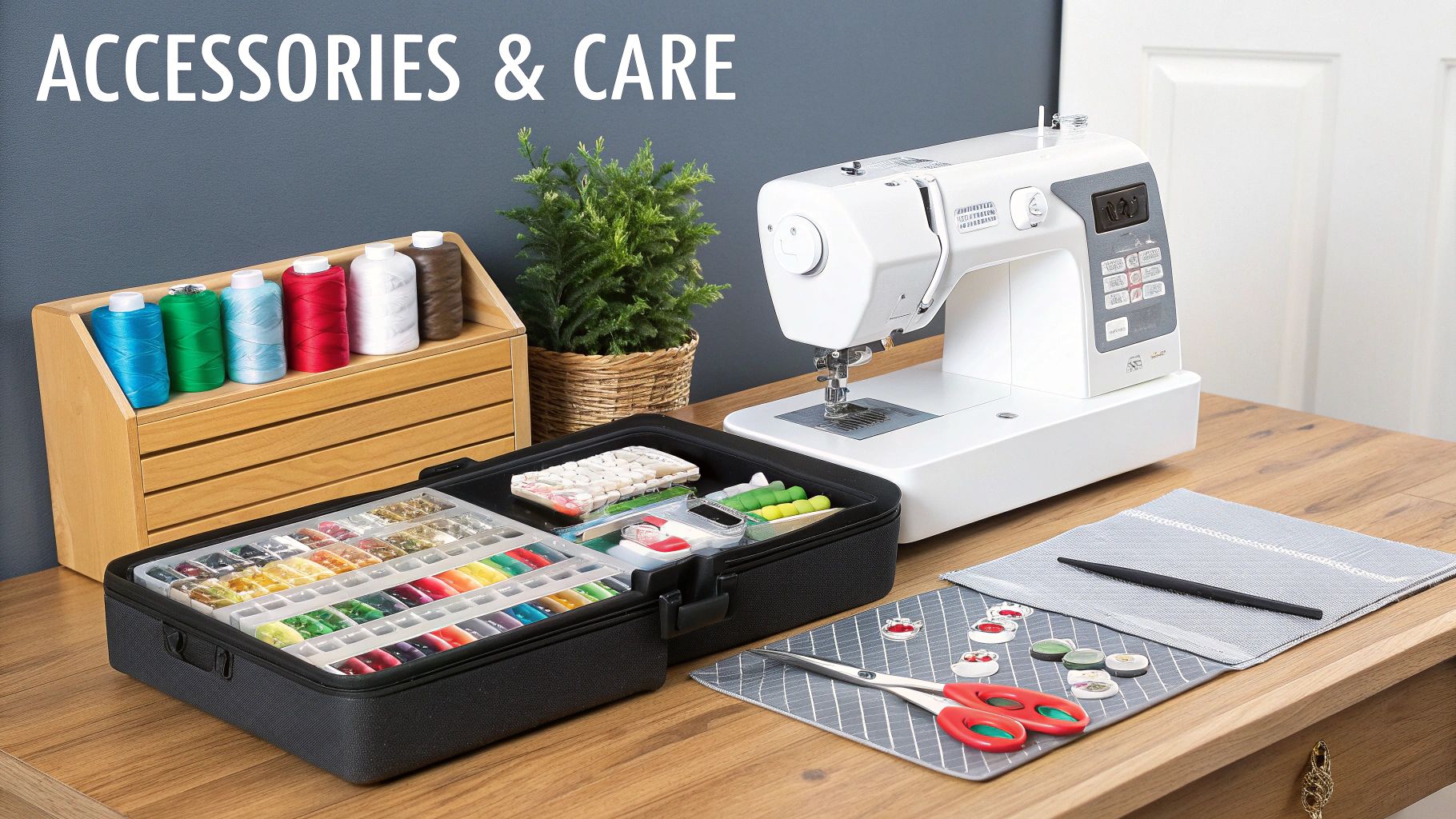
Choosing a fantastic quilting machine is a huge step, but the machine itself is only part of the story. To really get the most out of your new investment, you’ll need the right support crew—a handful of key accessories and a simple maintenance routine.
Think of it like this: your machine is the engine, but the right accessories are the high-performance tires that give you a smooth, controlled ride. They work together to turn a good quilting session into a great one, preventing frustration and helping you create beautiful, professional-looking quilts.
Must-Have Quilting Accessories
While the world of sewing gadgets is endless, a few tools are absolute non-negotiables for quilters. They’re specifically designed to help you manage bulky layers, nail those perfect seam allowances, and unlock your creative potential.
-
A Walking Foot: This is, without a doubt, the most important accessory for a quilter. It has its own little set of feed dogs on top that work in sync with your machine's feed dogs below. This ensures the top and bottom layers of your quilt sandwich move together perfectly, preventing the dreaded shifting and puckering that can ruin a project.
-
A 1/4" Piecing Foot: In quilting, accuracy is everything. This little foot has a built-in guide that makes sewing a perfect quarter-inch seam almost effortless. Consistent seams are the secret to sharp points and blocks that line up flawlessly.
-
A Darning or Free-Motion Foot: If you want to "draw" with your thread, this is your tool. The foot hovers just over the fabric, giving you the freedom to move your quilt in any direction. It’s essential for stippling, beautiful feather designs, or any other free-motion quilting pattern you can dream up.
An extension table is another game-changer. This flat surface snaps onto your machine, giving you a much larger area to support the weight of your quilt. It stops the fabric from dragging and pulling on the needle, which means better stitches and way less strain on your arms and shoulders.
Keeping Your Machine in Top Shape
Taking care of your machine isn't just about fixing things when they break; it's about preventing problems in the first place. A well-maintained machine runs smoother, stitches better, and will be your creative partner for years to come. Neglecting it is like never changing the oil in your car—sooner or later, little issues become big, expensive ones.
A clean, well-oiled machine is a happy machine. Just 15 minutes of basic care after every few projects can dramatically extend its life and save you from a mid-project breakdown.
Here’s a simple checklist to keep your machine humming along:
- De-Lint Regularly: Lint is a machine’s worst enemy. Grab a small brush and clean out the bobbin area and around the feed dogs after every 8-10 hours of sewing.
- Change Your Needle: A dull needle is the number one cause of skipped stitches and fabric snags. Make it a habit to start every new quilt with a fresh needle.
- Oil If Required: Not all machines need oiling—some are self-lubricating. Check your manual to see if, where, and how often your machine needs a drop of oil.
Even if you’re great with home maintenance, an annual professional tune-up is a must. A technician can deep-clean, adjust, and calibrate all the parts you can't reach. If you’re looking for someone you can trust, our guide on finding sewing machine service near you can point you in the right direction.
Your Partner in Quilting
We've covered a lot of ground—features, machine types, and all the essential accessories. But at the end of the day, picking the right sewing machine for quilting is a really personal decision. It comes down to your creative goals, your budget, and the kind of projects that get you excited to start sewing.
There’s no single “best” machine out there. There’s only the machine that’s best for you.
And that’s where we come in. Don’t think of us as just another store. Think of us as your quilting partner, here to help you sort through all the options and find the one machine that will bring you joy for years to come.
How We Can Help You on Your Quilting Journey
We're all about giving you hands-on advice and real-world support. Our goal is to make sure you not only find the perfect machine but also feel confident using it.
- Expert Brand Guidance: We can walk you through the subtle differences between top-tier brands like BERNINA, PFAFF, and Handi Quilter, helping you match their unique strengths to your personal quilting style.
- Professional Servicing: With over 20 years of experience, our technicians know these machines inside and out. We’ll keep your investment running like a dream so it’s always ready when inspiration strikes.
- Accessible Financing: We truly believe your dream machine should be within reach. That's why we offer flexible financing options to help make a high-quality machine a reality, no matter your budget.
- Ongoing Education: Getting a new machine is just the first step! Our classes are designed to help you build skills and master every feature your new powerhouse has to offer.
A quilting machine is an investment in your creativity. We're here to give you the personalized advice, technical support, and resources you need to make it a happy and successful one.
Once you’ve mastered your new machine, who knows? You might even find yourself exploring handmade crafts as a side hustle. Wherever your creativity leads, we’re here to support every stitch of the journey.
Frequently Asked Questions About Quilting Machines
Diving into the world of quilting machines can feel a bit overwhelming. You're comparing features, figuring out what's a "must-have" versus a "nice-to-have," and trying to make a smart investment. We get it, and we hear these questions all the time. Let's clear up some of the most common ones.
Can I Use a Regular Sewing Machine for Quilting?
Absolutely! A standard sewing machine is perfect for piecing together your quilt tops. In fact, that's where most of us start.
The challenge comes when you're ready to quilt the actual layers—the top, batting, and backing. A regular machine's smaller throat space and less powerful motor can quickly turn your creative session into a frustrating fabric-wrestling match. Dedicated quilting machines are built to handle that bulk, making the entire process smoother and a whole lot more fun.
What Is the Most Important Feature for a Quilting Machine?
If I had to pick just one thing, it would be throat space. This is the open area to the right of your needle, and it's your main workspace. Having a generous throat—think 9 inches or more—is a game-changer. It gives you the room to move your quilt around without it becoming a bunched-up mess, which is essential for smooth, even quilting on anything bigger than a lap quilt.
Other features are fantastic, of course, but you can’t get around the need for physical space.
Expert Insight: I can't tell you how many quilters have told me they didn't realize how much they were fighting their machine until they upgraded to one with a larger throat. It truly changes the experience from a struggle into a creative flow.
Do I Really Need a Walking Foot?
Yes. For quilting on a domestic machine, a walking foot is non-negotiable. Think of it as adding all-wheel drive to your machine. It has its own set of feed dogs on top that work in sync with the machine's feed dogs below, pulling all layers of your quilt sandwich through evenly.
Without it, the top fabric tends to stretch and shift, which is how you end up with dreaded puckers and pleats. A walking foot is your secret weapon for a beautifully flat, professional finish.
How Often Should I Get My Quilting Machine Serviced?
Even if you're great about cleaning out lint at home, your machine needs a professional tune-up at least once a year. A certified technician can get into all the nooks and crannies you can't, lubricating internal parts, checking the timing, and resetting the tension to perfect factory specs.
Think of it as preventative care. Regular servicing keeps your machine humming along, extends its life, and helps you avoid a major breakdown right when you're in the middle of a project.
At All About Sewing, we're more than just a store; we're your creative partners. We're here to help you find the perfect machine for your quilting journey. Explore our collection of quilting machines or stop by for a chat—we'd love to help you out with personalized advice and expert service.


