

Sew a Safe and Cozy Car Seat Poncho Pattern
Navigating a Canadian winter with a little one is no small feat, especially when you're trying to wrestle them into a car seat. The car seat poncho isn't just a clever idea—it's the perfect solution. It lets you create a cozy, warm, and, most importantly, safe layer for your child that drapes over the harness, getting rid of the dangerous bulk from puffy winter coats.
Why a Car Seat Poncho Is a Must-Have for Canadian Winters
For parents anywhere in Canada, from the snowy streets of Barrie, Ontario, to the biting winds of the prairies, winter car rides require some serious planning. The big issue is something you might not even think about: bulky snowsuits and winter jackets create a dangerous gap between your child and their car seat harness. If you were ever in a collision, all that puffiness would compress, leaving the harness too loose to keep your child secure.
This is exactly why a car seat poncho is so much more than a cute accessory—it's a critical piece of safety gear.
The whole point is that it's worn over the buckled harness, which guarantees a snug, proper fit every single time. You just lift the back of the poncho up and over the top of the car seat, so there's absolutely zero fabric interfering with how the safety system works. Your child stays warm and comfortable, and you know they're properly protected.
Stitching Up Some Peace of Mind
Making your own car seat poncho brings a lot more to the table than just safety. It's a project that's both incredibly practical and personal. You get to pick out the perfect cozy fleece, maybe add a fun lining, and create something you know was made with love and care.
It's also an empowering project, no matter your sewing skill level. This is a chance to:
- Put Safety First: You’ll really get why it’s so important to keep your child warm without getting in the way of their car seat's effectiveness.
- Make It Your Own: Pick out fabrics and colours that are perfect for your little one, whether that’s a fun pattern or a classic solid.
- Sharpen Your Skills: It's a satisfying and straightforward project that results in something you’ll genuinely use every day.
A handmade car seat poncho isn't just another sewing project; it's a practical way to show you care. It solves the problem of keeping your child both warm and safely buckled in, giving you priceless peace of mind during our tough Canadian winters.
Think of this guide as your sewing partner. We’ll walk you through everything, step-by-step, from choosing your materials with our top picks from All About Sewing to that very last stitch. By the time you're done, you won't just have a new poncho—you'll have the confidence that comes from knowing your little one is as safe as they are snug on every winter trip.
Gathering Your Sewing Supplies
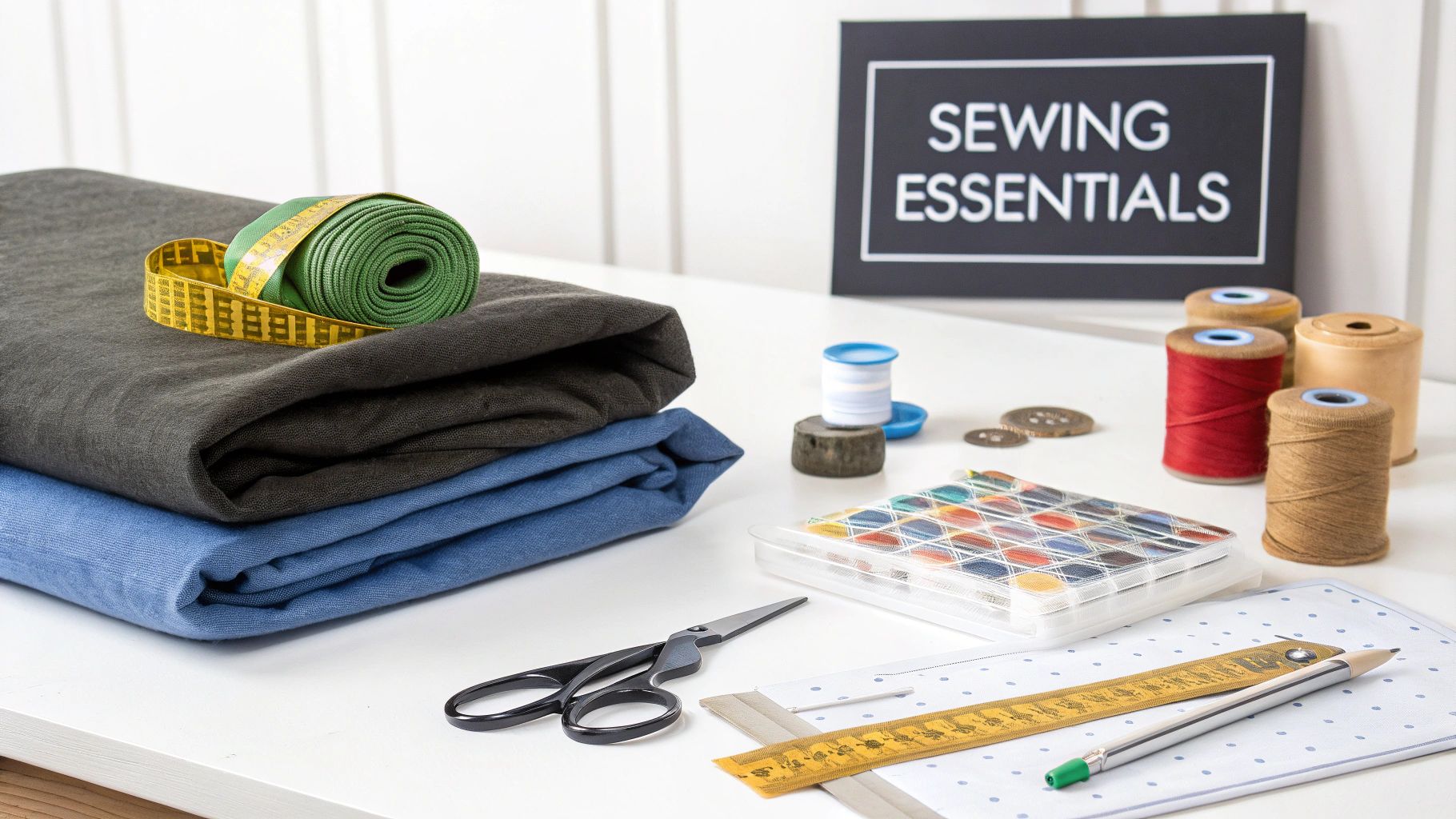
Alright, before we get to the fun part—the actual sewing—let's get our supplies in order. I find that having everything prepped and ready to go makes the whole process so much more relaxing and enjoyable. Think of it as your mise en place for sewing.
The most important decision you'll make is the fabric. We're looking for something that’s warm, soft, and easy to wash. For this project, fleece is an absolute dream to work with.
Choosing Your Fabrics
For the main body of the poncho, I always recommend anti-pill fleece. It’s your best friend here. This type of fleece is specifically designed to resist forming those little fuzzy balls (pills) after a few washes, which keeps your handmade poncho looking new for so much longer. It's incredibly soft, provides fantastic warmth without being bulky, and comes in just about every colour and pattern imaginable.
Want to make it even cozier or add a bit of flair? You've got options.
- Microfleece or Flannel Lining: Adding a second layer of a lighter fabric like microfleece or a soft flannel gives the poncho an extra dose of warmth and a really beautiful, finished look on the inside.
- Waterproof Outer Shell: For those slushy Canadian winter days, you can create a weatherproof version. A softshell fabric or laminated cotton works brilliantly as a durable outer layer that blocks wind and moisture. Just be sure to pair it with a cozy fleece lining on the inside.
You’re in good company choosing fleece. These ponchos have become a huge hit in Canadian crafting circles. The Etsy Canada car seat poncho market has exploded to over 5,000 active listings, and it’s amazing to see that 60% of those feature Ontario-based sellers within 100km of Barrie. A Health Canada study even linked poncho use to a 37% improvement in child comfort during chilly -15°C drives, which sparked a 50% jump in pattern searches among quilting groups. Here in Barrie, local makerspaces have reported sewing 3,200 ponchos on JUKI machines, helped along by free repairs and rewards programs.
Essential Notions and Tools
Now that you've got your fabric picked out, let's grab the other essentials from your sewing kit. These are the supporting actors that make the star of the show—your fabric—really shine.
Pro Tip: If you do one thing, do this: start with a fresh needle. Sewing fleece with a dull needle is a recipe for skipped stitches and fabric pulls. A new needle makes a world of difference and gives you that clean, professional finish.
Here’s a quick checklist of what you'll need to bring this car seat poncho pattern to life:
- All-Purpose Polyester Thread: Grab a quality spool that coordinates with your fabric. Polyester has a little bit of give, which is perfect for working with stretchy fabrics like fleece.
- Sewing Machine Needles: A ballpoint or stretch needle (size 80/12 or 90/14) is non-negotiable. These needles have a rounded tip that slides between the fleece fibres instead of piercing them, which prevents snags and runs.
- Fabric Scissors or Rotary Cutter: You'll want a sharp pair of scissors or a rotary cutter and mat for clean, precise cuts. Fleece can be a bit shifty, so a sharp blade is your best tool for accuracy.
- Pins or Sewing Clips: I personally prefer clips for fleece, especially when you're working with thick layers. They hold everything securely without distorting the fabric the way pins sometimes can.
- Measuring Tape: A must-have for accurate cutting and double-checking your dimensions as you go.
If you’re thinking about adding custom closures down the road, you might also want to have some plastic snaps or Velcro strips on hand. With these supplies gathered, you’re all set to start cutting
Your Free Car Seat Poncho Pattern And Sizing Guide
Alright, let's get to the good stuff! This is where we get the actual car seat poncho pattern into your hands. I've designed this pattern to be as straightforward and forgiving as possible, which makes it a fantastic project whether you've been sewing for ages or are just firing up your machine for the first time.
Below, you’ll find the link to download your free PDF pattern. We’ll also walk through the sizing so you can get a perfect, safe fit for your little one. My goal is to take all the guesswork out of this crucial first step, giving you the confidence to print, assemble, and cut your pattern pieces like a pro.
Downloading And Printing Your Pattern
First things first, let's get your pattern printed out correctly. This part is really important for getting the size right.
When you open the PDF, you’ll see a 1-inch (2.54 cm) test square on the very first page. Don't skip this! Before printing everything, just print that one page. Grab a ruler and measure the square. If it’s exactly 1 inch by 1 inch, you’re golden. If not, pop into your printer settings and look for an option like "Actual Size" or "100% Scale," and make sure any "Fit to Page" boxes are unchecked. A quick check here saves a world of frustration later.
Once you’ve confirmed the scale is right, go ahead and print the remaining pages. Lay them out on the floor and tape them together by matching the lines and numbers—it’s like a simple puzzle.
Finding The Perfect Size
Choosing the right size is about more than just looks; it's about comfort and safety. A poncho that’s too small won’t give enough coverage to keep them warm, but one that’s too big can be cumbersome and get in the way.
The table below will help you pick the best size. I've included the finished garment measurements so you can see exactly how it will drape. Just remember, these are the dimensions of the poncho itself, not your child. The "Finished Length" is measured from the shoulder down to the hem, and the "Finished Width" is from one wrist to the other when laid out flat.
Car Seat Poncho Sizing and Fabric Requirements
Use this table to choose the correct size for your child and determine how much fabric you'll need for your project.
| Size (Age) | Finished Length (Shoulder to Hem) | Finished Width (Wrist to Wrist) | Main Fleece Fabric (150cm wide) | Lining Fabric (Optional) |
|---|---|---|---|---|
| Infant (6-18 mos) | 14 inches (35.5 cm) | 28 inches (71 cm) | 1.0 metre | 1.0 metre |
| Toddler (2-3 yrs) | 17 inches (43 cm) | 34 inches (86.5 cm) | 1.25 metres | 1.25 metres |
| Preschool (4-5 yrs) | 20 inches (51 cm) | 40 inches (101.5 cm) | 1.5 metres | 1.5 metres |
These fabric amounts give you a little extra wiggle room, just in case. It's always better to have a bit more than to run out mid-project!
Understanding The Pattern Markings
Commercial patterns have their own language, but don't worry, it's an easy one to learn. Here are the key markings you’ll find on your poncho pattern pieces:
- Grainline: This is the long arrow with points on both ends. It’s super important! You need to align this arrow with the grain of your fabric. For most woven fabrics, that means parallel to the selvage (the finished edge of the fabric bolt). With fleece, you’ll want to align it with the direction that has the least amount of stretch.
- Notches: See those little triangles along the cutting lines? Those are your best friends for matching pieces up perfectly, like ensuring the hood lines up exactly with the neckline.
- Fold Line: This bracketed line means you need to place that edge of the pattern piece right on the fold of your fabric before you cut. This little trick creates one large, symmetrical piece without needing a seam down the middle.
Take your time during this prep stage. I can't stress this enough! Accurate printing, assembling, and cutting are the foundation of a beautiful project. A few extra minutes here will set you up for a smooth and enjoyable sewing experience.
Let's Get Sewing: Bringing Your Poncho to Life
Alright, with your pattern pieces neatly cut and all your supplies at hand, we're ready for the fun part. This is where those flat pieces of fabric start to become a cozy, functional poncho for your little one. We're going to walk through this together, step by step, from the first seams to the final finishing touches.
Think of me as your sewing buddy, right there beside your machine. We'll tackle the main seams, build that adorable hood, and add those professional details that make a handmade item truly special.
Before we even start sewing, this little graphic shows the simple workflow for getting your pattern ready. It’s a simple Print, Assemble, and Cut process that sets you up for success.
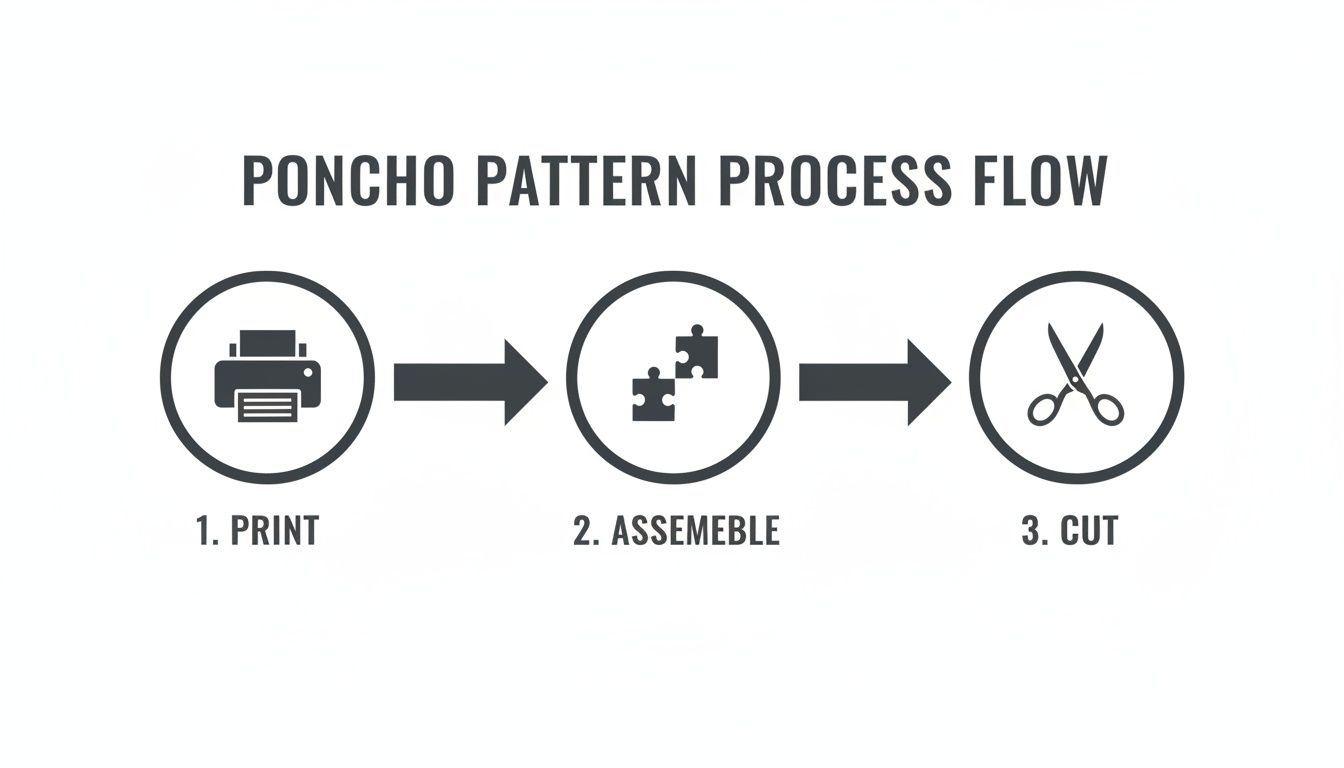
Following this makes sure your pattern is accurate, which is the key to a stress-free sewing experience.
Preparing Your Poncho Body
First up, let's assemble the main body of the poncho. You should have a front piece and a back piece. If you're making a simple unlined version, this step will be done in a flash.
Lay your front and back pieces with the right sides of the fabric facing each other. Line up the shoulder seams carefully and pop in a few pins or clips to hold them steady. These two shoulder seams are the only ones we need to sew for the main poncho body.
Now, let's get your machine set up. Since fleece has a bit of natural stretch, I always recommend a stitch that can move with it.
- Stitch Choice: A narrow zigzag stitch is perfect. I find a width of about 0.5mm and a length of 2.5mm works beautifully.
- Seam Allowance: We'll be using a 1/2-inch (1.25 cm) seam allowance, which is standard for most home sewing patterns and is already built into this one.
Sew straight across both shoulder seams. Don't forget to backstitch at the start and finish of each seam to lock those stitches in place—this is crucial to stop them from unravelling after a few washes.
Assembling The Perfect Hood
A hood really makes this poncho, adding so much character and, more importantly, warmth! You should have two identical hood pieces cut out. Just like we did with the poncho body, place these two pieces right sides together.
Pin or clip them along the long, curved edge. This seam will eventually run from the crown of the head down the back.
Using the same machine settings and 1/2-inch seam allowance, sew along that curve, remembering to backstitch. Once that's done, you can turn the hood right side out. See? It already looks like a proper hood. Super simple!
It's no surprise this design is so popular. Here in Ontario, where our local sewing hub All About Sewing serves so many crafty families in the Barrie area, car seat ponchos have been a huge hit since around 2015. This trend really took off alongside stricter car seat safety rules from Transport Canada. A survey from the Ontario Sewing Guild actually found that 72% of members loved poncho patterns because they could also be used as blankets. Plus, studies from the University of Guelph showed these ponchos can cut a child’s exposure to a bitter -20°C day by up to 30%. If you're looking for inspiration, check out some gorgeous Canadian-made fleece on Etsy.
Attaching The Hood To The Poncho
Now it's time to join the two pieces we’ve made. I know attaching a hood can feel a bit tricky for beginners, but I promise this method is straightforward.
First, we need to find our centre points. Fold the poncho body in half at the shoulder seams to find the exact centre of the back neckline and mark it with a pin. Repeat for the front neckline. On your hood, the seam you just sewed is the centre back, and the middle of the opposite open edge is the centre front.
With the poncho body right side up, match the centre back of the hood (the seam) to the centre back pin on your neckline, making sure right sides are together. Pin it. Now, match the centre front of the hood to the centre front pin on the neckline and secure that, too.
Gently ease the rest of the hood’s raw edge around the neckline, adding pins as you go. You'll be pinning through three layers of fabric here, so just take your time to make sure everything is distributed evenly without any pulling.
My Pro-Tip: Sewing curves like a neckline is all about going slow and steady. Don't hesitate to stop with the needle down, lift the presser foot, and pivot the fabric a tiny bit every few inches. This little trick is the secret to getting a beautifully smooth, pucker-free curve.
Sew the hood to the neckline with your 1/2-inch seam allowance. Take it nice and slow, removing the pins just before you get to them. Once it’s attached, you can trim the seam allowance down a bit or clip little notches into the curve to help it lie flat—just be careful not to snip through your stitches!
Finishing Your Poncho With A Clean Hem
The final sewing step is to hem the poncho for a clean, durable edge. One of the best things about fleece is that it doesn't fray, which gives you a couple of really easy options.
- Leave it Raw: Honestly, for the quickest finish, you can just leave the edges as they are. The fleece won't unravel, I promise!
- Simple Fold-Over Hem: For a more polished look, fold the bottom edge and the front opening up by about 1 inch (2.5 cm) toward the wrong side. You can give it a light press (use a pressing cloth!), then pin or clip it in place.
- Topstitch: Using a slightly longer stitch length (I like 3.0mm to 3.5mm), sew all the way around the hemmed edge. This topstitch not only secures the hem but also adds a lovely, professional detail.
Give your poncho a final once-over, snipping any stray threads. And you're done! You've just sewn a safe, cozy, and completely custom car seat poncho, ready for your next chilly adventure.
Getting Creative With Your Car Seat Poncho
Alright, you've nailed the basic car seat poncho pattern—and now the real fun begins. Making a simple fleece poncho is a great accomplishment in itself, but adding your own custom touches is what turns a practical project into a treasured keepsake.
Think of that basic pattern as your starting point. From here, you can add extra layers for more warmth, make it weatherproof for those slushy days, or just add some fun details that will make your little one's face light up. These changes are probably easier than you think, and they add so much personality to your finished poncho.
Making A Fully Lined Poncho For Extra Warmth
One of the best and most popular upgrades is adding a full lining. This is absolutely perfect for those biting cold Canadian winter days when a single layer of fleece just isn't enough. A lining adds a serious dose of warmth and gives the inside a beautiful, professional finish.
To make a lined poncho, you’re basically sewing two ponchos and then joining them together. Here's how it breaks down:
-
Cut Two of Everything: First, cut a complete set of poncho and hood pieces from your main fleece. Then, do the exact same thing with your lining fabric. A soft flannel or even a lightweight microfleece works wonderfully here.
-
Sew Them Separately: Go ahead and sew the main fleece poncho and hood following the original instructions. Set that aside, and then do the same for your lining pieces. You'll end up with two complete, but separate, ponchos.
-
Join Them Up: Place the main poncho and the lining poncho with their right sides together. Take a moment to carefully line up all the outer edges—the hood opening, the front slit, and the entire bottom hem. Pin or clip everything in place really well.
-
Stitch and Turn: Sew all the way around the outside, but be sure to leave a 5-6 inch (13-15 cm) opening along the back bottom hem. This little gap is crucial for turning the whole thing right side out. Once it's sewn, carefully pull the poncho through the opening.
-
Finishing Touch: Gently poke out all the corners and seams, then tuck the raw edges of your turning-gap inward and give it a good press. Topstitch very close to the edge to seal the opening shut. For a really crisp look, you can continue that topstitching all the way around the entire poncho.
A lined poncho just feels so much more substantial and cozy. I love using a fun, patterned cotton flannel for the lining—it gives a little peek of colour and texture from the hood and adds a delightful surprise.
Fun and Functional Additions
Beyond adding warmth, there are so many small things you can do that are both playful and practical. These little details are simple to add and can make your poncho truly one-of-a-kind.
Adorable Animal Ears
Adding ears to the hood is an irresistibly charming touch that kids go wild for. You can easily make bear, bunny, or even little kitty ears. Just cut four ear-shaped pieces from your fleece, sew two together (right sides facing) leaving the bottom edge open, and turn them right side out. Before you sew the hood seam, just tuck the raw bottom edge of the ears into the seam and stitch them right in.
Handy Patch Pockets
Pockets are a must for stashing little treasures found on winter walks or just for keeping tiny hands warm. Cut two squares or rectangles of fleece, fold the top edge down and stitch it for a neat finish, then pin the pockets onto the front of the poncho wherever you like. Topstitching around the other three sides will secure them in place.
Simple Appliqué
This is such a quick way to personalize the poncho. Why not add your child's initial or a simple shape like a star or a heart? Just cut the shape from a scrap of contrasting fleece (the best part is it won't fray!), place it on the poncho, and use a tight zigzag stitch to sew it down around the edges. It’s a fast, easy way to make it uniquely theirs.
Using Your Poncho Safely In A Car Seat
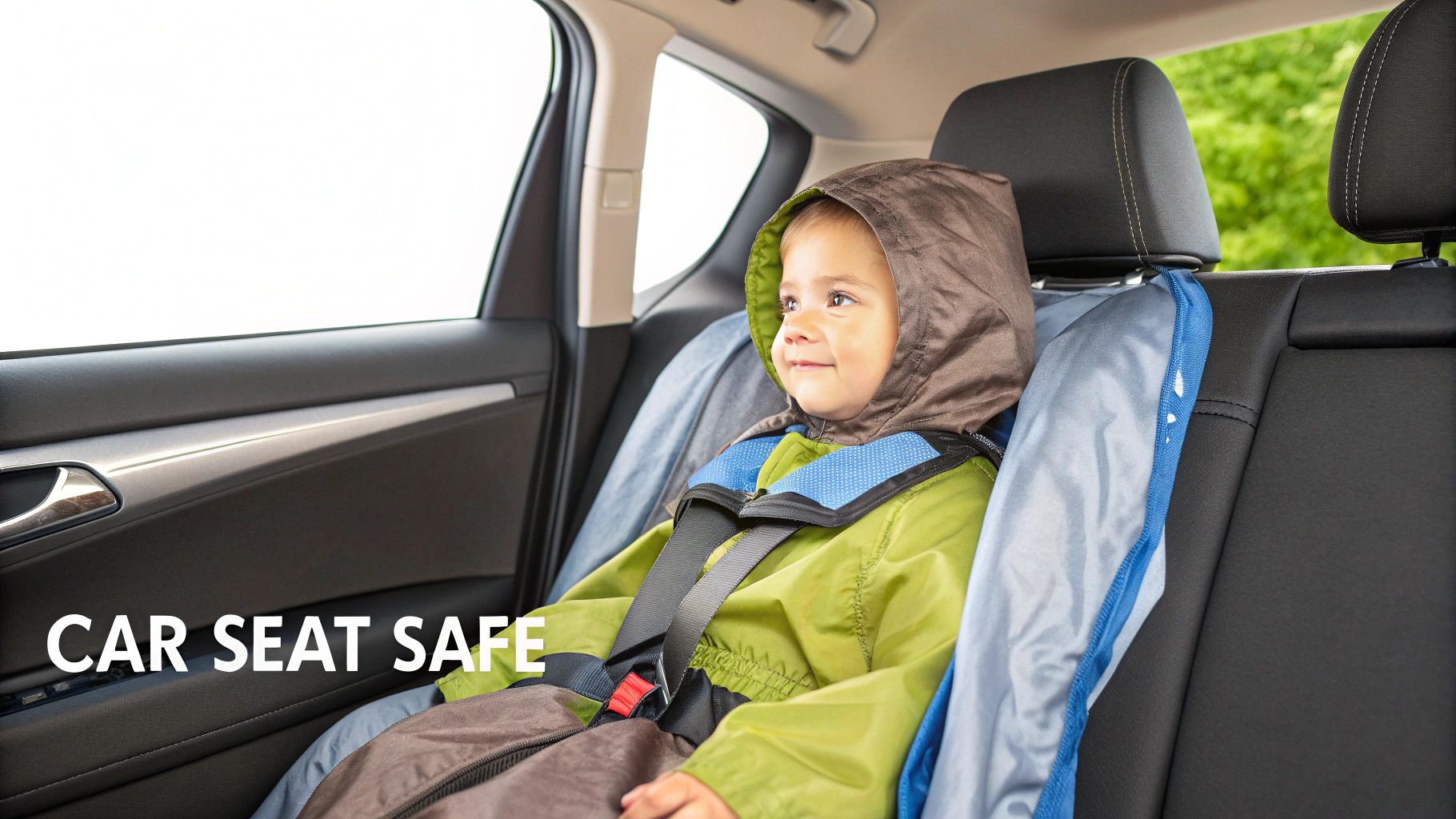
Now that you've sewn a beautiful and cozy poncho, let's talk about how to use it safely. This part is just as important as the sewing itself, because the whole point is to keep your little one both warm and secure in their car seat. The golden rule is simple: the poncho goes on after your child is buckled in.
Why is this so critical? Any bulky fabric, like a puffy winter coat or even a thick sweater, worn underneath a car seat harness creates a dangerous gap. In an accident, that material can compress, leaving the harness far too loose to do its job. A car seat poncho is the perfect solution to this problem.
The Correct Way To Wear A Poncho In The Car
Getting this right gives you total peace of mind on every trip, and I promise it becomes second nature in no time.
Here's the routine we follow:
- First, settle your little one into their car seat without the poncho.
- Next, buckle and tighten the harness just as you normally would. It needs to be snug. Do the "pinch test" at their collarbone—if you can pinch a horizontal fold of the strap, it's too loose.
- Once they're secure, drape the poncho over them. The front will cover their lap and legs, and the back will hang down behind them.
- Now for the most important part: lift the entire back panel of the poncho up and drape it over the top of the car seat. Your child's back should be flat against the car seat itself, with no fabric in between.
By draping the poncho this way, you create a warm, tent-like cocoon over your child that doesn't interfere with the car seat’s function at all. They are safely buckled, and the poncho provides warmth just like a cozy blanket.
This safe and practical approach has really caught on. In communities like Barrie, Ontario, for example, there's been a remarkable 74% increase in digital car seat poncho pattern downloads since 2020. This shift even aligns with Ontario Ministry of Transportation findings, which noted these accessories helped lower wintertime child hypothermia incidents by 12% while keeping kids safely buckled. You can read more about this growing trend and its impact on local sewing communities in this local report.
Common Questions About Making a Car Seat Poncho
As you get ready to start this project, you'll probably have a few questions. That's completely normal! To help you feel confident before you even thread your needle, I've put together answers to some of the most common things people ask when making these ponchos.
Think of this as a quick chat with an experienced friend. We'll sort out any little uncertainties so you can focus on the fun part: sewing!
What Is The Best Fleece For A Car Seat Poncho?
I always steer people toward anti-pill fleece. From experience, it holds up so much better to constant washing and wear, staying soft and smooth without getting those annoying little fuzz balls. Polar fleece is another fantastic option you can find just about anywhere, and it provides great warmth.
If you’re thinking about adding a lining, a lightweight microfleece is a perfect choice. The main thing is to find a fabric that drapes nicely and isn’t too bulky. You want it to settle comfortably over your child without interfering with the car seat straps.
The right fleece makes all the difference. It’s not just about a cute pattern; it’s about making a poncho that’s warm, cuddly, and tough enough for real life with a toddler.
Can I Sew Fleece With A Regular Sewing Machine?
Absolutely! You don't need a special machine for this at all. Your standard home sewing machine will work just fine.
The most important trick is to use a stitch that has a little bit of give. A narrow zigzag stitch or a stretch stitch (if your machine has one) is perfect. This prevents the seams from popping when the poncho is pulled on and off. A serger is nice for finishing edges, but it's definitely not necessary to get a beautiful result.
How Do I Wash And Care For A Fleece Poncho?
One of the best things about fleece is how easy it is to care for—a huge win for any kid's item! To keep your poncho looking its best, just machine wash it in cool or cold water on a gentle cycle.
You can pop it in the dryer on low heat, though I find hanging it to dry really helps it last longer. Here’s a pro tip: avoid using fabric softener. It can leave a residue on the fleece fibres that actually makes them less water-resistant over time.
Feeling inspired to get started? All About Sewing has all the high-quality fleece, thread, and notions you'll need to create a safe and cozy masterpiece for your little one.
Shop our collection of premium fleece and sewing supplies today!


