

Finding the Best Lightweight Sewing Machine in Canada
So, what exactly is a lightweight sewing machine? At its core, it's any portable model built for convenience, usually weighing less than 15 pounds (or about 6.8 kg). It’s the perfect blend of function and compact design, making it a fantastic option for anyone who sews on the go—whether for classes, travel, or simply a small living space.
What Defines a Lightweight Sewing Machine
When you hear “lightweight sewing machine,” you might imagine something a bit flimsy or basic. But that couldn't be further from the truth these days. Modern engineering has packed a surprising amount of power into these smaller frames. Think of it like a high-performance tablet versus a clunky old desktop computer; one is built for mobility, the other for raw, stationary power. "Lightweight" definitely doesn't mean "low quality."
The real magic of these machines is their portability, achieved without gutting all the features you actually need. No, it might not punch through six layers of heavy-duty canvas like a factory machine, but it’s certainly no toy.
Beyond the Number on the Scale
A truly great lightweight machine is about more than just what it weighs. It’s about smart design and a careful balance of materials. Instead of heavy steel, manufacturers often use a sturdy aluminum alloy for the internal frame to give it a solid core. The outer casing is usually made from a high-impact plastic that can take a few bumps while keeping things light.
This clever combination results in a machine that is:
- Easy to Transport: You can actually carry it to a sewing class or a friend's house without throwing your back out.
- Simple to Store: Its smaller size means you can tuck it away in a closet or on a shelf—a huge plus for anyone short on dedicated craft space.
- Surprisingly Versatile: You'd be amazed at what these little workhorses can handle. Many can sew everything from delicate silks to light denim and corduroy with ease.
It's no surprise that portable models are becoming more and more popular. The household sewing machine market in Canada, which is heavily influenced by these machines under 15 pounds, has been growing steadily. It just goes to show how much home sewists value convenience and flexibility. You can see more details about the Canadian home sewing machine market on industryresearch.biz.
A great lightweight sewing machine gives you the freedom to sew anywhere. It’s not about sacrificing capability; it's about gaining the freedom to create wherever inspiration strikes, from your kitchen table to a weekend getaway.
Ultimately, a lightweight sewing machine is a tool designed with a specific purpose in mind. It's for the sewer who needs mobility, convenience, and a machine that doesn't take over their entire home. Whether you're a student moving into a dorm, a quilter heading to a workshop, or just someone who needs a reliable machine for quick projects, a portable model offers the perfect mix of performance and practicality.
Balancing Portability with Sewing Power
When you're looking for a lightweight sewing machine, the biggest question is always about the trade-off. How do you find that perfect sweet spot between a machine you can actually carry to a class and one that won’t quit when you’re hemming a pair of jeans? This balance is truly the most important thing to figure out.
A sewing machine's weight isn't just a number on a spec sheet; it's a direct reflection of what’s inside. The internal frame, the size of the motor, and the materials used for the outer casing all add up. Get a handle on this, and you’re well on your way to making a smart choice.
Think of it like choosing a vehicle. A zippy little city car is brilliant for navigating downtown traffic and squeezing into tight parking spots. But if you need to haul a ton of lumber, you bring in the heavy-duty truck with its massive engine and reinforced steel frame. You wouldn’t ask the city car to do the truck’s job, and you can't expect a ten-pound sewing machine to power through thick upholstery leather.
Each one is built for a different purpose. A lightweight sewing machine is all about convenience and mobility, while a heavier machine is built for raw strength and tackling seriously demanding projects.
Debunking the Power Myth
It’s a common myth that all lightweight machines are flimsy or only good for mending a hem. While they aren't industrial workhorses, modern engineering has done wonders to close the power gap. The secret is all in the smart design and better materials.
Many of today's best portable machines feature a metal interior frame, often made from a strong-but-light aluminum alloy. This gives the machine a rigid skeleton, keeping all the important moving parts perfectly aligned and cutting down on vibration. It adds stability without the bulk of a full steel body, and it's what separates a reliable sewing tool from a frustrating toy.
When you pick up a machine that feels surprisingly solid for its weight, that metal frame is usually the reason why. It’s your ticket to consistent, even stitches, even when you’re sewing at a decent pace.
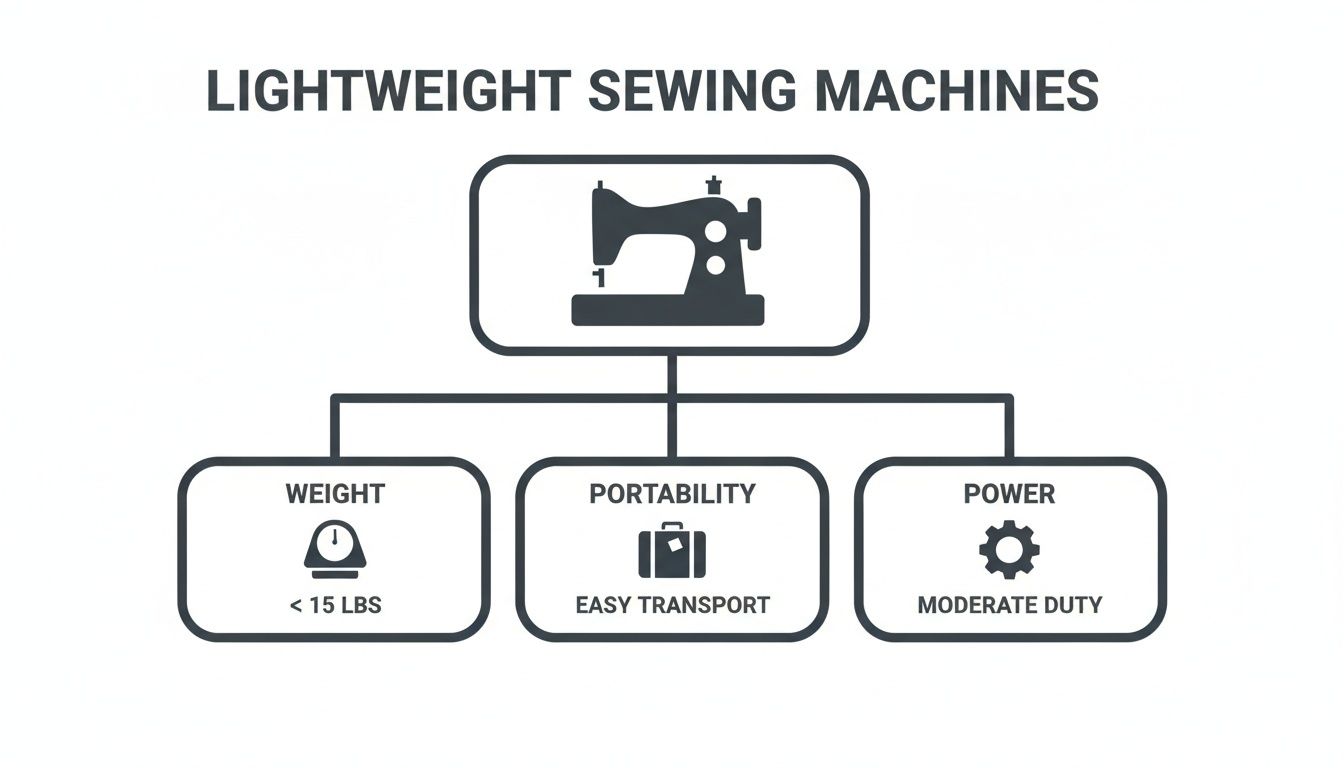
As you can see, it’s all about finding the right blend of these three elements for the kind of sewing you want to do.
The Engine Under the Hood
Besides the frame, the motor is the real heart of any sewing machine. In lightweight models, you’ll find smaller, more efficient motors designed to give you enough power without weighing things down. They don't have the brute-force torque of a heavy-duty motor, but they're more than capable of handling the fabrics you'll use for most everyday projects.
A good motor in a lightweight machine can typically handle:
- Multiple Layers of Cotton: Perfect for quilting projects where you're piecing together fabric and batting.
- Light Denim and Corduroy: You can confidently hem jeans or stitch up a corduroy skirt without the machine groaning.
- Stable Knits and Apparel Fabrics: From t-shirt jersey to breezy linen, a quality portable machine can manage most common garment fabrics.
But it’s also important to be realistic. If your dream is to sew heavy canvas totes, thick leather belts, or multi-layered upholstery, a machine weighing over 25 pounds with a beefier motor is going to be a much better, and less frustrating, choice.
To help you visualize the differences, here's a quick comparison of the main machine types.
Sewing Machine Types At-a-Glance
This table breaks down the key trade-offs between lightweight, standard, and heavy-duty machines. It's a great way to see where each type shines.
| Feature | Lightweight Machine (Under 15 lbs) | Standard Home Machine (15-25 lbs) | Heavy-Duty/Industrial Machine (25+ lbs) |
|---|---|---|---|
| Best For | Travel, classes, small spaces, beginners, light home repairs | General home sewing, garment making, quilting | Professional sewing, thick materials (leather, canvas) |
| Portability | Excellent. Easy to carry and store. | Moderate. Can be moved but not ideal for frequent transport. | Low. Designed to stay in one place. |
| Motor Power | Moderate. Handles light to medium-weight fabrics. | Strong. Handles a wide range of fabrics, including some denim. | Very High. Powers through thick, multi-layered materials. |
| Frame Material | Often a metal interior frame with a plastic exterior. | Mostly metal frame and components with a plastic exterior. | All-metal construction for maximum durability. |
| Stitching Speed | Moderate (e.g., up to 800 stitches/minute) | Good (e.g., 800-1,100 stitches/minute) | Very Fast (e.g., 1,100-5,500+ stitches/minute) |
| Key Advantage | Convenience and ease of transport. | Versatility for the average home sewist. | Unmatched power, speed, and durability. |
Ultimately, the right machine depends entirely on your projects. The table shows there's no single "best" option—just the best option for you.
For example, imagine you’re off to a quilting retreat. Your lightweight machine is a breeze to pack up and set up at your station. It will happily stitch through layers of cotton and batting all weekend long as you piece together beautiful quilt blocks. This is where a portable machine is in its element.
Now, picture trying to sew a heavy-duty waxed canvas duffel bag on that same machine. You’d likely run into skipped stitches, a strained-sounding motor, and a whole lot of frustration. It’s not a bad machine; it’s just the wrong tool for that particular job. Understanding that distinction is the key to a happy sewing life.
Essential Features for Your Portable Machine
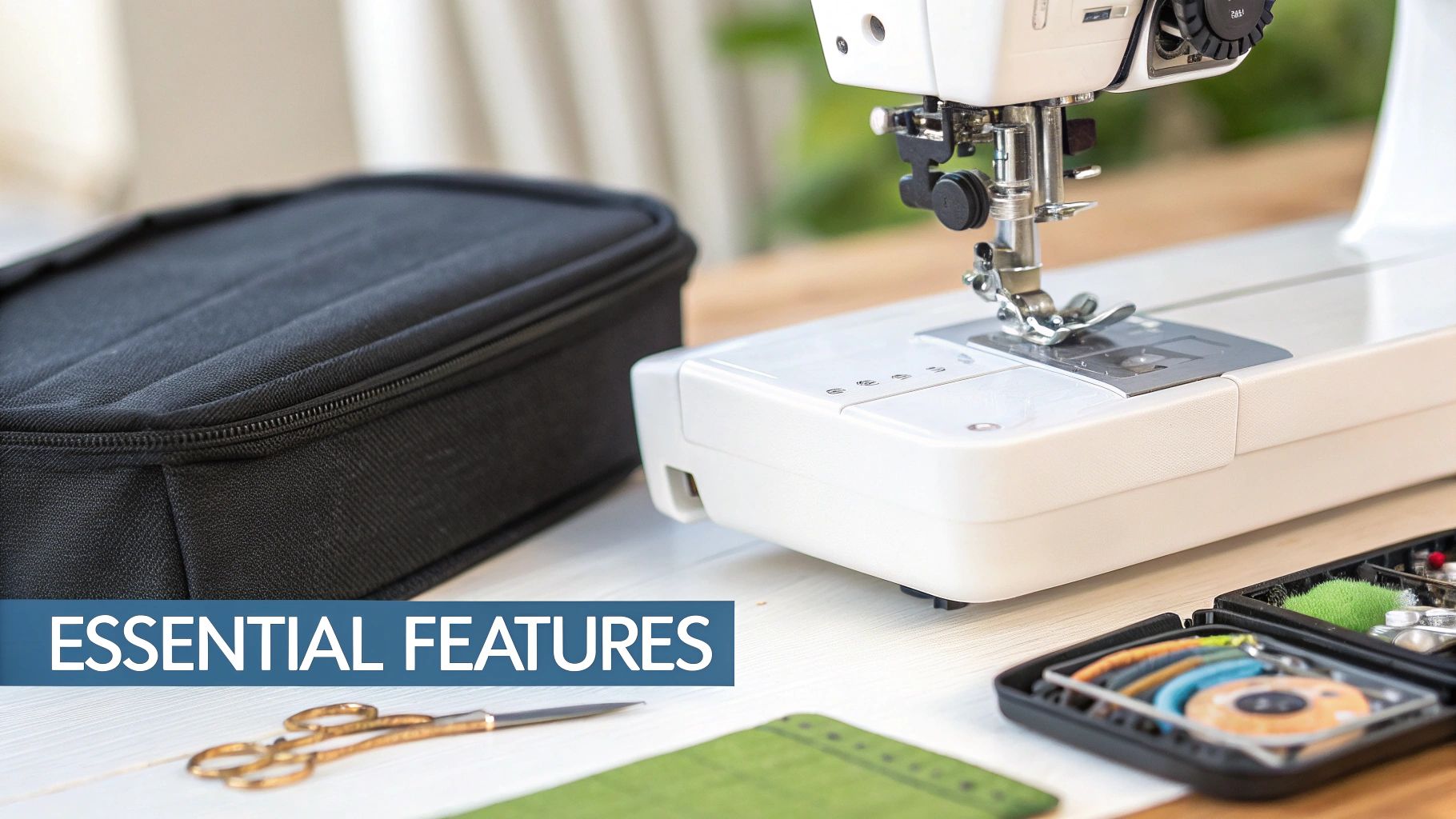
When you start shopping for a lightweight sewing machine, it’s so easy to get dazzled by flashy features and massive stitch counts. But here’s the thing: not all those bells and whistles are useful, especially when you’re after something practical and portable. Focusing on a handful of core features will mean the difference between a machine you love and one that just collects dust.
Think of it like buying a travel backpack. You don't need a thousand little pockets you'll never touch. You need strong zippers, comfy straps, and just enough room for what matters. A great portable sewing machine is built on the same idea, favouring smart design over needless complexity.
Let's dive into the practical, must-have features that actually make a difference when you need a machine you can take on the go.
Motor Power and Speed Control
A solid motor is the heart of any sewing machine, but for a lightweight model, it’s not about raw speed. What you really need is consistent piercing power and adjustable speed control. This combo gives you the muscle to push through different fabrics without the machine feeling like it’s about to rocket off the table.
Adjustable speed control is a game-changer, whether you’re a beginner just finding your rhythm or an expert tackling a tricky curve. It lets you slow things right down to a crawl for maximum precision on delicate fabrics or tight corners. Then, you can hit the gas on those long, straight seams.
This kind of control is what builds confidence and cuts down on mistakes. It’s the difference between feeling in command of your project and just trying to keep up.
The Right Stitches for the Job
It’s tempting to go for the machine that boasts hundreds of stitches, but honestly, how many will you ever use? For most projects, all you need are a few rock-solid utility stitches.
Look for a machine that absolutely nails these basics:
- Straight Stitch: This is the foundation of everything. A good machine will let you adjust the length for standard seams, basting, and topstitching.
- Zigzag Stitch: Absolutely essential for finishing raw edges to stop them from fraying. It's also your go-to for sewing with stretchy knit fabrics.
- Buttonhole Stitch: A reliable, one-step automatic buttonhole feature is a massive time-saver and makes your garments look so much more professional.
- Blind Hem Stitch: This is the secret to creating those nearly invisible hems on skirts, trousers, and curtains.
These four workhorse stitches will handle over 90% of your everyday sewing needs. A machine that does these few things perfectly is far more valuable than one that does 200 decorative stitches poorly.
The best lightweight sewing machine isn't the one with the most features; it's the one with the right features. Focus on quality over quantity to ensure your machine is a reliable partner for your creative projects.
Portable models are incredibly popular here in Canada. The Canadian sewing machine market generated USD 41.0 million in revenue and is bouncing back strong. The electric segment, which includes most lightweight designs, holds a dominant 45.12% revenue share, which just goes to show how much hobbyists and quilters value having a machine they can take to classes and retreats. You can find more Canadian sewing machine market trends on grandviewresearch.com.
Key Portability and Convenience Features
Beyond the motor and stitches, a few key details determine how easy it is to pack up your machine and use it anywhere. These are the little things that take a machine from being just "small" to being truly portable and user-friendly.
First up, a free arm is non-negotiable. By sliding off a piece of the sewing bed, you get a smaller, narrower surface that's perfect for sewing in the round—think sleeves, cuffs, and pant legs. Trust me, hemming a pair of trousers without one is a wrestling match you don’t want to start.
Another lifesaver is a built-in needle threader. This tiny mechanism saves a surprising amount of time and, more importantly, a whole lot of eye strain. Once you’ve used a machine with one, you’ll wonder how you ever managed without it.
Finally, don’t forget the accessories that make it truly portable:
- Hard Case or Cover: A sturdy case is essential. It protects your machine from dust, dings, and bumps while you're on the move.
- Onboard Storage: A little compartment for your presser feet, bobbins, and needles keeps everything tidy and ensures you don’t leave a crucial part at home.
- Good Lighting: A bright, built-in LED that shines right on the needle area is critical for accuracy and reduces eye fatigue, especially if you end up sewing in a dimly lit classroom or hotel room.
By keeping this practical checklist in mind, you can confidently pick a lightweight machine that’s not only easy to carry but also powerful and versatile enough to bring all your creative ideas to life.
Is a Lightweight Sewing Machine Right for You?
So, how do you connect the dots between a features list and what you actually do when you sew? This is the most important part of picking a machine. A lightweight sewing machine isn't just a piece of equipment; it's a partner in your creative life, and it has to fit the way you work.
To help you figure it out, let’s walk through a few real-world scenarios where these portable powerhouses really shine. By seeing how a lightweight model fits into different sewing routines, you'll get a much clearer picture of whether it’s your perfect primary machine, a trusty sidekick for travel, or if your projects really need something bigger and heavier.
Meet the Quilter on the Go
Picture Sarah, a passionate quilter who absolutely loves going to workshops and weekend retreats. She doesn’t have a massive sewing studio at home—just a small corner—but her creative ambitions are huge. For her, a heavy, stationary machine would be an anchor, tying her to one spot and keeping her from her community.
A lightweight model is her ticket to freedom. She can pack up her machine, which weighs around 12 pounds, and head to a class without breaking a sweat. But she needs more than just portability.
For quilting, Sarah’s must-haves are:
- A Wide Throat Space: She needs enough room to manoeuvre those bulky quilt sandwiches without a fight.
- An Extension Table: This is a game-changer. It clicks into place and creates a big, flat surface, stopping the weight of the quilt from pulling on the needle and messing up her stitches.
- Consistent Stitch Quality: This is non-negotiable for getting those perfectly pieced blocks and beautiful, even topstitching.
Brands like JUKI and Brother make some fantastic models that are light enough to carry but have the muscle to handle layers of cotton and batting. For Sarah, a lightweight machine isn't a compromise—it's what makes her hobby possible.
The Dedicated Sewing Student
Next up is Leo, a fashion student living in a tiny dorm room. He has to haul his machine to class twice a week for pattern-making and garment construction. Can you imagine him trying to lug a massive, complicated machine across campus? It would be a total nightmare.
Leo’s perfect machine is straightforward, reliable, and easy to move around. He couldn't care less about 300 decorative stitches; what he needs is a machine that absolutely nails the fundamentals, every single time.
His checklist includes:
- Adjustable Speed Control: This lets him slow things right down for tricky seams on slippery fabrics, which is a huge confidence booster while he's still learning.
- A Solid Metal Frame: Even in a lightweight model, a metal interior gives it the stability needed for consistent performance, project after project.
- A Free Arm: This is essential for setting in sleeves and hemming trousers—core skills he’s trying to master.
For a student like Leo, a portable, user-friendly machine like the Brother CS6000i or a similar model is the ideal choice. It delivers all the practical functions he needs for his coursework without burying him in features he’ll never use.
Choosing the right machine is all about matching its strengths to your creative process. Whether you value mobility for classes, a small footprint for your home, or simplicity for learning, the goal is to find a machine that removes barriers, not creates them.
The Apartment Crafter
Finally, let’s look at Maya. She lives in a downtown apartment where space is a luxury. She doesn't have a dedicated sewing room; her craft space is her kitchen table. When she’s done sewing for the day, her machine has to vanish into a closet.
For Maya, size and easy storage are everything. A lightweight sewing machine with a small footprint is her only real option. She loves dabbling in a bit of everything—making throw pillows, hemming curtains, and sewing simple clothes.
Her machine needs to be a versatile all-rounder. She’d look for a compact model that still has a capable motor for getting through light home decor fabrics. A hard cover is also a must-have to protect it from dust and bumps while it’s tucked away. Maya is proof that you don't need a massive space to have a fulfilling creative hobby—you just need the right tools.
Keeping Your Portable Sewing Machine in Top Shape
A lightweight sewing machine that’s always on the go faces a different kind of wear and tear than a heavy-duty model that never leaves the table. All that movement—the bumps in the road, the jostling through doorways—can affect its delicate internal parts. Proper maintenance isn't just about a quick dusting; it’s about protecting the precision that makes your machine so great to work with.
Think of it like a musician caring for their instrument. You wouldn't just toss a guitar in the boot of your car without a case, right? Your sewing machine deserves that same level of care. A little bit of consistent upkeep goes a long way in preventing small frustrations from becoming major repair jobs.
Simple Habits for a Happy Machine
The good news is you don't need to be a professional technician to handle the basics. By working a few simple habits into your routine, you can keep your machine running beautifully, whether it’s your travel companion for classes or your go-to for quick projects at home.
These three steps will make all the difference:
- Clear Out the Bobbin Area: After you finish a project or two, grab a little brush and sweep out the lint and stray threads from around the bobbin case. Lint is the number one enemy of good stitches, causing all sorts of tension headaches.
- Change Your Needle—A Lot! A new needle is your best friend for quality stitching. Seriously. Plan on swapping it out every 8-10 hours of sewing. A dull needle doesn't just make bad stitches; it can snag your fabric and even damage the machine.
- Get a Good Padded Case: If you plan on moving your machine at all, this isn't optional. A solid, padded case is what stands between your machine and a bumpy ride, protecting its alignment and timing from getting knocked out of whack.
A lightweight sewing machine that’s well cared for is a joy to use. Taking just a few minutes to clean up after a project means it will be ready to go the next time inspiration strikes, saving you from the frustration of a machine that just won't cooperate.
Knowing When to Call a Pro
Even with the best at-home care, a machine that travels will eventually need a professional tune-up. The subtle vibrations from being moved around can gradually throw off its internal timing, leading to problems that a simple cleaning can't solve.
It's probably time to book a service if you're seeing these signs:
- Stubborn Skipped Stitches: You’ve changed the needle, cleaned everything out, and it's still skipping stitches. This is a classic sign of a timing issue.
- Strange Noises: If your machine starts clunking, grinding, or making any new, loud sounds, it’s crying out for help. Don't push through it!
- Tension Troubles: You've fiddled with the tension dials endlessly, but your stitches still look messy. This often points to a need for professional calibration.
This is where an expert touch is crucial. Here at All About Sewing, our technicians bring over 25 years of brand-trained experience to the table. We know exactly what a lightweight sewing machine needs to stay in peak condition and give it a long, happy life. With our workmanship warranty, you can rest easy knowing your portable partner is in the most capable hands.
Got Questions About Lightweight Machines?
Even after wading through all the specs and features, you probably still have a few lingering questions. That's completely normal! Getting those final details sorted is what helps you go from "I think this is the one" to "I know this is the one." Let's clear up some of the most common questions I hear from sewists about lightweight machines.
Can a Lightweight Machine Actually Sew Denim?
This is the big one, and the honest answer is: it depends on what you mean by "sew denim."
Can a good quality lightweight machine hem a pair of jeans or stitch up a simple denim skirt? Absolutely. Most are more than capable of handling a couple of layers of standard-weight denim without breaking a sweat.
But what they're not built for is tackling the really tough stuff—like sewing over the thick, multi-layered flat-felled seams on a pair of heavy-duty work pants. For that kind of work, you really need to bring out a heavy-duty machine. It's like using a paring knife for chopping veggies versus needing a butcher's cleaver for tougher cuts.
What’s the Ideal Weight for Taking It on the Go?
If you plan on carrying your machine to classes, guild meetings, or sewing retreats, you'll want to find one in the 10 to 14 pound range (that's about 4.5 to 6.3 kg). This is the real sweet spot for portability.
Anything in that bracket is light enough to carry without throwing your back out, but it still has enough weight (usually from a metal internal frame) to sit firmly on the table and not vibrate or "walk" away from you while you're sewing. A machine under 10 pounds might be tempting, but it can often feel a bit flimsy and less stable.
Remember, a great portable machine isn't just about being light. It's about being a sturdy, reliable partner wherever you set up to sew. You're looking for that perfect balance between manageable weight and solid construction.
Should I Get a Computerized or a Mechanical Model?
This really boils down to your personal sewing style and what you feel comfortable with.
A mechanical machine is the classic choice. You turn dials and knobs to pick your stitches, which many people find beautifully simple and direct. They’re often easier to service and are true workhorses.
A computerized machine, on the other hand, gives you an LCD screen and push-button controls. This opens the door to a huge variety of stitches, handy features like a speed control slider, and automated one-step buttonholes. For a beginner, the push-button simplicity can be a real game-changer, while an experienced sewist might just prefer the tactile feel of a mechanical model. There's no wrong answer here!
How Often Will It Need a Tune-Up?
If you're using your lightweight machine regularly, especially if you're taking it out and about, a professional tune-up every 12 to 18 months is a smart move. Of course, you should be doing your own basic maintenance—cleaning out lint from the bobbin area and changing your needle often.
But a professional servicing goes deeper. A technician will check and adjust the timing and tension, lubricate all the right spots, and make sure everything is perfectly calibrated. It’s the best way to extend its lifespan and ensure your stitches stay flawless.
At All About Sewing, our expert technicians know exactly what your portable machine needs to stay in top shape. We can give it the professional care it deserves so it runs beautifully for years. Explore our full range of services and find your next lightweight sewing machine today at https://all-about-sewing-canada.myshopify.com.


