

How to Find a Great Seamstress Near Me
We’ve all been there. That favourite pair of jeans starts to feel a little too loose, or the dress you bought for a wedding just doesn't hang right. That’s when the hunt for a good “seamstress near me” kicks off. Finding the right person isn't just about convenience; it's about handing over a piece of clothing you love and trusting an expert to make it perfect.
Why Finding a Local Seamstress Matters
Going local for your alterations is about so much more than a quick fix. You're building a relationship with a skilled artisan who gets to know your style and how you like your clothes to fit. This personal connection is key to getting consistent, high-quality results every single time.
The Value of In-Person Expertise
You just can't beat the precision of an in-person fitting. A local seamstress can see exactly how a fabric drapes on your body, letting them pin and mark with an accuracy that a virtual chat could never match. This direct, hands-on approach is what leads to a flawless fit, whether you're just shortening the sleeves on a blazer or completely reimagining a vintage dress.
Choosing someone in your community also means you're supporting a local business. This is especially important now, as the industry that supplies these talented pros is shifting. In California, for example, the fabric and craft stores industry has been shrinking by an average of -1.2% each year between 2020 and 2025. You can read more about the North American sewing trends impacting local experts. Your support keeps their doors open.
A great local seamstress is more than a sewer; they're a fit consultant. They can look at an outfit and see its potential, suggesting tweaks you'd never have thought of to turn an awkward piece into something that looks custom-made for you.
When you find a great seamstress near you, you’ve found a partner for your wardrobe. Their skill helps you extend the life of your clothes, which is a great move for sustainability. You get to repair and perfect what you already own instead of constantly buying new. At places like All About Sewing, we see the value in these local connections every day, helping bring passionate creators and the community together.
How to Actually Find a Great Seamstress
When you're looking for someone to trust with your clothes, a quick "seamstress near me" search is just scratching the surface. To find a truly reliable pro, you need to dig a little deeper and tap into your local community. This is how you uncover the skilled artisans who are famous for their work, not just their online ads.
Your first move is still online, but it's about being smart with your search.
Get Specific With Your Google Search
Think about exactly what you need done. A simple hem is one thing, but a delicate vintage dress or a tailored suit? That requires a specialist. Refining your search from the get-go will connect you with people who have the right skills for your specific job.
For instance, searching "wedding dress alterations" will bring up a totally different set of experts than "leather jacket repair." The same goes for "custom suit tailor" versus "curtain hemming." Being precise weeds out the generalists and points you directly to the right professional, saving you a ton of time.
Ask Around in Your Local Circles
Honestly, some of the best seamstresses are found through simple word-of-mouth. These are often the hidden gems with decades of experience and a long list of happy clients—people known for their incredible craftsmanship, not their marketing budget.
Tapping into your local network is probably the most reliable way to find someone you can trust. A personal recommendation says more about quality and service than any online ad ever could.
Start by asking for names in places where people share community info. Think local Facebook groups, neighbourhood forums, or even just asking that friend whose clothes always fit perfectly. These recommendations come from real, positive experiences.
Check With Other Sewing-Related Businesses
Another fantastic strategy is to go where the sewing pros hang out. Your local fabric stores and sewing machine repair shops are absolute goldmines for this kind of information.
The staff at these places deal with skilled sewers all day, every day. They know who’s buying professional-grade supplies or who brings their machine in for constant tune-ups because they're running a busy business. Shops like All About Sewing often keep a list of trusted professionals they can refer you to for all kinds of alterations and custom work.
By talking to these local insiders, you get a vetted referral from someone who actually knows the industry. They can point you to a seamstress whose skills are the perfect match for what you need, helping you find a go-to person for all your future garment fixes.
How to Choose the Right Seamstress for Your Project
Okay, so you’ve got a list of names from your "seamstress near me" search. Now for the important part: figuring out who’s actually the right person for the job. This is where you dig a little deeper than just a business name and a phone number to find a pro whose skills line up with what you need.
The first thing I always look at is their portfolio. Any serious seamstress will have a gallery of their work, either online or in a physical album you can flip through at their shop. You’re looking for proof they can handle your specific project. If you need a wedding dress altered, you want to see photos of stunning bridal work, not just a bunch of simple pant hems.
Next, I dive into the customer reviews. Don’t just rely on the testimonials they post on their own website. Check out what people are saying on Google, Yelp, and even local Facebook groups. I pay close attention to comments about their communication, how long things took, and—most importantly—the quality of the final fit. When you see consistently great feedback across different sites, that’s a really good sign you’ve found someone reliable.
This flowchart breaks down the basic paths you can take to narrow down your options.
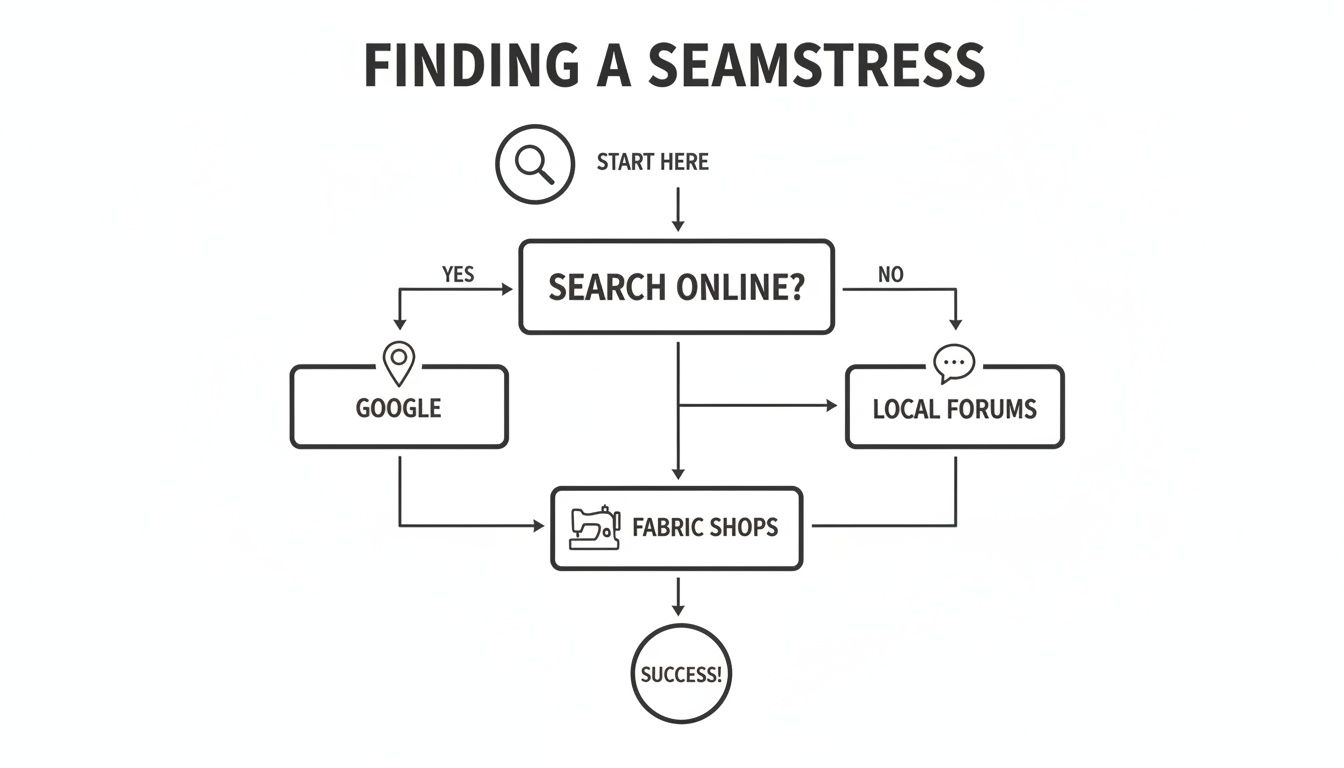
As you can see, whether you start your hunt online or by asking around town, the goal is always to vet your candidates until you land on a true professional.
Matching Their Specialty to Your Needs
Here’s something a lot of people don’t realize: not all seamstresses do the same kind of work. The skills are often highly specialized. The tailor who’s a genius with structured wool suits might not be the best person to trust with a delicate, beaded silk gown.
Think about the garment you need help with.
- Delicate Fabrics: If you have something made of silk, chiffon, or lace, you need an expert with a light touch who knows how to prevent snags and puckering.
- Heavy-Duty Materials: Working with leather, denim, or thick canvas requires industrial-strength machines and special needles. It's fair to ask if they have the right equipment.
- Structured Garments: Tailoring a blazer or formalwear is a whole different ball game. It involves shaping pads, interfacing, and lining—a very specific skillset.
Choosing a seamstress is like hiring any other skilled tradesperson. You wouldn't ask a plumber to do your electrical work. Matching their expertise to your garment is the key to avoiding a costly mistake.
A Quick Look at Common Alterations and Costs
To give you a clearer idea of what to budget for, here’s a quick rundown of some common services and what you might expect to pay in Canada. Keep in mind that prices can vary based on your location, the complexity of the job, and the seamstress's experience.
Common Alteration Services and What to Expect
| Service | Description | Estimated Price Range (CAD) |
|---|---|---|
| Hemming Pants/Trousers | Shortening the length of trousers, jeans, or pants. | $15 - $35 |
| Taking in a Waist | Adjusting the waistband on skirts, pants, or dresses for a snugger fit. | $25 - $50 |
| Shortening Sleeves | Shortening the sleeves on a shirt, blouse, or jacket. Cuffs add complexity. | $20 - $45 |
| Tapering a Shirt/Blouse | Slimming the sides of a shirt or blouse for a more fitted look. | $30 - $60 |
| Replacing a Zipper | Replacing a broken zipper on pants, skirts, or jackets. | $25 - $50+ (plus cost of zipper) |
| Bridesmaid Dress Alterations | Common adjustments like hemming, taking in the bust/waist, and strap length. | $75 - $200+ |
| Wedding Dress Alterations | Highly complex, often including hemming multiple layers, bodice work, and adding a bustle. | $400 - $1,000+ |
This table should help you set realistic expectations before you even make the first call.
Key Questions to Ask Before Committing
That first phone call or visit is your chance to get a feel for their professionalism and make sure you’re on the same page. Coming prepared with a few smart questions can save you a lot of headaches down the road.
Here are a few questions I always recommend asking:
- What’s your typical turnaround time for a job like this? This is crucial, especially if you’re on a deadline for an event. Timelines can get crazy during busy seasons like prom or the summer wedding rush.
- Can you give me a ballpark price? They won’t be able to give you a firm quote without seeing the garment, but any experienced pro should be able to provide a rough price range for standard alterations.
- How does your fitting process work? You’ll want to know how many fittings to expect. For anything complex, you should plan for at least two fittings to get it perfect.
- Do you have experience with [your specific fabric or style]? Don’t be shy! Asking directly if they’ve worked with, say, vintage lace or leather will give you immediate peace of mind.
- What’s your policy if I’m not happy with the final result? A reputable seamstress will always stand by their work and should be willing to make small adjustments to ensure you’re satisfied.
Getting clear, confident answers to these questions is how you find someone you can trust to deliver the quality your favourite clothes deserve.
Getting Ready for Your Alteration Appointment
Think of a great alteration as a team effort between you and your seamstress. When you show up prepared, everything runs smoother, you save time, and you help the professional nail your vision. The end game? A piece of clothing that fits precisely how you dreamed it would.
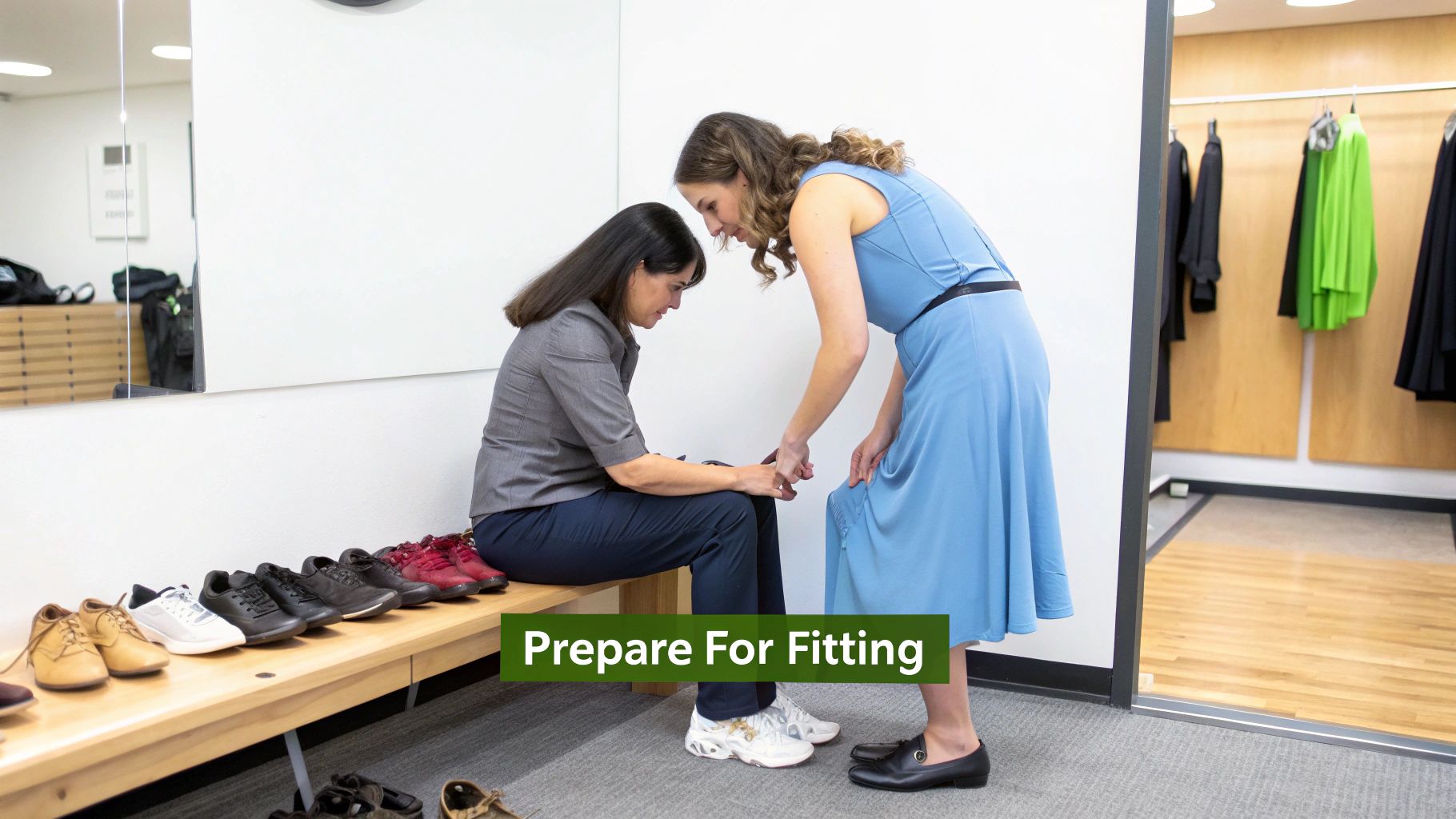
This prep work starts before you even walk out the door. You're essentially setting the stage for your outfit's big debut.
What to Bring to Your Fitting
To get that perfect fit, showing up with the right items is absolutely essential. Your seamstress needs to see the complete picture of how you'll wear the garment, which means bringing along all the crucial accessories.
- Your Shoes: This one's the biggie. Your shoe height completely changes the hemline of pants, skirts, and dresses. If you bring the exact pair you plan to wear, the seamstress can mark the length with pinpoint accuracy.
- Your Undergarments: What you wear underneath makes a huge difference. The specific bra, shapewear, or slip you have in mind can alter how a garment hangs and drapes on your body. Wearing them to the fitting ensures the final alterations work with their shape and support, not against them.
Forgetting these key items usually means you’ll have to come back for a second appointment just to get measured, which can push back your timeline.
Prepping Your Garment (and Your Ideas)
Beyond the accessories, a couple of other things will help you make the most of your time with the sewing pro. First, please make sure the garment you bring in is clean. It’s unhygienic for the seamstress to work on soiled clothing, and dirt or stains can sometimes even affect how the fabric handles.
A fitting is a conversation. Don't be afraid to speak up and be specific. A good seamstress wants to understand your vision, not guess what it is. Clearly explaining that you want a "sharper taper on the leg" or "a bit more room in the shoulders" is incredibly helpful.
Take a moment to think about how you want the final piece to look and feel. Found some inspiration photos on Pinterest? Bring them! The more clearly you can explain your goals, the better. Instead of a vague, "I want it to fit better," try something more descriptive, like, "I'd love for the waist to be more defined, but I still need to be able to sit down comfortably."
This is the kind of detail a professional needs to deliver results you'll be thrilled with. When you prepare, you're not just a client—you're a collaborator. That partnership is the fastest route to walking out with a garment that feels like it was made just for you.
Speaking the Language: A Quick Guide to Sewing Terms
Ever walked into a fitting and felt like you were trying to order coffee in a foreign country? You know what you want, but you just don't have the words. Getting on the same page as your seamstress is the first step to a perfect fit, and knowing a few key terms makes all the difference.
When you need to shorten your pants or a dress, the word you're looking for is hem. It’s easily the most common alteration out there. But a hem isn't just a hem. The finish has to match the garment. A sturdy pair of jeans needs a tough, durable stitch, while a delicate silk blouse requires a light touch and a tiny, almost invisible seam to keep it looking elegant.
Common Terms for the Perfect Fit
Beyond just hemming, there are a few other words that will pop up when you're talking about shaping a garment to your body. These are the adjustments that transform an item from "it's okay" to "it was made for me."
- Taking In: Simply means making a garment smaller. If a dress is gaping at the back or too loose in the waist, the seamstress will "take it in," usually along the existing seams.
- Letting Out: The exact opposite. If something is a bit too snug, a seamstress can check the seam allowance for extra fabric that can be "let out" to give you a little more breathing room.
- Dart: See those small, tapered folds in a blouse or the back of a skirt? Those are darts. They’re crucial for giving a garment shape and making it follow the body's natural curves.
- Inseam: This is the measurement that runs from the crotch down to the bottom of your pant leg. It’s the number you need to know when you're getting trousers or jeans hemmed.
Using these terms helps you clearly explain what you're looking for. It ensures that when you find a professional after searching "seamstress near me," you both start the project with the same vision.
A clear conversation is the foundation of a great alteration. Saying, "I think we need to take in the waist and maybe add a small dart at the bust," gives your seamstress a perfect roadmap.
The Tools of the Trade
Of course, all the skill in the world needs the right equipment to back it up. A professional's workspace is more than just a needle and thread; it’s filled with specialized tools and industrial machines designed for every type of fabric, from whisper-thin chiffon to rugged leather.
The U.S. industrial sewing machine market, which is projected to reach USD 472.62 million by 2025, shows just how critical this equipment is. You can learn more about the U.S. industrial sewing machine market on straitsresearch.com. In high-production states like California, top-tier machines from brands like PFAFF and JUKI are essential for keeping up with demand and producing quality work—the same kind of professional-grade equipment we rely on at All About Sewing.
This investment in professional gear is what separates an amateur from an expert and allows a seamstress to deliver flawless, long-lasting results every single time.
Got Questions About Local Alterations? We’ve Got Answers.
Walking into a seamstress's shop can feel a little intimidating if you've never done it before. What should you ask? What's a fair price? How long will it take? It's completely normal to have these questions.
Let's clear things up so you can feel confident when you search for "alterations near me" and know exactly what to expect.
What’s a Realistic Turnaround Time?
One of the first things people wonder is, "How long will this actually take?" For straightforward jobs like hemming a pair of pants or taking in a simple dress, you can generally expect a turnaround of one to two weeks.
But that's just a starting point. If you're bringing in something more complex, like a lined suit jacket or an intricate formal gown, the work will naturally take longer. Life also gets in the way—things can get seriously backed up during peak seasons. Think prom time in the spring or the height of summer wedding season. During those busy periods, even a simple hem might take three or four weeks.
A Quick Tip: Always ask about their current wait times right at the beginning. If you need that outfit back for a specific event, let them know upfront. A good seamstress will tell you honestly if they can meet your deadline.
How Much Should I Budget for Alterations?
There's no single price list for sewing, and costs can swing quite a bit depending on where you live, the seamstress's experience, and of course, how tricky the job is.
That said, here are a few ballpark figures to give you a rough idea of what common alterations might cost:
- Simple Pant Hem: You're likely looking at somewhere between $15 and $25.
- Taking in a Lined Blazer: This is a much more involved job, so the price could be anywhere from $50 to $100+.
- Bridesmaid Dress Alterations: These often require multiple tweaks, so plan for a range of $75 to $200.
Any professional will be happy to give you a firm quote once they've seen the garment in person. Don't be afraid to ask for it before you agree to anything.
What if I’m Not Happy with How It Turned Out?
It happens. Sometimes an alteration just doesn't feel right when you put it on. The absolute best thing you can do is speak up politely and immediately—before you even leave the shop.
Always try on your altered garment for a final check. A reputable seamstress wants you to be happy and will almost always be willing to make small adjustments to perfect the fit. Show them exactly what's bothering you, whether a seam is pulling strangely or it’s still a bit too loose in the shoulders. It’s always easier to fix it on the spot.
Ready to get that perfect fit? The team at All About Sewing has over 25 years of experience and is ready to help with everything from simple hems to complex custom work. Visit us today for an expert consultation!


