

Sewing Summer Dresses Patterns From Start to Finish
Welcome to the incredibly rewarding world of making your own clothes. Picking out the perfect summer dress pattern is the first, most exciting step in a creative journey that lets you express your unique style in a way that store-bought clothes never can. Consider this guide your personal roadmap to sewing a dress you'll absolutely love.
Your Journey to Sewing the Perfect Summer Dress
There’s nothing quite like the feeling of wearing something you made with your own hands—a dress that fits you perfectly and reflects your personal taste down to the last stitch. A summer dress is a fantastic project for any sewist. It’s a chance to turn a beautiful piece of fabric into a three-dimensional garment that tells a story, whether you're a beginner making a simple sundress or a seasoned pro tackling a more intricate design.
This guide is here to help you do more than just choose a pretty picture on a pattern envelope. We're going to dive deep into how to turn your vision into a real, wearable piece of clothing, building your skills and confidence along the way. Think of this as having an experienced sewing friend by your side, ready to help you navigate every decision.
What You Will Learn
My goal is to give you the practical, real-world knowledge you need to succeed. We'll cover everything from figuring out what all those pattern markings mean to making those final little tweaks for a perfect fit.
Here’s a sneak peek at what we'll cover together:
- Understanding Silhouettes: We’ll break down the different styles, from classic A-lines to breezy wrap dresses, so you know exactly what you’re looking for.
- Matching Patterns to Your Skills: You’ll learn how to pick a project that’s challenging enough to be fun but not so difficult that it becomes frustrating.
- Choosing the Right Fabric: We'll explore the best materials for creating light, comfortable summer dresses that drape beautifully.
- Mastering the Fit: I’ll demystify common alterations and fitting adjustments to help you get that custom-made, flattering look.
By the end of this guide, you won't just have a new dress. You'll have a whole new set of skills and the confidence to take on any sewing project that catches your eye.
This is about more than just seams and stitches; it's about the pure joy of creating. So, let’s get started by exploring the basic building blocks of summer dress patterns to help you find the perfect style for your next project.
Finding Your Perfect Summer Dress Style
Before you even touch a piece of fabric, the real starting point of any sewing project is picking the right silhouette. Think of a sewing pattern as the blueprint for your dress. It dictates the fundamental shape and feel of the final garment, making it the most critical decision you'll make right at the beginning.
With so many styles out there, it can feel a bit overwhelming, almost like learning a new language. But don't worry. We'll break down the basics one style at a time. Once you get a feel for a few core silhouettes, you'll be able to spot the patterns that not only match your vision but also make you feel fantastic.
A Guide to Summer Dress Silhouettes
Let's walk through some of the most popular and well-loved shapes you’ll come across. Each one has its own unique personality and fit, perfect for different summer moods and occasions. To make it even easier, here's a quick-reference table to help you compare the most common styles at a glance.
| Silhouette Style | Key Characteristics | Best For Body Shapes | Common Fabric Pairings |
|---|---|---|---|
| A-Line | Fitted at the bust, then flares out gently to the hem, resembling the letter 'A'. | Universally flattering; great for pear and hourglass shapes. | Cotton poplin, linen, chambray, rayon challis. |
| Sheath | A straight, form-fitting cut that follows the body's natural curves without a defined waist. | Best for rectangle or hourglass shapes; can be altered for most. | Ponte knit, crepe, stable cottons like sateen. |
| Wrap Dress | Wraps across the body, tying at the side or back to create a V-neck and defined waist. | Excellent for almost all body types due to its adjustable fit. | Jersey knit, rayon, silk, soft cottons. |
| Tiered Maxi Dress | Features horizontal panels (tiers) that increase in width, creating a full, flowing look. | Works well for all shapes, offering a relaxed and forgiving fit. | Voile, gauze, lightweight cotton, viscose, rayon. |
This table gives you a great starting point, but let’s look a little closer at what makes each of these styles special.
-
The A-Line Dress: This is a true classic for a reason. Just picture the letter 'A'—it's snug through the shoulders and bust before gracefully flaring out towards the hem. It’s a go-to for so many sewists because it skims right over the waist and hips, creating a beautiful, balanced shape that’s incredibly easy to wear.
-
The Sheath Dress: For something a bit more sleek and tailored, the sheath is your answer. This style is cut to follow your natural curves, often using darts for shaping. It’s like a blank canvas, making it the perfect choice to show off a stunning fabric print or to dress up for a special summer evening.
-
The Wrap Dress: The wrap dress is pure genius. It’s designed to wrap one side over the other and tie at the waist, which creates a flattering V-neckline. People love this style because it cinches you in at the smallest point and offers a wonderfully customizable fit, making it both comfortable and chic.
-
The Tiered Maxi Dress: If you’re chasing that breezy, bohemian vibe, nothing beats a tiered maxi. It’s built with horizontal panels of fabric, or "tiers," that get wider as they go down the dress. The result is a wonderfully voluminous and flowing garment that’s an absolute dream for staying cool on the hottest of days.
A pattern’s line drawing is your most honest guide. It strips away the styling and fabric choice on the cover photo, showing you the true shape and seam lines of the garment you are about to create.
Beyond the Silhouette: Key Design Elements
Once you've settled on a general shape, it's the smaller details that really bring a dress to life. Things like necklines and sleeves have a huge impact on the final look and feel of your garment. A simple scoop neck, for example, gives off a casual, open vibe, while a V-neck can create the illusion of a longer torso.
Sleeve choices are just as important. Cap sleeves give you just a bit of shoulder coverage, puff sleeves can add a touch of romance, and a sleeveless design is the ultimate choice for keeping cool. As you browse summer dresses patterns, notice how these elements work together. This focus on combining comfort with style is a big deal in the fashion world, too. In fact, the demand for relaxed yet stylish summer dresses has become a major driver in the Canadian women's apparel market, which was valued at USD 33,882.94 million in 2023 and is expected to keep growing. You can discover more insights about Canadian apparel retail forecasts to see how these trends are shaping the industry.
Matching a Pattern to Your Sewing Experience
The most exciting part of any sewing project is picking the pattern, but it's also where things can go sideways. The real secret to a fun, successful project—not a frustrating one—is choosing summer dresses patterns that match where you are right now in your sewing journey.
Think of it like learning to bake. You wouldn't tackle a complex, multi-layered cake for your very first project. You'd start with simple cookies to get the hang of it. Sewing is exactly the same. Starting with a pattern that helps you build confidence one seam at a time is the best way to grow your skills and actually enjoy the process.
Patterns for the Beginner Sewist
If you're just starting out, the name of the game is mastering the fundamentals: sewing a straight line, finishing your seams so they don't fray, and getting a good, crisp press with your iron. The best beginner patterns are designed to let you focus on just that, without throwing a bunch of confusing steps at you.
Look for patterns with these tell-tale signs of being beginner-friendly:
- Minimal Pattern Pieces: Less to cut, less to pin, and fewer seams to line up. Simple.
- Simple Silhouettes: Think A-line or shift dresses. They have straightforward lines and a forgiving fit, which is a huge plus when you're learning.
- No Complex Closures: For now, steer clear of zippers and buttonholes. A simple pull-on dress, maybe with an easy elastic waist, is the perfect place to start.
When you're browsing, keep an eye out for patterns labelled "easy," "quick sew," or "beginner." These are your best friends. They're designed specifically to help you create something beautiful and wearable without the headache, building a solid foundation for your skills.
Levelling Up to Intermediate and Advanced Patterns
Once you've got a few simple projects under your belt and you feel like you and your sewing machine are on good terms, it's time to branch out. Intermediate patterns are where you start adding some really cool techniques to your sewing toolkit.
This is where you'll start to see fun challenges like:
- Set-in Sleeves: This takes a bit of patience, as you have to gently ease a curved sleeve into the armhole without any puckers.
- Princess Seams: These are long, curved seams that run down the front of a dress, creating beautiful shaping over the bust and waist.
- Zippers and Linings: Adding these gives your handmade clothes a much more professional and polished finish.
Advanced patterns are for the sewist who's ready for a true challenge. We're talking couture-level details, tricky fabrics like silk or chiffon, and a lot of fine-tuning to get the fit just right. These are the projects that really let you show off your skills.
Sometimes, just deciding on a style can be the hardest part. This little decision tree can help you get started.
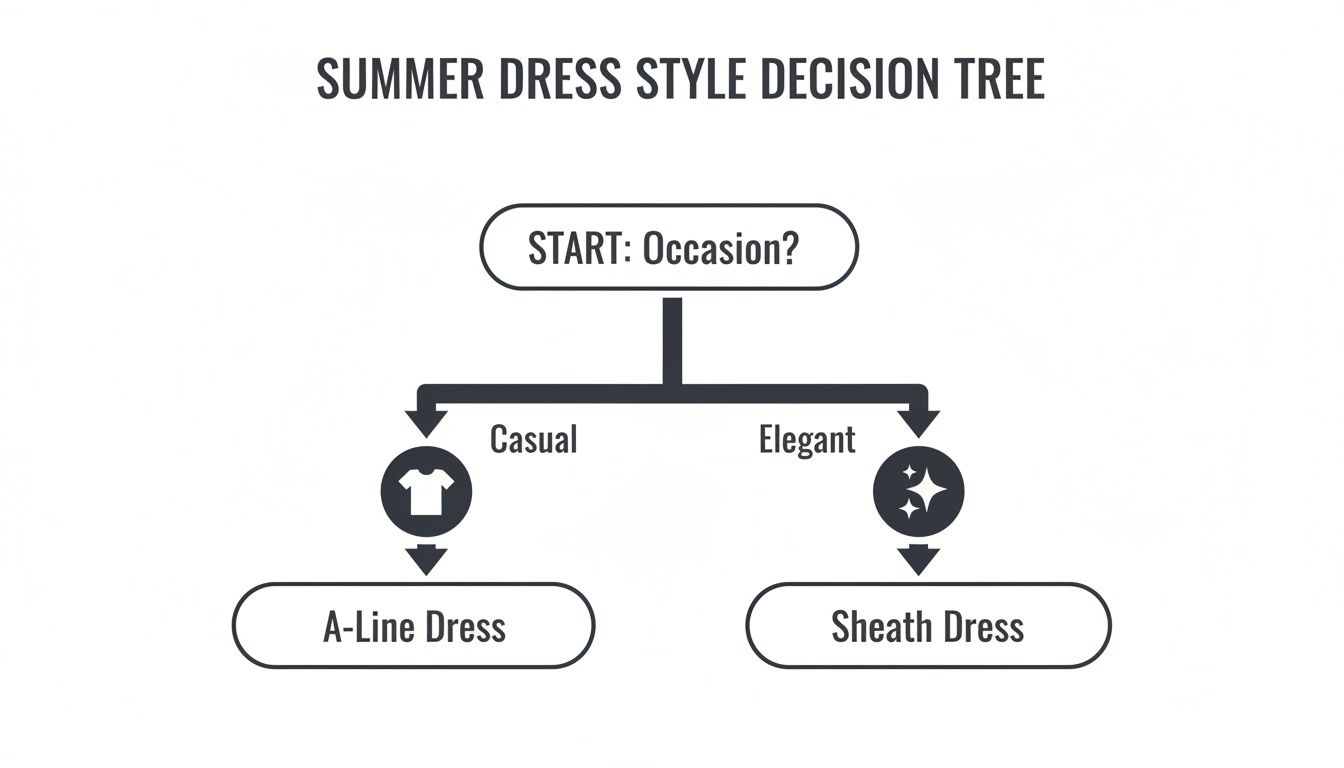
It’s a simple visual guide. Thinking about whether you need a dress for a casual brunch or a more elegant evening can instantly point you toward a great starting silhouette, like a breezy A-line or a classic sheath dress.
2. Choosing the Right Fabric for Your Dress
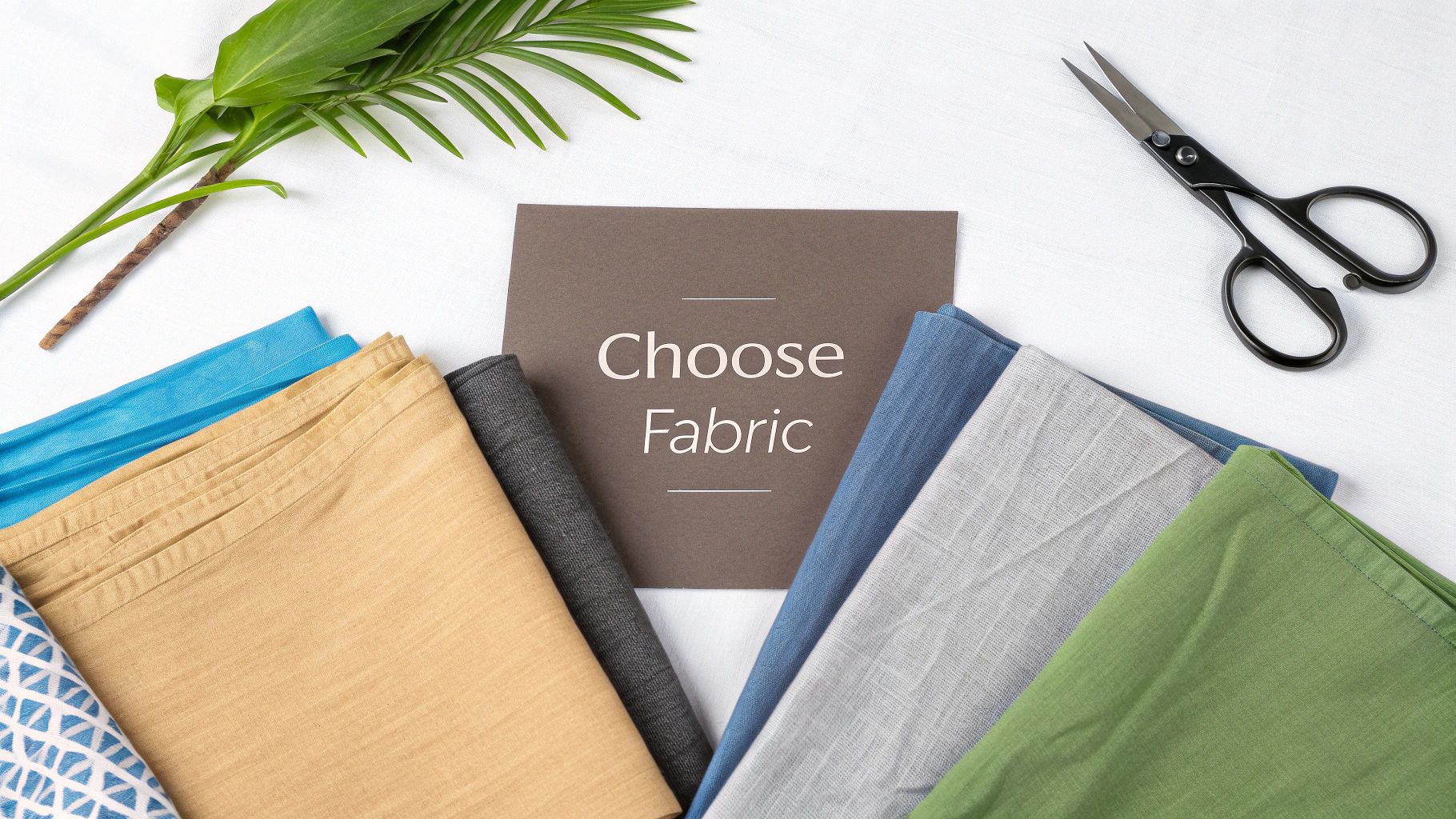
If your pattern is the blueprint for your dress, the fabric is what brings it to life. This choice is a big one. The right fabric can make a simple dress feel incredible, while the wrong one can turn a beautiful design into something that just doesn't hang right or feels uncomfortable in the heat.
For summer sewing, it's all about breathability and drape.
You’ll want to stick with natural fibres as much as possible. Think of them as your dress's built-in air conditioning—they let air flow freely, which is exactly what you need on a sticky summer day.
This isn't just a niche hobbyist trend, either. People are actively seeking out comfortable, stylish clothes. In Canada, retail apparel sales recently jumped 9.3% in just seven months, with women's clothing specifically climbing 9.1%. A big part of that growth came from younger shoppers looking for those breezy summer dresses patterns made from lightweight fabrics. You can read the full analysis on Canadian retail spending to see the data for yourself.
Top Fabrics for Summer Dresses
Stepping into a fabric store can feel a little overwhelming with all the choices, but you can confidently narrow your search by focusing on a few summer superstars. Each one has its own personality and works best for different styles of summer dresses patterns.
To make it easier, here’s a quick guide to my go-to summer fabrics.
| Fabric Type | Key Characteristics | Best For These Patterns | Sewing Difficulty |
|---|---|---|---|
| Cotton | Breathable, versatile, easy to sew. Comes in many weights (voile, lawn, poplin). | Structured A-line dresses (poplin), floaty maxi dresses (voile), everyday shirt dresses (lawn). | Beginner-Friendly |
| Linen | Highly breathable, gets softer with each wash, has a beautiful natural texture. Wrinkles easily. | Simple shift dresses, relaxed-fit tunics, minimalist wrap dresses. | Beginner to Intermediate |
| Rayon (Viscose) | Silky smooth with an incredible, fluid drape. Can be slippery to work with. | Wrap dresses, bias-cut slips, any design needing graceful movement like circle skirts or cowls. | Intermediate |
| Chambray | Looks like lightweight denim but is softer and breathes better. Strong and easy to handle. | Casual shirt dresses, button-front A-line skirts, simple sundresses with pockets. | Beginner-Friendly |
| Cotton-Linen Blend | Combines the breathability of linen with the stability and wrinkle-resistance of cotton. | Any pattern where you want the linen look without all the creasing. Great for tiered skirts and simple bodices. | Beginner-Friendly |
Choosing the right material is half the battle, and these options are a fantastic starting point for almost any summer project you can dream up.
My Favourite Pro-Tip: Don't be afraid to try fabric blends! A cotton-linen mix, for example, gives you that classic, airy look of linen but with far fewer wrinkles. It’s the best of both worlds and a dream to wear.
Why You Should Listen to Your Pattern
Every sewing pattern comes with a list of suggested fabrics, usually right on the back of the envelope. Please, don't ignore it! This isn't just a casual suggestion; it's essential advice straight from the designer.
The designer has tested the pattern and knows exactly which fabrics will make the finished dress look and feel the way it's supposed to.
For instance, if a pattern calls for a drapey rayon challis, it’s because the design needs that fluid movement to work. If you try to make it with a stiff cotton poplin, you'll lose the silhouette completely. Trust the pattern recommendations—they are your single best guide to getting a result you’ll be proud to wear.
How to Achieve a Perfect Custom Fit
The real magic of sewing your own clothes isn’t just about picking gorgeous fabric—it’s about getting a fit that feels like it was truly made for you. Off-the-rack clothing is designed for a generic "average" body, but a dress you make yourself can be shaped to your own unique curves. This is how you take a project from "good" to "unforgettable."
The most critical step toward that perfect fit happens long before your scissors ever touch your final dress fabric. It’s all about making a test garment, which we call a muslin or a toile. Think of it as a dress rehearsal for your dress. You’ll use some inexpensive fabric, like basic unbleached cotton, to sew a practice version first.
This test run lets you check the fit, spot any awkward pulling or gaping, and figure out all your adjustments on a version you don't have to worry about. It might feel like an extra step, but trust me, it's a game-changer. It’s the secret that separates homemade from handmade and saves you from a heartbreaking mistake on your beautiful fabric.
Your First Step: The Practice Garment
Making a muslin is surprisingly simple. Just cut and sew the main structural pieces of your chosen summer dresses patterns—that usually means the bodice and skirt. Don't bother with the fiddly bits like zippers, facings, or fancy finishes just yet. The goal here is just to see how the basic silhouette hangs on your body.
Once you’ve stitched it together, slip it on and take a good, honest look in the mirror. Ask yourself a few key questions:
- Does it feel too snug or too loose anywhere? Pay close attention to the bust, waist, and hips.
- Are the darts pointing to the right place, and is the waistline sitting at your natural waist?
- Is the hemline a flattering length for your height and the shoes you might wear with it?
Don’t be afraid to get hands-on! Pin, draw, and even snip into your muslin to get the fit just right. Once you’re happy, you’ll transfer these changes back to your paper pattern pieces. It’s a straightforward process that will give you a massive confidence boost before you make the first cut into your final fabric.
Common Adjustments Everyone Can Master
Fitting can sound intimidating, but most issues boil down to just a few common tweaks. You absolutely do not need to be a master tailor to handle these—they're incredibly accessible and make a world of difference in how your dress looks and feels.
The goal of fitting isn't to change your body to fit the dress; it's to change the dress to fit your body. Minor tweaks can dramatically improve how a garment feels and looks, turning it into a piece you'll reach for again and again.
Here are a few of the most common and impactful adjustments you can make:
-
Blending Between Sizes: Let's be real: almost nobody fits perfectly into a single size. It’s incredibly common to be, say, a size 14 at the bust and a size 16 at the hips. The fix is easy! Just draw a new, smooth line on your pattern piece connecting the size 14 mark at the top to the size 16 mark at the bottom. Voilà, a custom pattern for your proportions.
-
Lengthening or Shortening: Most patterns have "lengthen/shorten" lines printed right on them for this very reason. To make an adjustment, you simply cut the pattern along this line. Spread the pieces apart and tape some paper into the gap to add length, or overlap the pieces and tape them down to shorten. This is a lifesaver for getting torso and hem lengths just right.
-
Bust Adjustments: If you're getting gaping at the armhole or pulling across the chest, the answer is usually a Full Bust Adjustment (FBA) or a Small Bust Adjustment (SBA). This sounds technical, but it just involves slashing and spreading (or overlapping) the bodice pattern piece to add or remove space right where you need it, without messing up the fit of the shoulders or waist. You can find tons of fantastic tutorials for this online that break it down step-by-step.
Setting Up Your Sewing Machine for Success
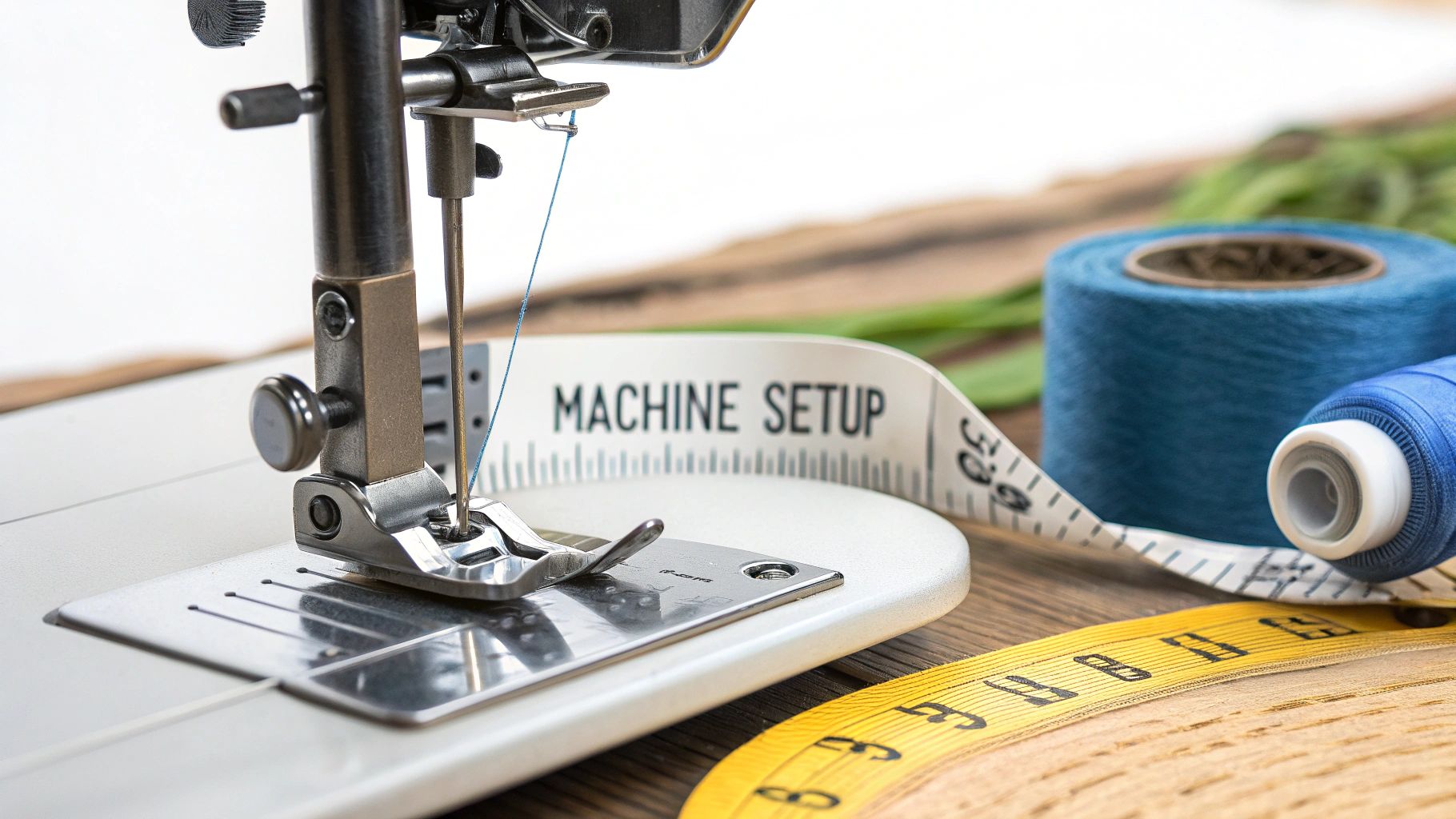
A gorgeous dress starts with a happy sewing machine. Before you even think about stitching that first seam on one of your new summer dresses patterns, spending a few minutes on setup is crucial. It’s the difference between a project that flows beautifully and one that makes you want to pull your hair out.
Think of it like warming up before a workout; you're getting your machine ready to perform at its best. This is especially true for the lightweight cottons, linens, and rayons we love for summer—they need a gentler touch than denim or wool.
Your Sewing Machine Checklist
First things first, give your machine a quick once-over. Clear out any lint left behind from your last project. With that done, it’s time to dial in the settings for those light and floaty fabrics.
- Needle Selection: This is your number one priority. A fresh, sharp needle is non-negotiable, as it will prevent snags, pulls, and those dreaded skipped stitches. For fabrics like cotton lawn or rayon challis, a universal needle in size 70/10 or 80/12 is your best bet.
- Thread Choice: Don't skimp on thread quality! A good all-purpose polyester or 100% cotton thread will serve you well. Make sure your bobbin is wound smoothly and evenly to avoid any tension headaches down the road.
- Stitch Length: When you're working with lightweight fabrics, a shorter stitch is your friend. A setting between 2.0 mm and 2.5 mm will give you a strong, secure seam that won’t cause the fabric to pucker.
I can't stress this enough: always test your stitches on a scrap piece of your dress fabric first. This simple five-minute step saves so much grief. It lets you check the tension and see how the stitch looks before you commit to the real thing, ensuring a smooth, professional seam on your finished dress.
Essential Notions Beyond the Basics
With your machine ready to go, let's talk about a few other supplies that make life easier.
For any part of the dress that needs a little support—think collars, cuffs, or button plackets—you'll want some lightweight fusible interfacing. It adds just enough structure to keep things crisp without adding any bulk or stiffness.
Finally, make sure your cutting tools are up to the task. A fresh blade in your rotary cutter or a pair of sharp sewing scissors will give you clean, precise cuts. After all, a beautifully sewn dress starts with accurately cut pieces. Now you're all set to sew with confidence
Your Top Questions About Summer Dress Patterns, Answered
Even the most seasoned sewist has questions, and when you're just starting with summer dress patterns, it's natural for a few to pop up. Let's tackle some of the most common ones I hear from fellow makers.
How Do I Pick a Pattern That Will Actually Flatter Me?
My best advice? Ignore the glamorous model on the pattern envelope for a minute and go straight to the line drawings on the back. Those simple sketches tell you the real story about the garment's shape, or silhouette.
An A-line or empire waist dress is almost universally flattering; it draws the eye upward and gracefully flows over the midsection and hips. If you want to create or highlight an hourglass shape, a wrap dress is a brilliant choice for cinching in the waist.
On the other hand, if you're looking to show off your curves, a classic sheath or a playful fit-and-flare will do the trick beautifully. It's all about matching the garment's fundamental shape to the look you want to achieve.
What's the Easiest Possible Dress for a True Beginner?
If you're just starting out, you want a win. Look for a simple shift dress or a pull-on sundress with an easy elastic waist. The key is to find summer dresses patterns with very few pattern pieces and no tricky closures like zippers or buttonholes.
Patterns marked "easy" or "beginner" are your best friend. They're designed to let you nail the basics—like sewing a straight line and finishing a hem—so you can build confidence for more complex projects down the road.
Can I Really Use Quilting Cotton for a Dress?
You absolutely can! In fact, quilting cotton is a fantastic fabric for beginners. It's stable (meaning it doesn't shift around much), it presses beautifully, and the sheer variety of prints is just incredible.
Because it has a bit more body and structure, it’s perfect for designs that benefit from holding their shape, like a classic A-line or a simple shift. It might feel a little crisper than a drapey rayon, but for a timeless sundress, it's a reliable and gorgeous choice.
At All About Sewing, we have everything you need to bring your sewing projects to life, from beginner-friendly patterns to high-quality fabrics and expert advice. Explore our collection and start creating today at https://all-about-sewing-canada.myshopify.com.


