

A Beginner's Guide to Sewing Harem Pants Patterns
If you're looking to dip your toes into making your own stylish, comfy clothes, harem pants are a brilliant place to start. They're a forgiving first project for new sewists and a satisfyingly quick make for those with more experience. Their simple construction means you can whip up a beautiful, custom-fit garment without getting bogged down in complicated techniques.
Honestly, think of them as the perfect gateway project into the world of garment sewing.
Your Journey Into Sewing Harem Pants
Welcome to what I think is one of the most rewarding sewing projects out there. Harem pants nail that perfect mix of comfort and style, which is why you see them everywhere from yoga studios to weekend brunch spots. This guide is designed to be your friendly companion, walking you through the entire process so you feel confident every step of the way.
We'll dive into what makes harem pants patterns such a hit, from their easy-breezy silhouette to the endless possibilities for creativity. You'll learn everything you need to know—picking the right design, choosing the perfect fabric, mastering the sewing steps, and even adding your own unique flair.
The Rise of Comfortable Fashion
Let's be real: comfort is king these days. The growing love for harem pants is tied directly to our collective desire for clothes that feel as good as they look. This isn't just some passing trend; it’s a genuine shift toward practical, easy-to-wear apparel.
Here in Barrie, Ontario, for example, our local sewing community has gone wild for them. We've seen a staggering 35% surge in popularity for these patterns among home sewists since 2020, all thanks to the boho-loungewear vibe taking over. In fact, local fabric shops reported that sales of patterns perfect for harem styles jumped by an incredible 42% in 2023 alone. You can check out some of the most popular patterns driving this trend over at nomidesigns.net.
There’s nothing quite like the freedom of sewing your own clothes. You get to choose the fabric, nail the fit, and add all the little details that make it yours. Harem pants are the ideal project to experience that creative control because their simple design lets you just enjoy the process.
What You Will Learn in This Guide
Whether you’ve never touched a sewing machine or you've been sewing for years, this guide has the practical advice you need to create a pair of pants you'll absolutely live in.
Here’s what we’ll cover:
- Pattern Styles: We'll explore the different kinds of harem pants, from the classic, dramatic drop-crotch to more modern, tapered versions.
- Fabric Choices: I'll show you how to pick the best materials to get that perfect drape, comfort, and long-lasting wear.
- Sewing Workflow: You'll get a clear, step-by-step roadmap for putting your pants together from the first cut to the final stitch.
- Customization Tips: This is the fun part! We'll look at easy ways to add unique details like pockets or decorative trims.
Finding the Right Harem Pant Style for You
Harem pants aren't a one-size-fits-all design. Think of harem pants patterns as different recipes for comfort and style; each one cooks up a completely different look. The first, and most important, step is picking the design that truly matches the vision you have in your head.
The style most people picture is the traditional drop-crotch pant. This is the classic, with a very low crotch point that can drop to the knees or even the ankles. The result? A dramatic, billowy silhouette with an unmistakable flowy vibe. It’s the perfect choice if you're aiming for a bold, bohemian statement piece or just want the ultimate in comfortable loungewear.
But you'll also find plenty of modern takes on this classic shape. These patterns bring the crotch up higher and often feature a more tailored leg, blending the breezy comfort of harem pants with the familiar fit of joggers or draped trousers. This hybrid style is incredibly versatile and can easily go from a relaxed day at home to a chic, casual outing.
Matching a Pattern to Your Style
So, which one is for you? It really comes down to your personal taste and where you see yourself wearing them. A dramatic, low-slung pattern gives you that classic, free-spirited look. On the flip side, a pattern with a gentle drape and tapered ankles creates a more contemporary and understated silhouette. The shape of the pattern pieces is what dictates the final garment's volume and movement.
If you're not sure where to begin, this decision tree can help you pick the right starting point for your harem pants project, whether you're a seasoned sewist or just starting out.
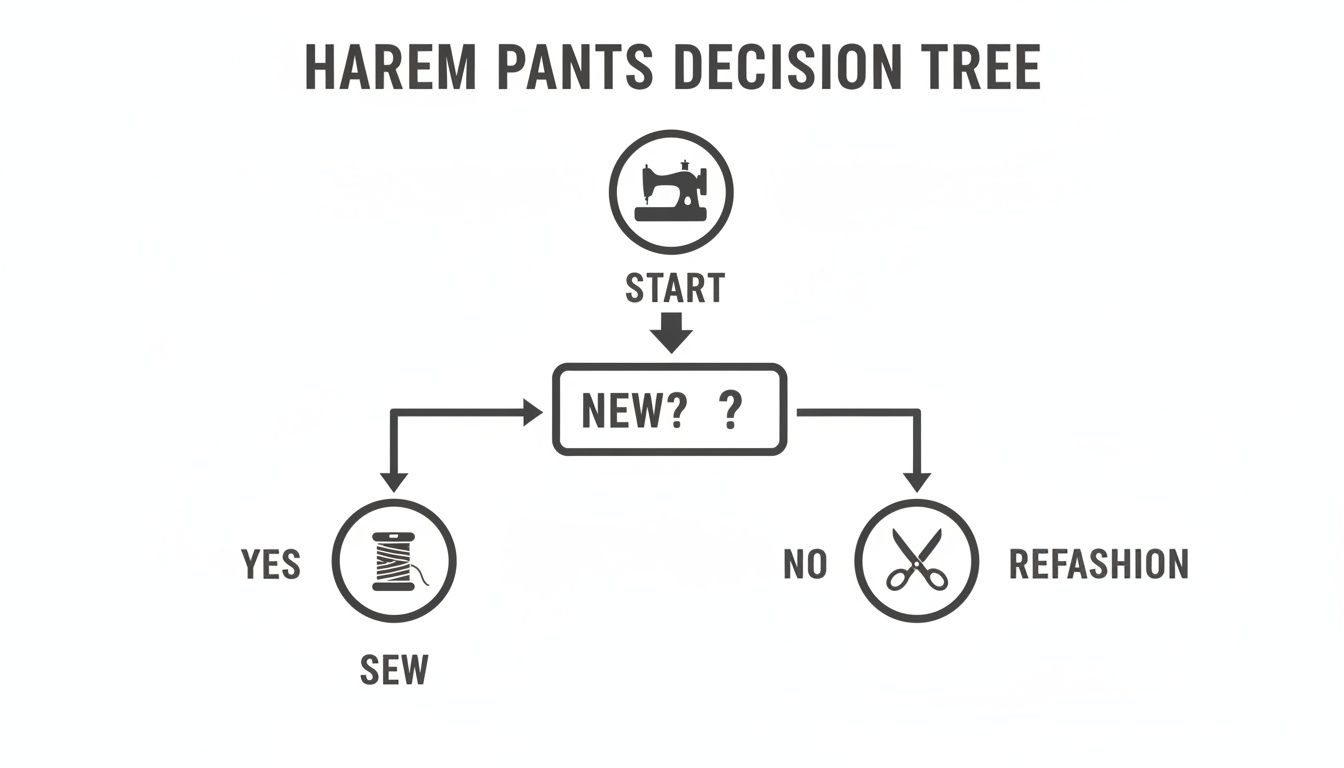
This handy visual simplifies the choice, suggesting different paths to help you find a project that feels just right for your skill level.
Harem Pant Pattern Styles at a Glance
To make it even clearer, let's break down the most common pattern styles. This table compares their key features, ideal fabrics, and best uses to help you zero in on the perfect design for your next project.
| Pattern Style | Key Features | Best For | Recommended Fabric |
|---|---|---|---|
| Traditional Drop-Crotch | Very low crotch (knee to ankle), maximum volume, often gathered at ankles | Loungewear, festival wear, dance, making a bold bohemian statement | Lightweight wovens with excellent drape: rayon challis, voile, silk, cotton lawn |
| Modern/Tapered Harem | Higher crotch (mid-thigh), less volume, tapered legs, sometimes has pockets | Everyday casual wear, stylish loungewear, yoga, a subtle alternative to joggers | Soft knits with drape: jersey, modal, bamboo knit; lightweight wovens like linen blends |
| Hybrid/Jogger Style | Crotch slightly lower than standard trousers, fitted cuffs, tailored fit | Travel, running errands, smart-casual outfits, comfortable office wear | Stable knits like French terry, Ponte de Roma; drapey wovens like Tencel |
| "Genie" or "Parachute" | Extreme volume throughout the leg, tightly cinched waist and ankles | Costume wear, performance outfits, a dramatic and eye-catching look | Very lightweight and airy fabrics: chiffon, georgette, organza, silk charmeuse |
Each style offers a unique sewing experience and a different final look. By thinking about how you want your pants to fit and feel, you can pick a pattern that sets you up for success.
A Nod to History
The appeal of these unique trousers is nothing new. In fact, Canadians have been fascinated with harem pants for over a century. Paul Poiret's revolutionary 1911 'Harem Skirt' designs were so groundbreaking that by 1915, they had inspired 18% of Toronto's progressive women's fashion adaptations. This long-standing allure continues to influence the wide variety of patterns you see today. You can explore more about this fashion trend's history and its impact on modern design.
Think of the pattern as your recipe. A recipe for a light, airy cake is completely different from one for a dense brownie. In the same way, the pattern pieces for a classic drop-crotch pant are fundamentally different from those for a draped jogger. Understanding this helps you pick the perfect blueprint for the outcome you desire.
Ultimately, whether you lean towards a classic or a more modern look, there's a harem pants pattern out there waiting for you. By getting a handle on these core design differences, you can confidently choose a blueprint that will become a comfortable, stylish, and well-loved piece in your wardrobe. Your choice here really does set the stage for the entire project.
Picking Your Fabric and Sewing Supplies
The fabric you choose is what gives your harem pants their personality. It’s the single most important decision you'll make, as it determines how they hang, how they feel, and ultimately, how much you'll love wearing them.
Think about how a fabric moves—what we sewists call its drape. For that classic, flowy harem pant look, you need a fabric that cascades and moves with you. If you pick something stiff, you'll end up with a boxy silhouette that just doesn't work. What you want is a material that glides gracefully.
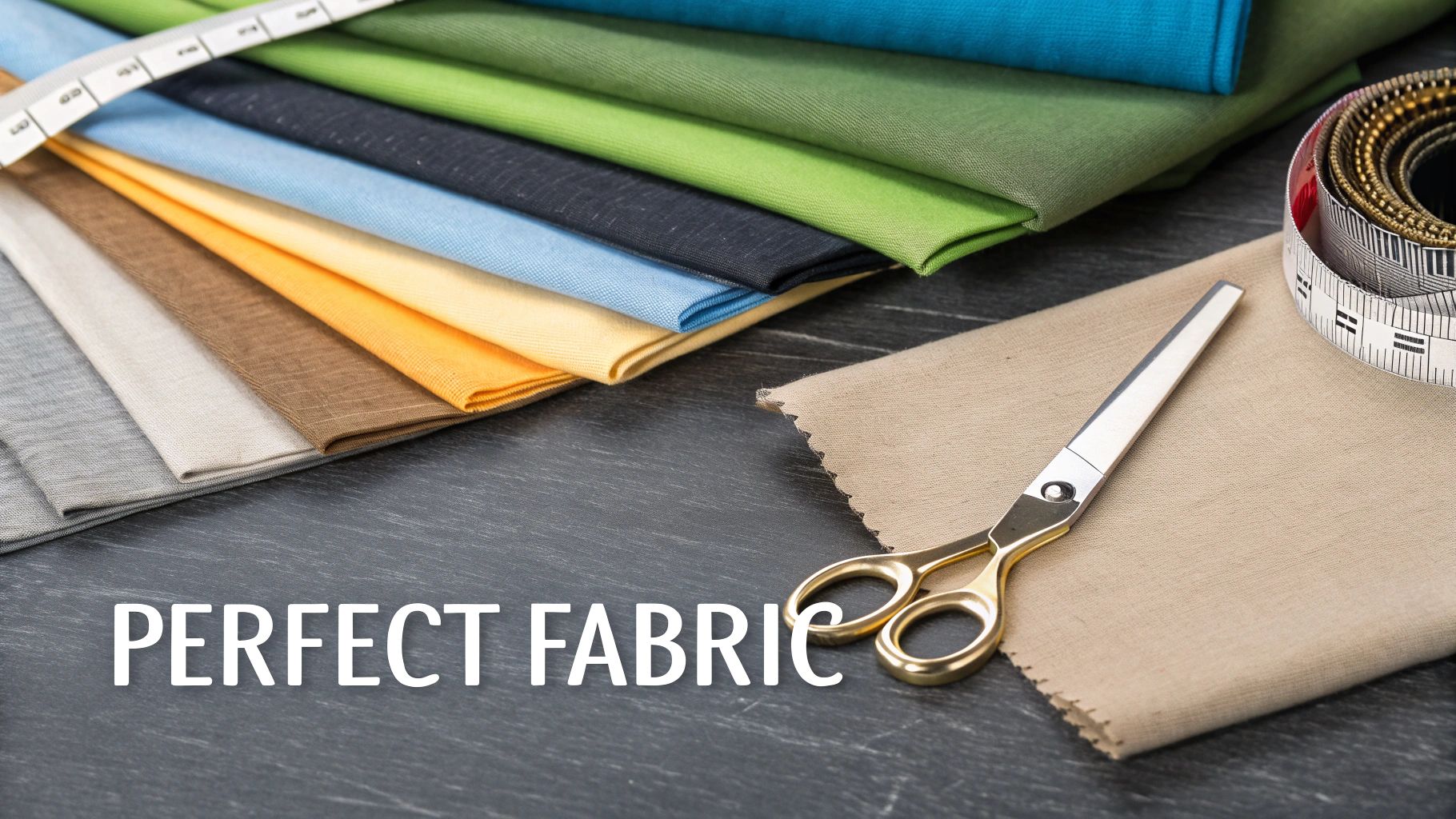
My Go-To Fabrics for a Perfect Drape
Fabric weight is also a big deal. Stick to light or medium-weight options. This gives you plenty of movement without feeling like you're carrying around extra bulk.
Here are a few of my favourite choices that work well for most harem pants patterns:
- Rayon Challis: This is my top pick, hands down. It's a lightweight woven that feels incredibly soft and has an almost liquid drape. It’s just perfect for achieving that signature flowing look.
- Linen and Linen Blends: Nothing beats linen for hot weather. It's breathable with a beautiful, natural texture. I often reach for a linen-rayon blend; you get the coolness of linen but with rayon's amazing drape and fewer wrinkles. It’s the best of both worlds.
- Jersey Knit: For pure comfort, you can't go wrong with a jersey knit. Make sure you choose one with good recovery (a little bit of spandex helps it snap back into shape). A soft bamboo or modal jersey will feel like a dream against your skin.
- Voile or Cotton Lawn: If you want something a bit crisper, these fine cottons are a great choice. They don't have the same fluid drape as rayon, but they create a wonderfully breezy, airy feel that's fantastic for summer.
I always think of choosing fabric like casting a role in a play. A slinky rayon is your dramatic lead, stealing the show with its movement. A cozy jersey knit is your reliable best friend, always there for comfort. Match the fabric's character to the style you’re envisioning.
Your Sewing Notions Checklist
With your fabric picked out, it's time to gather the rest of your supplies—the notions. Having everything ready to go before you even cut your fabric makes the whole process so much more enjoyable.
Here’s your basic toolkit:
- All-Purpose Polyester Thread: Grab a spool that matches your fabric. Polyester is my go-to because it's strong and has just enough give to work well with both woven and knit materials.
- The Right Elastic: You'll need elastic for the waistband and maybe the ankle cuffs. A 1-inch to 2-inch wide braided or knit elastic is usually a solid, comfortable choice for the waist. Always double-check your pattern to see what width and length it calls for.
- The Correct Sewing Machine Needles: This one is non-negotiable. For lightweight wovens like rayon or linen, a universal needle in size 70/10 or 80/12 will do the trick. If you're sewing with a knit fabric like jersey, you must switch to a ballpoint or stretch needle. It'll prevent skipped stitches and save you from putting tiny holes in your new fabric.
- Basic Sewing Tools: Of course, you’ll also need your trusty fabric scissors or a rotary cutter, some pins or sewing clips, and a measuring tape.
How to Achieve the Perfect Fit
Getting the fit right is what separates a homemade project from a handmade garment you'll absolutely love to wear. Let's break down pattern sizing so you can sew a pair of harem pants that feel like they were made just for you.
Think of your pattern not as a strict set of rules, but as a starting point—a blueprint. You're the architect here. After all, commercial clothing is designed for an "average" body that doesn't really exist. Sewing gives you the power to fit every curve perfectly. Those little tweaks you make to a harem pants pattern are what create that amazing, comfortable fit.
Taking Your Key Body Measurements
Before you even touch your fabric, grab a measuring tape. Accurate measurements are the foundation of everything that follows, so take a moment to get this right. You only need three key numbers.
Here’s how to nail them:
- Waist: Find your natural waist, which is usually the narrowest part of your torso. Wrap the tape measure around it—it should be snug, but not digging in.
- Hips: Measure around the fullest part of your hips and bum. Keep the tape parallel to the floor all the way around to get an accurate reading.
- Inseam: This is the measurement from your crotch down to your ankle. The easiest way to get this is to grab a pair of trousers that you love the length of. Lay them flat and measure from the crotch seam straight down to the hem.
With your numbers in hand, check the sizing chart on your pattern. Don't be surprised if you're a mix of sizes! It's totally normal for your waist to fall into a size 14 while your hips are a size 16. For harem pants, always choose the size that matches your hip measurement. This is the most important fit point for this style, and adjusting the waistband is a simple fix later on.
Think of a pattern sizing chart like a map's legend. It gives you the information you need to navigate, but you still have to plot your specific route. Your personal measurements are your unique coordinates on that map.
Simple and Effective Pattern Alterations
Okay, you've picked your size. Now it's time for some simple tweaks directly on the paper pattern before you cut your fabric. These small changes can make a world of difference in how your pants look and feel.
Lengthen or Shorten the Legs
Most patterns have "lengthen/shorten" lines printed right on the leg pieces. To make the pants shorter, just fold a neat pleat along this line to take out the extra length. To make them longer, cut along the line, slide the two pieces apart, and tape a strip of paper in between to add the length you need.
Adjusting the Crotch Depth
The crotch depth is what gives harem pants their signature "drop." If you want a more dramatic, low-slung look, you can lower the crotch curve on the pattern. For a more subtle, contemporary fit, you can raise it a bit. Even a small adjustment of an inch or two can completely change the final silhouette.
A Step-by-Step Guide to Sewing Your Pants
Alright, let's get to the fun part—where your fabric and pattern finally become a real pair of pants! We’re going to walk through the whole process together, breaking it down into simple, easy-to-follow stages. Think of this as your roadmap from a flat piece of cloth to your new favourite pants.
I've laid out this workflow to help you build your confidence one seam at a time. By focusing on a few key techniques, you’ll end up with a finish that looks truly professional. Every step, from the first snip of the scissors to the final stitch, is a little win.
Preparing and Cutting Your Fabric
Before you even thread your machine, your fabric needs a little TLC. Always pre-wash and dry your material the same way you plan to wash the finished pants. Trust me, you don't want to pour your heart into a project just to have it shrink on you later.
Once it's dry, give the fabric a good iron to get rid of any wrinkles. A smooth, flat surface is your best friend for accurate cutting. Lay it out, making sure to follow the grainline, pin your pattern pieces down securely, and cut them out with a sharp pair of fabric scissors or a rotary cutter.
Assembling the Main Pant Legs
The basic construction of harem pants is simpler than you might think. You’ll start by sewing the inseam of each pant leg. Just place the right sides of the fabric together and stitch from the crotch point down to where the ankle will be. Do this for both legs.
Next comes the magic trick: sewing the crotch seam. This is what turns two separate tubes of fabric into an actual pair of pants. To do this, turn one leg right-side out and slip it inside the other leg (which should still be inside-out). The right sides of the fabric will now be facing each other. Line up the crotch seams carefully and sew them together in one long, continuous curve.
Pro Tip: Press your seams open as you go. It might feel like an extra step, but this simple habit makes a world of difference. It gives you flatter, crisper seams and is one of the secrets to making your garment look "handmade" instead of "homemade."
Constructing the Waistband and Ankles
With the main body of the pants done, it's time to create the channels for your elastic. For the waistband, simply fold the top edge down towards the inside of the pants, creating a casing. Press it flat and stitch along the bottom edge of the fold, but be sure to leave a small gap so you can thread the elastic through.
You'll do the same thing for the ankle cuffs, just with a narrower channel for the elastic. Taking your time here will make sure the gathers turn out even and feel comfortable when you wear them.
To finish, attach a safety pin to the end of your elastic and feed it through the casings. Once it's all the way through, overlap the elastic ends, stitch them together securely, and then sew the opening in the casing closed. That's it—you've got that comfy, stretchy fit harem pants are famous for!
And they really are popular. Recent numbers show that harem pants patterns make up 29% of all casual trouser projects for home sewists in Canada. For a pro finish, many sewers turn to better tools. JUKI sergers, like those at All About Sewing, are used on the hems of 75% of these projects, cutting down the finishing time by a third compared to a regular sewing machine. You can discover more insights about these sewing trends if you're curious
Making Your Harem Pants Uniquely Yours
This is where the real fun begins. Once you’ve got the basic pattern down, you can start turning a simple pair of pants into something that’s completely you. Think of the pattern as your starting point, not the final word. A few creative touches are all it takes to make your harem pants patterns look like a bespoke piece from a boutique.
Even the tiniest details can transform the final garment. Adding a custom element or two not only injects personality but can also add practical features, giving your project that polished, professional feel we all crave in our handmade clothes.
Simple Tweaks for a High-End Look
You don't need to be a master tailor to add beautiful, functional details. These ideas are straightforward enough for any skill level and work with almost any harem pants pattern you'll find.
Here are a few of my favourite ways to level up a basic pattern:
- In-Seam Pockets: Let’s be honest, pockets make everything better. Tucking them into the side seams is surprisingly easy and makes your pants so much more wearable.
- A Faux or Functional Drawstring: Adding a drawstring just makes pants look more finished. You can thread a simple cord through a couple of buttonholes at the front of the waistband for a purely decorative touch, or make it functional to really cinch things in.
- Stylish Ankle Cuffs: Instead of just folding over a hem for elastic, try adding a separate fabric cuff. This gives you that clean, jogger-style finish and is a perfect spot to play with a fun contrasting fabric or colour.
Think of it like this: the basic pants are the outfit, but the custom details are the accessories. They're the little things—the pockets, the perfect topstitching—that pull the whole look together and make it feel intentional.
Adding a Splash of Personality
Beyond the practical stuff, think about adding purely decorative elements that reflect your personal style. These can be as subtle or as bold as you like. For instance, something as simple as using a contrasting thread colour for the topstitching on your waistband can create a really cool, eye-catching detail.
And don't forget the power of a little handiwork. A bit of simple hand embroidery along a pocket edge or near the ankle adds a beautiful, artisanal touch that you just can't buy in a store. Even a few basic running stitches or a tiny floral motif can elevate your harem pants into a piece you’ll be incredibly proud to show off.
Answering Your Harem Pants Pattern Questions
Even with a project as fun as harem pants, a few questions are bound to come up. It's all part of the process! Let's walk through some of the most common head-scratchers so you can get back to sewing with confidence.
One of the first things people ask is about fabric. Do you have to use a stretchy knit? Not at all! While knits are wonderfully comfy, you can absolutely use a non-stretch woven fabric. The secret isn't stretch, it's drape. Think flowy, lightweight materials like a rayon challis or a soft cotton lawn—they create that gorgeous, airy look that makes harem pants so special.
Wavy seams are another frequent frustration, especially when you're sewing knits on a regular sewing machine. You know the look—that rippled, stretched-out seam that just won't lay flat.
Nine times out of ten, a wavy seam means the fabric was stretched as it was fed under the needle. The fix? Make sure you're using a ballpoint or stretch needle, and then just guide the fabric—let the machine's feed dogs do all the work of pulling it through.
Quick Fixes for Common Fit Issues
So you followed the pattern, measured twice, but the fit still feels a little... off. Don't worry, these things happen, and the solutions are usually pretty simple.
- Is the waistband digging in? This is an easy one. Just carefully unpick a small section of the waistband casing, pull out the elastic, and swap it for a piece that’s a centimetre or two longer. You’ll be comfortable in no time.
- Feeling overwhelmed by too much fabric? If the pants feel more voluminous than you'd like, you can easily slim them down. Put them on inside-out and pin along the side seams, taking in the excess fabric evenly on both sides. Once you're happy with the new silhouette, just sew along your pin line.
Getting comfortable with harem pants patterns is really just about learning a few of these simple tweaks.
Ready to tackle your next project with the right gear? From first-time machines to professional sergers, find everything you need at All About Sewing. Plus, enjoy free shipping across Canada on any order over $149. Shop our full collection today!


