

Industrial Sewing Machines Canada A Complete Buyer's Guide
So, your passion project has started to feel a lot more like a full-blown production line. That's a great problem to have! For artisans and small businesses across Canada, this is often the point where you need to think about a serious upgrade. Choosing the right industrial sewing machine isn't just about buying a "stronger" machine; it's a strategic move that can scale your operations, elevate your quality, and ultimately, make your business more profitable.
Why Your Business Needs an Industrial Sewing Machine
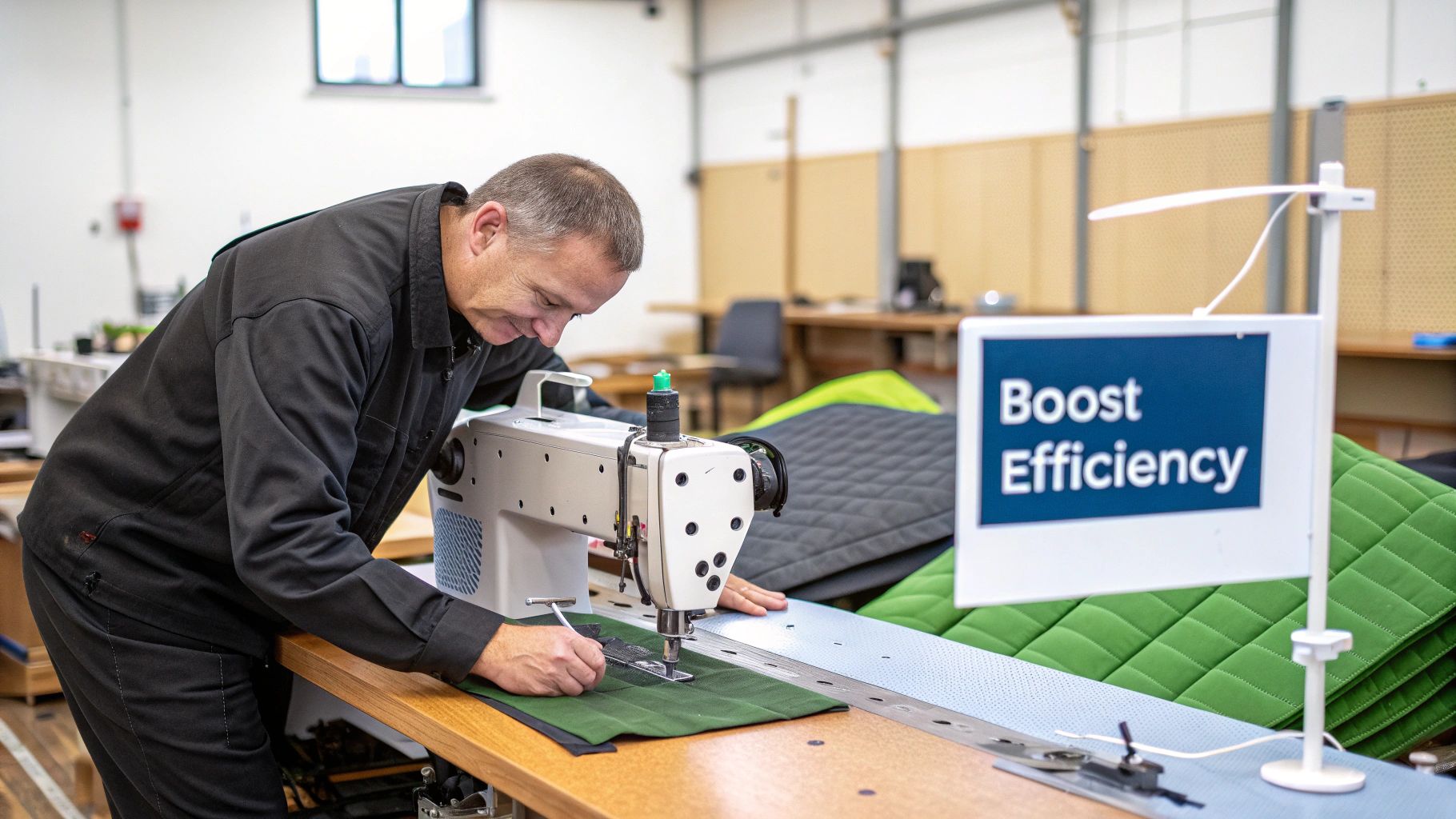
It’s easy to get the wrong idea about the jump from a domestic to an industrial sewing machine. Think of it this way: a home machine is like your trusty kitchen mixer. It's wonderfully versatile, perfect for whipping up the occasional batch of cookies or a birthday cake. An industrial machine, on the other hand, is the massive, specialized oven in a busy bakery—it’s built to do one job perfectly, thousands of times a day, without ever breaking a sweat.
These machines aren't just more powerful; they are purpose-built workhorses. Each model is engineered for relentless speed, incredible precision, and the durability to handle specific materials day in and day out. They are the engine of production for countless Canadian professionals.
Who Relies on These Powerhouses
All across Canada, a diverse community of skilled creators depends on these specialized machines. Trying to keep up with orders on a domestic model quickly becomes a bottleneck, limiting growth and capping your potential.
- Upholstery Artisans: They need machines with a walking foot and high presser foot lift to power through thick layers of fabric, foam, and leather without missing a beat.
- Sailmakers and Canvas Workers: For them, it’s all about durability. They rely on machines that can sew heavy, weather-resistant materials and create seams strong enough to face the elements.
- Small-Batch Apparel Brands: Speed and consistency are everything for these entrepreneurs. Industrial machines can pump out thousands of stitches per minute, ensuring every garment has the same professional finish.
An industrial sewing machine is more than just a piece of equipment. It’s a commitment to professional quality and production capacity. It’s the step you take when you’re ready to move from hobbyist to serious business owner.
A Legacy of Canadian Production
The importance of industrial sewing is woven right into the fabric of Canadian history. Back in 1881, the sewing machine industry was already a major player in our nation's manufacturing scene, with 17 establishments employing 1,188 people. These factories were churning out over $1 million in products—a huge figure for the time—which shows just how vital these machines were to early industrialization, particularly in Ontario and Quebec. You can dive into more of this fascinating history over at Statistics Canada.
At the end of the day, investing in the right industrial machine is a key business decision. It's about breaking through your production limits, increasing your output, and delivering a product that truly reflects the highest standard of your craft. It’s the move that empowers Canadian businesses to compete, grow, and thrive.
Domestic vs. Industrial Machines: A Practical Comparison
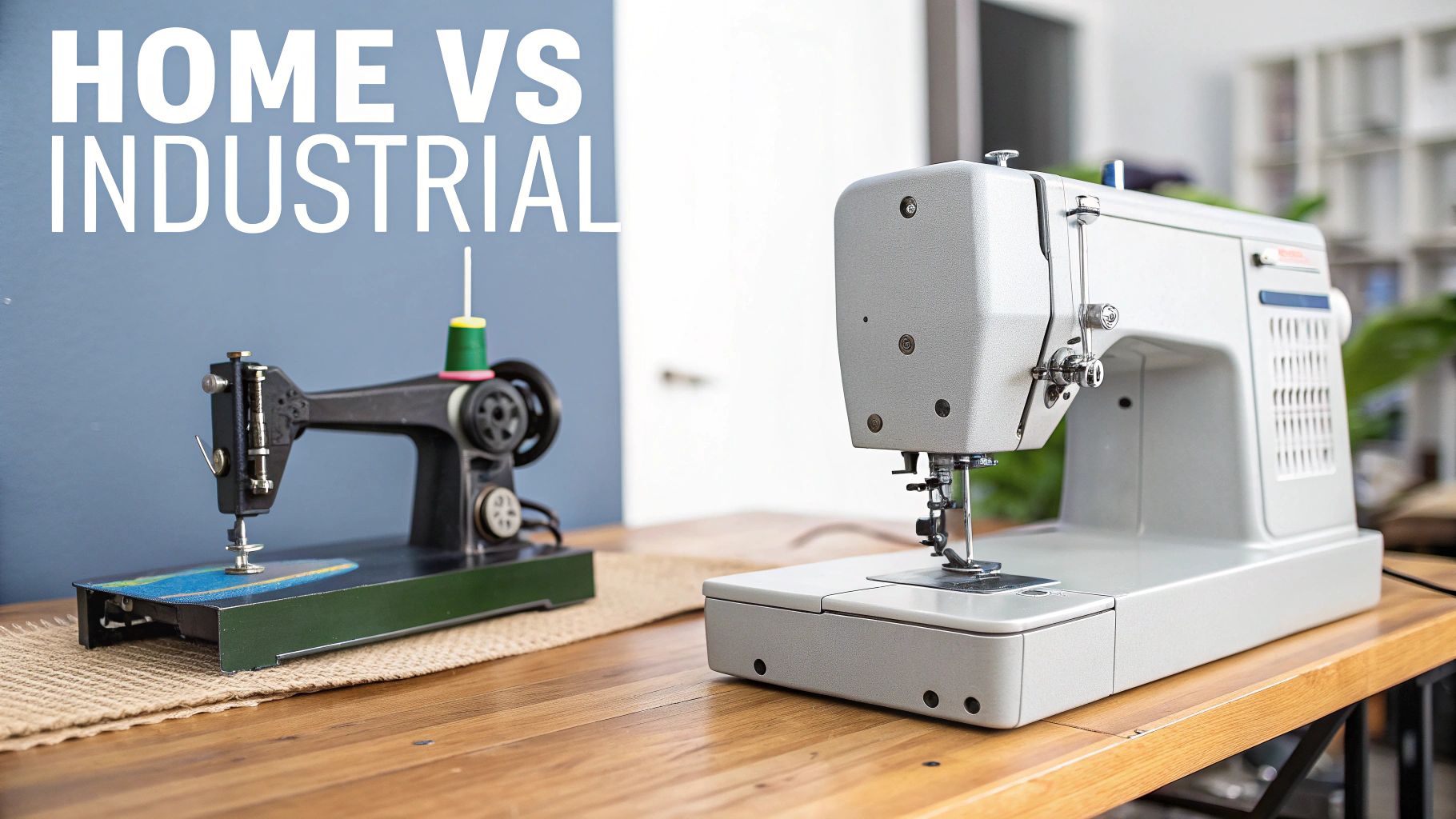
Walking into a professional shop, the difference between a home machine and an industrial beast is obvious. But the real distinctions go far deeper than just size and speed. It’s about power, precision, and purpose.
Choosing the right machine is about matching the tool to the job. Think of it like a home kitchen versus a commercial restaurant kitchen—both cook food, but they are built for entirely different demands. Let’s break down exactly what sets these two classes of machines apart, so you can make a smart investment for your Canadian business.
Domestic vs Industrial Sewing Machine Showdown
To really see the difference, it helps to put them side-by-side. This table cuts through the noise and compares the key features you'll be working with every day.
| Feature | Domestic Sewing Machine | Industrial Sewing Machine |
|---|---|---|
| Primary Use | Hobbies, light repairs, occasional projects. | Full-time, high-volume production. |
| Motor | Small, internal motor. | Large, external motor (clutch or servo). |
| Speed | Lower, typically ~800 stitches per minute. | Very high, 2,000 to 5,500+ stitches per minute. |
| Construction | Mostly plastic body and internal gears. | All-metal construction, built into a table. |
| Function | Multi-purpose ("jack-of-all-trades") with many stitch types. | Specialized ("master of one")—built for one specific task. |
| Durability | Designed for intermittent, hourly use. | Built to run 8+ hours a day, every day, for decades. |
| Control | Good for general sewing, but can struggle with thick materials. | Exceptional power and control, especially with a servo motor. |
| Portability | Lightweight and portable. | Extremely heavy and stationary. |
This comparison makes it clear: domestic machines offer versatility for the hobbyist, while industrial machines deliver the specialized power and endurance needed for professional results.
The Heart of the Machine: Motor Power and Control
The biggest leap in performance comes from the motor. Your home machine has a small motor tucked inside its plastic case, similar to a kitchen blender. An industrial machine, on the other hand, is driven by a massive external motor bolted right to the underside of the table.
This isn't just for show; it's the source of its relentless power. You'll generally find two types:
- Clutch Motor: The old-school workhorse. The motor runs constantly at full tilt as long as the machine is on, which creates a noticeable hum. You "engage" the needle by pressing the pedal, which connects a clutch plate. They’re powerful but can be loud and tricky to control at slow speeds.
- Servo Motor: The modern standard. A servo motor is completely silent until you press the pedal. It uses a fraction of the electricity and gives you incredible speed control—from a single, perfect stitch to full throttle.
For anyone doing detailed work like bag making or topstitching on leather, a servo motor is a must-have. And if you're setting up a shop in your Canadian home, the quiet operation is a game-changer for keeping the peace with your family and neighbours.
Built for the Long Haul: Construction and Durability
Take a look inside a typical domestic machine and you'll find a lot of plastic gears and components. They’re designed this way to be lightweight and affordable for home use. They get the job done for a few hours a week, but they aren't built for a daily grind.
Industrial machines are engineered with a totally different philosophy: survival. They are made of cast iron and steel, from the body to the gears. This heavy-duty build does two things. First, it absorbs the intense vibration of sewing at thousands of stitches per minute. Second, it ensures the machine can take the abuse of a full-time production schedule for decades.
The external motor isn't just about power—it's about practicality. If the motor on an industrial machine ever fails, you can simply unbolt it and replace it. When the internal motor on a domestic machine dies, the entire machine is often headed for the landfill.
One Job, One Perfect Stitch
This might be the most crucial concept to understand. Your domestic machine is a jack-of-all-trades, packed with dozens of decorative stitches for every occasion. An industrial machine is a specialist—a master of one.
It's designed to do a single thing flawlessly, thousands of times a day. A straight-stitch machine only sews a straight stitch. A walking foot machine is built specifically to pull thick, sticky, or layered materials through without shifting. You won't find a zig-zag option on a machine designed for stitching upholstery.
This specialization isn't a drawback; it's the entire point. It guarantees a stronger, more consistent, and more professional result for that specific task, every single time.
Who Makes the Best Industrial Sewing Machines in Canada?
When you first dip your toes into the world of industrial sewing machines, you'll notice a few big names pop up again and again. It's not like the consumer market where one brand tries to do it all. Here, the top players have built their reputations by being the absolute best at one or two things. Think of it less like a shopping list and more like meeting a team of specialists, each with a distinct personality and skill set.
Figuring out these brand identities is your first, most important step. It helps you cut through the noise and find the right machine for your work, whether you're launching a clothing line or opening a custom upholstery shop.
JUKI: The Unstoppable Workhorse
If you walk into almost any garment factory in the world, you'll see rows of JUKI machines. This Japanese brand is legendary for one simple reason: they build absolute workhorses. They’re famous for their incredible reliability, no-nonsense mechanics, and the sheer ability to run all day, every day, without skipping a beat.
For Canadian apparel makers, a JUKI lockstitch is often the first machine they buy. It's built for pure speed and endurance, making it the undeniable champion for high-volume production where every stitch needs to be perfect, time after time.
- Best For: Apparel manufacturing, general garment work, and any job that demands a fast, dependable straight stitch.
- Price Point: Expect to see entry-level models, complete with table and motor, starting around $1,500 - $2,500 CAD.
- Canadian Availability: JUKI has a strong presence in Canada. You'll find them at most specialized dealers, with excellent support for parts and service.
PFAFF: The Precision Engineer
PFAFF brings classic German engineering to the sewing world. While they offer a wide range of machines, they're truly revered for their advanced technology and incredible performance on tricky materials, especially in upholstery and high-end quilting.
Their machines, particularly those with the famous IDT (Integrated Dual Feed) system, give you amazing control over slippery or thick, multi-layered fabrics. If you're an artisan working with leather, vinyl, or heavy textiles, a PFAFF provides the muscle and pinpoint accuracy you need for a flawless finish.
A PFAFF is what you choose when "good enough" isn't in your vocabulary. It's an investment in precision engineering that pays for itself in quality, especially when you're fighting material shift on a tough project.
Brother: The Smart Innovator
Brother has cleverly carved out a niche by mixing industrial-strength power with features that are surprisingly easy to use. They are known for their innovative, often programmable machines that make the jump from a domestic model to an industrial one feel a lot less intimidating.
Many of their industrial machines come with handy features like automatic thread trimmers and back-tacking. These might sound small, but they seriously boost your efficiency, especially for small- to medium-sized production runs. This blend of power and convenience makes Brother a favourite for everyone from small clothing startups to busy embroidery businesses across Canada.
Other Major Players on the Canadian Scene
While JUKI, PFAFF, and Brother are the big three, a few other brands offer fantastic, specialized machines for Canadian creators.
- Singer: With a name that goes way back, Singer's industrial machines are known for being robust and budget-friendly. They're a solid choice for heavy-duty work like sewing canvas or for general repair shops.
- Ricoma: If embroidery is your game, Ricoma is a name you need to know. They specialize in multi-needle embroidery machines that make professional-grade apparel decoration accessible.
- Techsew: A true Canadian success story, Montreal-based Techsew focuses on heavy-duty machines for leatherworkers, shoemakers, and upholsterers. Their machines are built like tanks for true artisans.
The Canadian market for these machines is well-established. In 2023, Canada imported $1,265,726 CAD worth of industrial sewing machines, with Ontario and Quebec leading the way. This isn't surprising, given the deep roots of textile and manufacturing industries in those provinces. This whole ecosystem is supported by a network of key importers who get these machines into workshops nationwide. You can dig into these trade numbers yourself on the Innovation, Science and Economic Development Canada website.
Ultimately, picking the right brand isn't about which one is "best"—it's about matching a machine's strengths to what you need to create. Once you understand their core personalities, you'll be able to start your search with a much clearer sense of direction.
Finding the Perfect Machine for Your Craft
Choosing an industrial sewing machine can feel like a huge, intimidating decision, but it really doesn't have to be. The secret is to forget about finding the one "best" machine out there. Instead, focus on finding the perfect machine for what you actually do every day.
This isn't about memorizing model numbers. It's about translating your work—the fabrics, the seams, the challenges—into a clear set of technical needs. Once you know what to look for, you can ask the right questions and pick a machine with total confidence.
Let's walk through how this works for three different kinds of Canadian makers.
For the Upholstery Artisan
If you’re wrestling with furniture, automotive interiors, or heavy canvas goods, you know the struggle. You’re fighting thick, stubborn materials that want to shift, bunch up, and resist every single stitch. Your machine isn't just sewing; it's a powerhouse that has to tame those demanding assemblies.
Your checklist should be all about raw power and absolute material control.
- Feed Mechanism: Does it have a walking foot (also called a compound feed)? This is the big one—it's non-negotiable. A walking foot uses multiple moving parts to grip the top and bottom layers of your material, pulling them through in perfect time. This is what stops that frustrating shifting and puckering you see on vinyl, leather, or thick canvas.
- Presser Foot Clearance: How high can the foot lift? You need to be able to get bulky assemblies under the needle without a fight. Look for a lift height of at least 3/8" (or 9.5mm).
- Motor Power: Is it a servo motor with a speed reducer? That combination is your secret weapon. It gives you incredible piercing power even at a snail's pace, letting you carefully place stitches through dense layers of foam, webbing, and fabric without the motor giving up.
For an upholsterer, a machine without a walking foot is like trying to build a deck with a tiny finishing hammer. It’s just the wrong tool for the job, and it will only lead to frustration and work you're not proud of.
For the Small-Scale Apparel Manufacturer
As an apparel maker, your game is all about efficiency and consistency. The goal is to crank out clean, professional seams as quickly as you can, turning bolts of fabric into finished garments. Here, brute force takes a backseat to speed, specialization, and features that slash your production time.
Here’s what you should be looking for when you're browsing industrial sewing machines in Canada:
- Stitches Per Minute (SPM): How fast does it run? A standard industrial lockstitch machine can hit speeds of up to 5,500 SPM. That raw speed is what makes high-volume production possible.
- Specialized Machines: Do you need more than just a straight stitch? For a truly professional finish, you'll want to look at dedicated machines like sergers (overlockers) for cleaning up raw edges and coverstitch machines for hemming knits. Building a small line of specialized machines is almost always better than trying to make one machine do everything.
- Time-Saving Features: Does it have an automatic thread trimmer or a needle positioner? These might seem like small luxuries, but features like these, common on machines from brands like Brother or JUKI, shave seconds off every piece you make. Over a production run, that adds up to a massive amount of time saved.
For the Etsy Entrepreneur and Bag Maker
If you're crafting bags, wallets, or other detailed leather and canvas goods, your work is a unique mix of the upholsterer's power needs and the apparel maker's demand for precision. You need a machine that’s both strong and nimble—one that can punch through thick layers but also execute beautiful, intricate stitches.
- Machine Type: Think about the shape of your products. A cylinder-arm machine has a narrow, free arm that lets you sew inside tight, tube-shaped items like bags. A post-bed machine has a small raised post, which is perfect for getting into tight corners and doing detailed topstitching on things like shoes.
- Control and Visibility: Have you considered a roller foot? Instead of a flat foot, it uses a small wheel to hold the material down. This gives you amazing visibility right at the needle and lets you pivot on a dime around tight curves—an absolute must for detailed accessory work.
- Versatility: How well does it handle different threads? Your projects might call for a fine thread for linings one minute and a thick, heavy thread for decorative topstitching the next. You'll need a machine with a robust tension system that can handle those changes without a fuss. Some Canadian brands, like Techsew, design their machines specifically for this kind of versatile leatherwork.
The True Cost of Buying and Owning an Industrial Machine in Canada
So, you're ready to level up to an industrial sewing machine. That's a big step! But the price tag you see online is just the starting line, not the finish. To make a smart investment, you need to look at the entire financial picture, not just the shiny machine head.
Think of it this way: an industrial machine isn't just one item. It’s a complete system. That price almost always needs to include the heavy-duty table it sits in and the powerful motor that drives it (a servo motor is usually your best bet for speed control). These aren't optional upgrades; they're essential. Without them, your powerful new machine is little more than an expensive paperweight.
Assembling the Total Cost of Ownership
Once you’ve got the core components accounted for, there are other costs to factor in. The big one that catches many people by surprise is shipping. These machines are beasts, often weighing over 90 kilograms, so they can't just be sent through standard post. They have to come on a pallet via a freight truck, which can easily add a few hundred dollars to your bill, depending on where you are in Canada.
Then, there are the initial setup costs to get you sewing:
- Professional Assembly: Sure, you could probably assemble it yourself with some patience and YouTube videos. But having a dealer build and test it for you ensures it’s perfectly calibrated and ready to go right out of the box.
- Essential Supplies: Your home sewing needles and thread won't cut it. You'll need to stock up on specialized industrial needles, a good supply of bobbins, and large cones of industrial-grade thread.
- Specialty Feet: Most machines come with a standard presser foot. But for any real work, you’ll quickly need others like a zipper foot, a walking foot, or a cording foot. It's best to budget for these from the start.
This handy decision tree can help you figure out what kind of machine aligns best with what you plan to make.
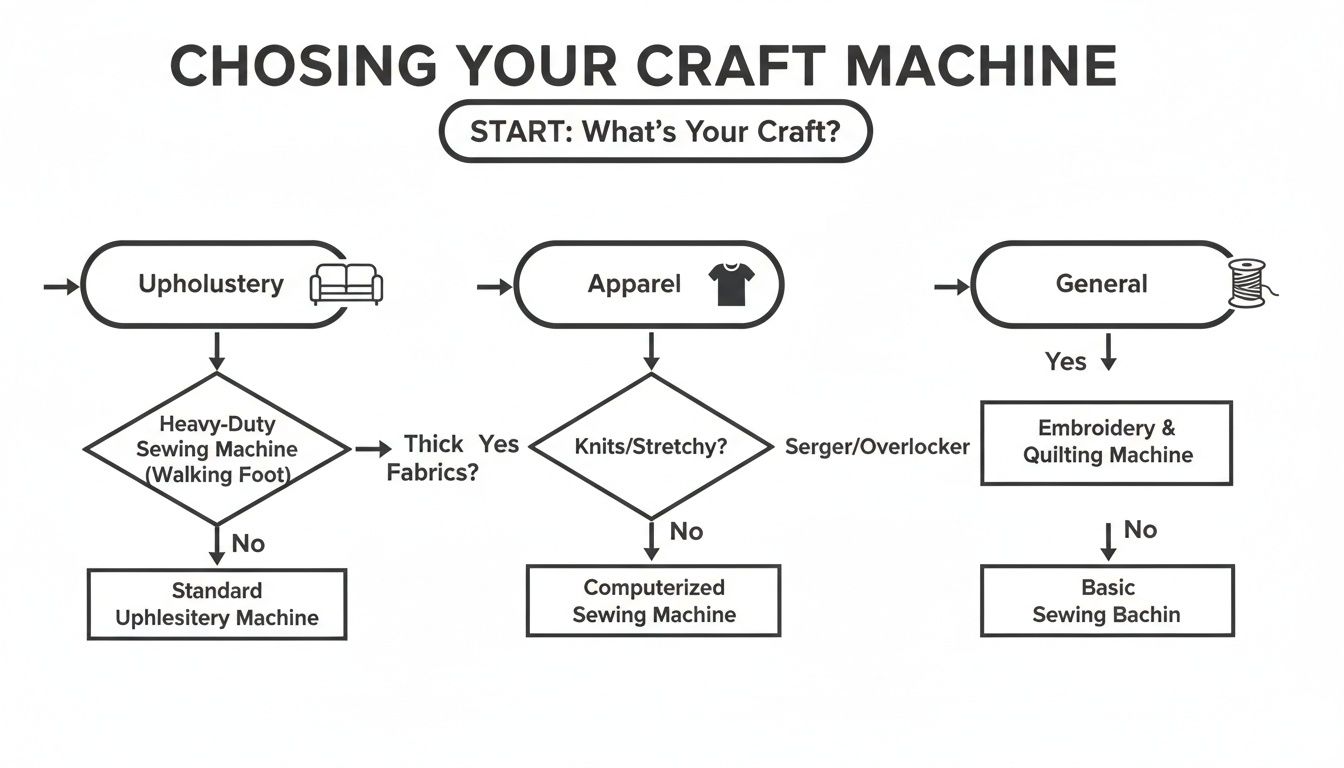
Starting with your end goal—like sturdy upholstery or delicate apparel—helps you zero in on the features you actually need and avoid paying for those you don't.
Where to Buy Your Machine in Canada
When it comes to buying industrial sewing machines in Canada, you really have two main choices: go through a specialized dealer or take your chances on the used market.
A reputable dealer, especially a local one, is worth their weight in gold. They offer expert advice to make sure you get the right machine, plus they often provide setup services and that all-important warranty. Having that support network is invaluable, particularly when you're just getting started.
The used market can seem tempting with its lower prices, but it's a gamble. There's no warranty, and you have no idea what the machine has been through. Unless you're an experienced sewing machine technician who knows exactly what to look for, sticking with a trusted dealer is the safer, smarter choice for your business's future.
Remember, a good dealer isn't just selling you a machine; they're starting a partnership with you. They become your go-to for parts, service, and the expert advice that keeps your production line moving.
Financing and Future-Proofing Your Investment
A new industrial machine is a serious purchase, but you don't necessarily have to pay for it all at once. Modern financing options have made these tools much more accessible for small businesses and serious hobbyists. Services like Affirm let you break the cost into manageable monthly payments, turning a major capital expense into a predictable operating cost. This lets you get the right tool for the job now without wiping out your cash flow.
Finally, think about the long game. The market for industrial sewing machines in Canada is strong and getting stronger, part of a North American industry expected to reach USD 720.14 million by 2033. This growth means there’s a healthy support system out there.
Before you commit, do a little homework. Make sure parts for your chosen brand are easy to get in Canada and that there are qualified technicians who know how to service it. This simple check ensures your machine will be a valuable asset for years to come, not a headache waiting to happen. You can dig into the numbers behind this market growth in this detailed report.
Keeping Your Machine Running: A Maintenance Guide
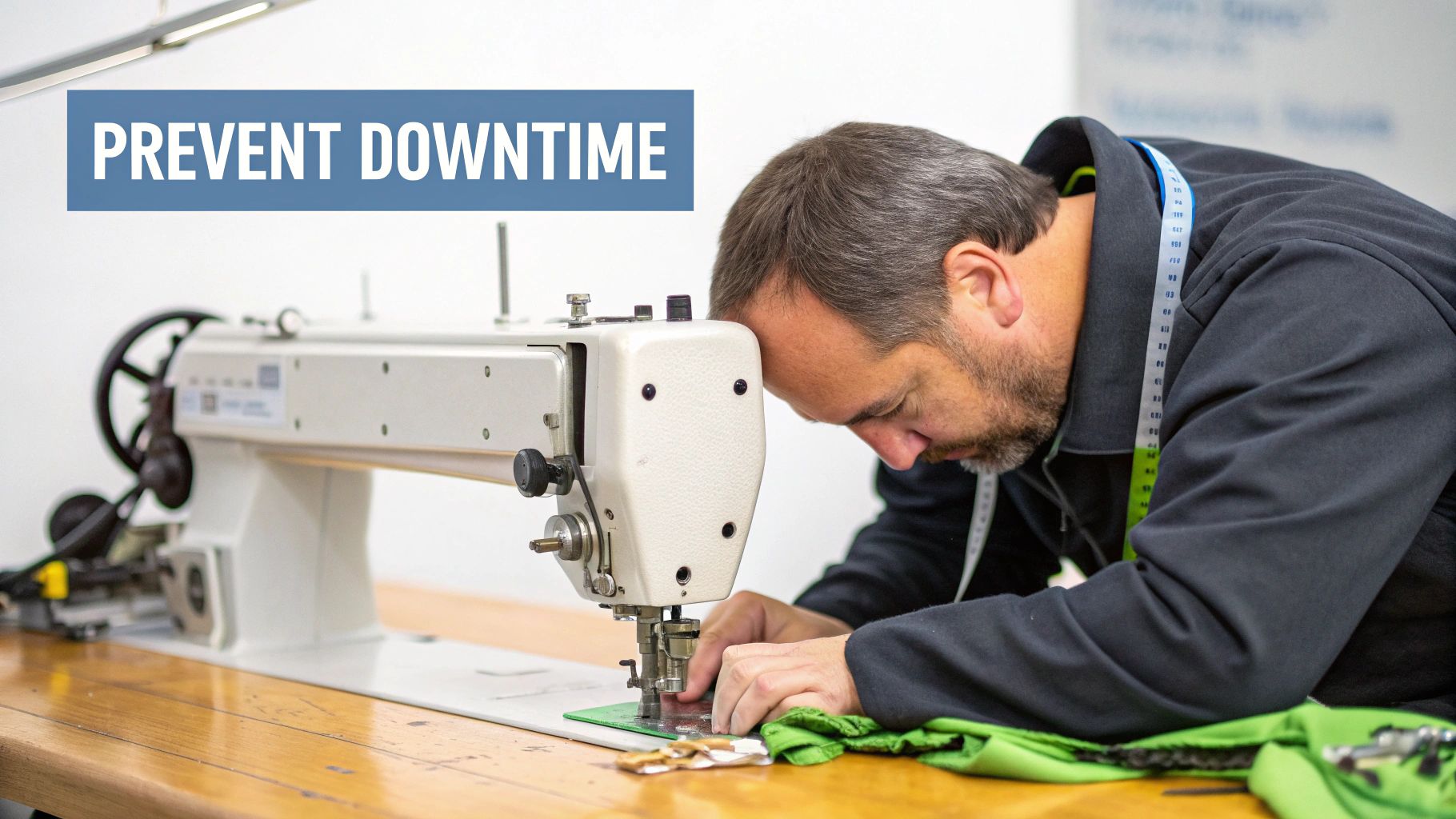
Think of your industrial sewing machine like a high-performance vehicle. You wouldn't drive a delivery truck for thousands of kilometres without changing the oil, and the same principle applies here. Consistent, preventative care is what keeps your machine humming and prevents those gut-wrenching moments when a sudden breakdown brings your entire production to a halt.
Switching your mindset from "reactive repair" to "proactive care" is the secret to getting a long, productive life out of your machine. A few simple, consistent tasks can head off the most common problems, saving you a world of frustration, time, and money. It's all about keeping your workflow smooth and your projects on track.
Your Daily Maintenance Checklist
These simple habits only take a few minutes but pay huge dividends in performance and longevity. Making them part of your daily start-up or shut-down routine is one of the smartest things you can do for your business.
- Clean Thoroughly: Lint, dust, and thread scraps are the enemy. They build up and can cause all sorts of havoc. Grab a soft brush or a can of compressed air and give the bobbin case, feed dogs, and tension discs a quick clean-out at the end of every day.
- Oil Systematically: These machines move at incredible speeds, and friction is not your friend. Proper lubrication is absolutely critical. Check your manual for the oiling points and use a high-quality machine oil to keep everything moving smoothly, quietly, and coolly.
- Change Your Needle: This is easily the most overlooked step, yet it's the simplest fix for skipped stitches and damaged fabric. Make it a habit to start each new project—or at the very least, each full day of sewing—with a fresh needle.
These three steps are your first line of defence against wear and tear, ensuring your industrial sewing machines in Canada keep running like a dream.
When to Call a Professional Technician
Daily care will take you a long way, but some jobs are definitely best left to the experts. Trying to fix complex internal issues without the right training or tools can quickly turn a small problem into a very expensive one.
Think of a good relationship with a trusted Canadian service centre as your business's insurance policy against downtime. They have the brand-specific knowledge and experience to keep your machine in peak condition.
Keep an eye out for these tell-tale signs that it's time to pick up the phone and book a service call:
- Timing Issues: You've re-threaded, you've put in a new needle, but the machine is still skipping stitches or shredding thread. This often means the hook timing is off, a precise adjustment that requires specialized tools and expertise.
- Unusual Noises: Any sudden grinding, clanking, or loud knocking sounds are a major red flag. Stop sewing immediately to prevent further damage and call a technician.
- Motor Problems: If the motor is hesitating, running inconsistently, or you smell something hot, that’s a clear signal for a pro. Electrical work is not a DIY project.
Finding a reliable service provider, like the team at All About Sewing, gives you a partner in your corner. They're dedicated to maintaining the health of your equipment, ensuring your powerhouse machine remains a valuable asset for years to come.
Got Questions? We've Got Answers
Stepping into the world of industrial sewing machines can feel a bit overwhelming. You've got questions about space, cost, and just how different they really are. Let's tackle some of the most common things Canadian buyers ask.
Can I Actually Use an Industrial Machine in My Home or Apartment?
Yes, you can! But—and this is a big but—you need to be smart about it. The two biggest issues you'll run into are noise and vibration.
This is where a modern servo motor is an absolute game-changer. Forget the old clutch motors that drone on endlessly; a servo is dead silent until your foot hits the pedal. To keep your neighbours happy, pop a thick anti-vibration mat under the machine's table. It works wonders to soak up the rumble. And always, always check the power requirements. Most newer machines sold in Canada run on standard household outlets, but you’ll want to confirm that before you swipe your card.
What's a Realistic Budget for a Machine in Canada?
The price tag on an industrial sewing machine in Canada can swing wildly depending on its specialty. Here’s a rough guide to get you started:
- Entry-Level Lockstitch: For a brand new, quality single-needle lockstitch machine (the workhorse of the industry), you should plan on spending between $1,500 and $2,500 CAD. That price typically includes the table and servo motor.
- Specialized Machines: If you're looking at something more specific, like a walking foot for upholstery or a machine with automated functions, the price can climb quickly, often landing between $3,000 and $7,000 CAD, or even higher.
Remember, the machine itself is just the starting point. Don't forget to factor in freight shipping costs, plus the essentials like extra bobbins, needles, and any special presser feet you’ll need for your work.
Do I Need Special Training to Operate One?
The core concept of sewing is the same, but the feel is night and day. An industrial machine is pure power and speed. It won't hold your hand with the user-friendly features you find on a domestic model. There’s a real learning curve, especially when it comes to taming that speed.
That's another reason a servo motor with adjustable speed is non-negotiable for anyone new to industrial machines. You can dial it way down to a crawl while you get the hang of things. Many good dealers offer a quick rundown when you buy, but expect to put in some practice time. You need to get a feel for its responsiveness before you can really let it fly.
For expert advice on choosing the right machine or getting your current one serviced, the team at All About Sewing has over 25 years of experience helping Canadian creators. Explore our collection of industrial machines and get the support you need at https://all-about-sewing-canada.myshopify.com.


