

Sewing Machine Repair Near Me: Find Local Pros - sewing machine repair near me
We’ve all been there. That dreaded clunking sound, the bird's nest of thread under your fabric, or stitches that suddenly start skipping. It’s enough to make any sewer's heart sink.
Before you jump online and search for "sewing machine repair near me," it's worth figuring out if you've got a simple DIY fix on your hands or something more serious. A tangled thread is one thing, but some problems really do need a professional touch to avoid making things worse.
Knowing When Your Machine Needs an Expert
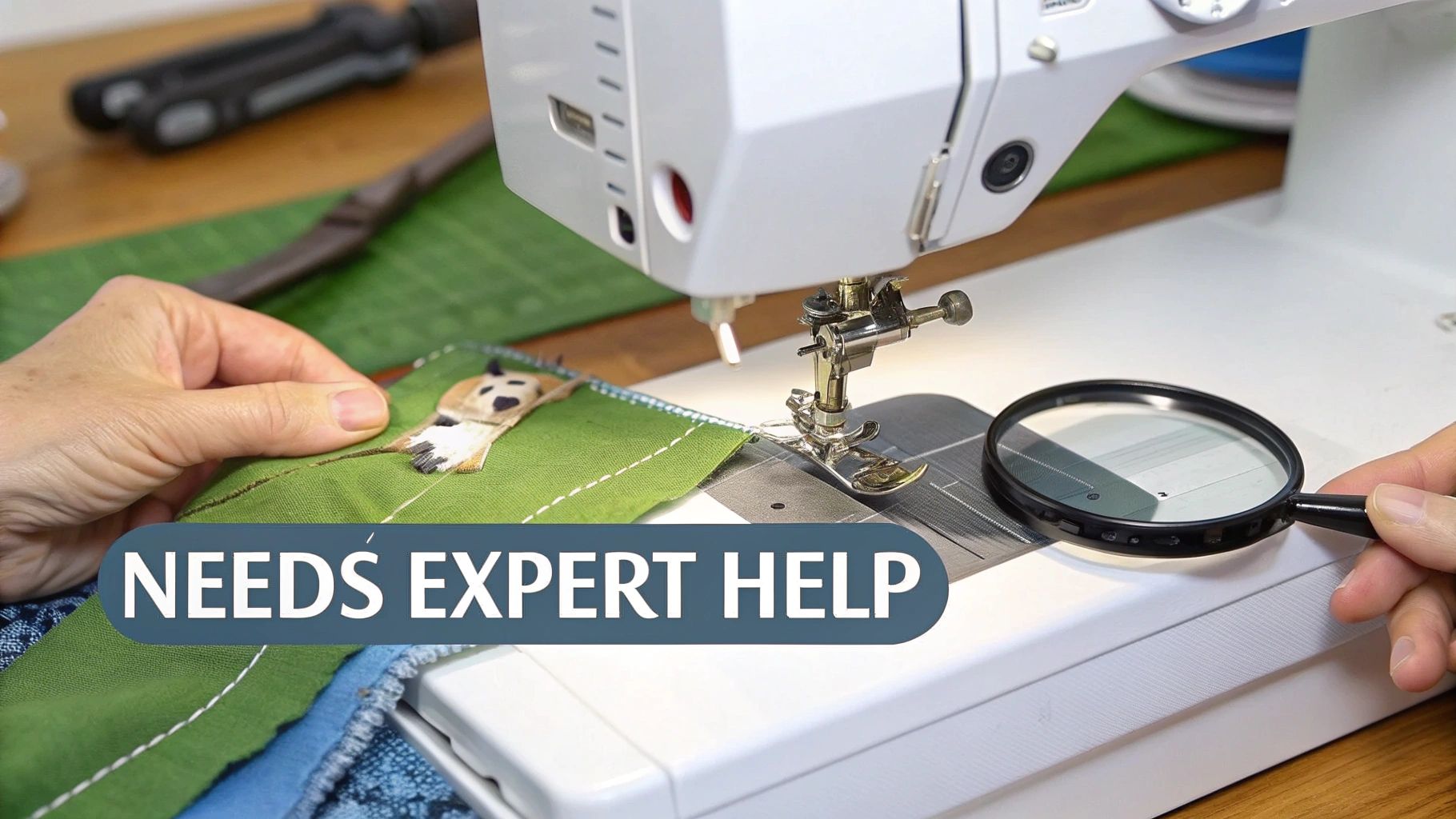
Plenty of common sewing machine issues are just a sign that it's time for some basic housekeeping. You’d be surprised how many problems disappear after a good cleaning of the bobbin case and a fresh needle. These simple habits are your first line of defence.
But sometimes, the symptoms point to deeper mechanical or electrical trouble that a quick tune-up just won't solve.
Distinguishing DIY Fixes from Professional Repairs
Here's a good rule of thumb: if you've done the basics—re-threaded the machine from scratch, cleaned out all the lint, and put in a brand-new needle—and the problem is still there, it's time to stop. Pushing a machine that has an underlying issue can quickly turn a small fix into a major, expensive breakdown. This is even more true with today's sewing and embroidery machines, which are a delicate mix of mechanics and sophisticated electronics.
Recognizing the warning signs is crucial. It's time to call in a pro if you notice any of these:
- Persistent Grinding or Clunking Noises: These aren't normal operational sounds. They often point to timing being off or a problem with internal gears, both of which require very precise adjustments.
- Motor Strain or a Burning Smell: An overheating motor is a serious red flag. Stop sewing immediately and get it checked by a technician to prevent permanent damage.
- Inconsistent Stitch Quality: If you’ve double-checked your tension settings but your stitches are still looping, uneven, or just plain messy, the machine's internal tension assembly might need to be professionally calibrated.
- Electronic Errors: On a computerized machine, error codes or a frozen screen are clear signs of trouble with circuit boards or sensors—definitely not something you can fix at home.
A professional technician can diagnose the root cause of these issues with the right tools and experience. Trying to fix something complex like timing on your own can easily knock your machine even further out of whack, leading to a much bigger repair bill later on.
This is why choosing a service centre with brand-trained experts, like our team at All About Sewing, is so important. You want someone who truly understands the specific design of your machine. Whether you're working with a powerhouse serger or a delicate embroidery unit, that specialized knowledge makes all the difference. Investing in a professional repair not only protects your machine but also gets you back to your creative projects without the headache.
Finding and Vetting the Right Local Repair Shop
When your sewing machine starts acting up, your first move is probably to search "sewing machine repair near me." That's a good starting point, but finding a technician you can truly trust with your machine—especially if it's your pride and joy—takes a little more effort.
The absolute best advice usually comes from other people who sew. Before you get lost in online reviews, talk to the local sewing community.
Start with Real-World Recommendations
Tap into the local network first. People who are passionate about sewing will give you honest, unfiltered opinions based on their own experiences.
- Quilting Guilds: Guild members are a fantastic resource. They often work on high-end, specialized machines and can tell you exactly who they trust with their BERNINA or JUKI models.
- Fabric Store Staff: The folks at your local fabric shop hear everything—the good, the bad, and the truly frustrating. Ask them which repair shops their happiest customers recommend.
- Online Sewing Groups: Local Facebook or community groups for crafters can be a goldmine. You'll get instant, candid feedback from people right in your neighbourhood.
Once you have a shortlist of names from people you trust, it's time to do a little online sleuthing. A well-maintained website often reflects a well-run business.
Check Out Their Online Presence
Think of a shop's website as its digital front door. It should be easy to find clear, essential information. If the site is vague or hard to navigate, that can be a red flag.
A great repair shop doesn't just fix machines; they build trust. Their website should openly display their credentials, list the brands they are certified to service, and be transparent about their process from the moment you walk in.
As you browse their site, keep an eye out for these key details:
- Brand Certifications: This is huge. Look for explicit mentions of factory training or certifications for specific brands like PFAFF, Brother, or Husqvarna Viking. For today's computerized machines, this is a must-have. It means the technician has access to genuine parts and the proper diagnostic software.
- Years of Experience: Experience counts for a lot. A technician who has been in the business for decades has seen it all, from a simple tension hiccup to a baffling electronic problem. A shop with over 25 years under its belt has proven it can stand the test of time.
- Clearly Stated Services: The website should tell you exactly what they do. Can they service your serger? Do they offer scissor sharpening? What about industrial machines? This helps you know right away if they're a good fit for your needs.
Finally, read online reviews, but do it with a critical eye. Go beyond the star rating and dig into the actual comments. Are people consistently praising the technician’s clear communication, fair pricing, and quick turnaround? Or do you see repeated complaints about missed deadlines or problems that weren't actually fixed? These patterns will give you the full story and help you confidently choose the right local expert to get your machine running smoothly again.
Key Questions to Ask Before Handing Over Your Machine
You’ve done your research and have a few potential repair shops on your list. Now it’s time for a quick phone call—this is where you can really get a feel for their professionalism and expertise. A few well-placed questions can save you from a world of frustration later on.
Think of it as a mini-interview. You're listening for more than just simple answers; you want to hear confidence, transparency, and a genuine understanding of their craft. This conversation is your final gut check before you entrust them with your beloved machine.
Getting a Handle on Costs and Timelines
Let's be honest, the two things we all want to know are "How much will it cost?" and "When will I get it back?" Vague answers here are often a red flag. It might signal a disorganized shop or a technician who isn't sure what they're doing.
Here are the essentials to ask about:
- Is there a bench fee to diagnose the problem? Most professional shops charge a standard fee for the time it takes a technician to open up your machine and figure out what’s wrong. This is completely normal. The key follow-up question is whether that fee gets applied to the final repair bill if you go ahead with the work.
- What's your typical turnaround time? A well-run shop should be able to give you a solid estimate, like "7-10 business days," while also mentioning that it depends on parts availability. An answer like, "Whenever we get to it," is a sign to walk away.
- Will I get an estimate before you start any major repairs? This is a deal-breaker. You should always get a call with a detailed breakdown of the costs for parts and labour before they do anything. This puts you in control.
A shop that is upfront and clear about money and time from the get-go is one that values your trust.
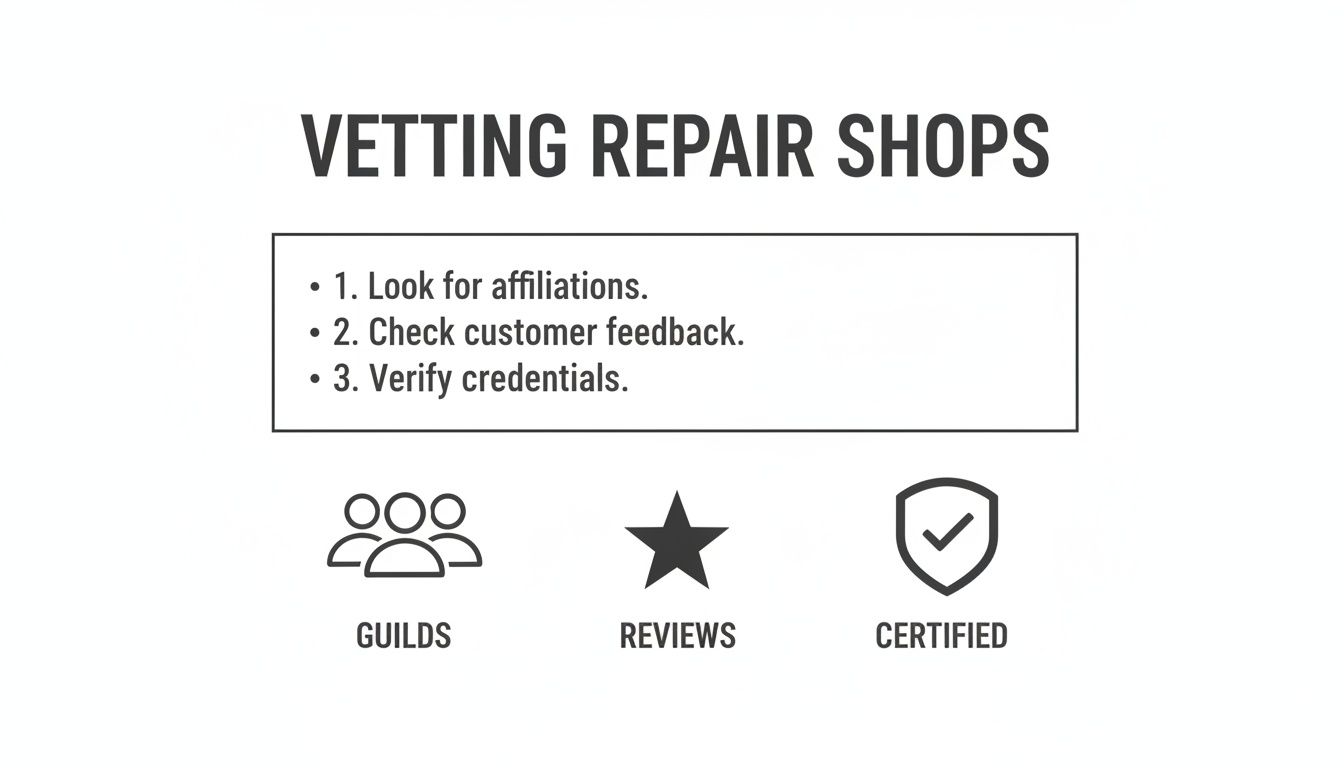
Confirming Their Expertise and Warranty
Once you’ve covered the logistics, it’s time to confirm they have the right skills for your machine and that they stand behind their work. This is especially critical if you have a specialized machine, like a long-arm quilter or a multi-needle embroidery unit.
In Canada, sewing machine repair is a recognized trade, not just a hobby. For example, our technicians at All About Sewing have over 25 years of brand-trained experience with complex machines from BERNINA, Brother, and JUKI. That experience is crucial when dealing with issues like tension failures, which can make up nearly 40% of all repair jobs. You can learn more about the national classification of these skilled services here.
A workmanship warranty is a promise. It means that if the same problem crops up again soon after you get your machine home, the shop will make it right without charging you again. It’s your safety net against a shoddy repair.
Dig a little deeper with these questions:
- Have you worked on my specific brand and model before?
- Do you use genuine manufacturer parts or aftermarket ones?
- What kind of warranty do you offer on your repairs and the parts you use?
The answers will quickly tell you if you’re dealing with a true specialist or just a general handyman.
Vetting a Repair Shop Questions and Answers
Knowing what to listen for is half the battle. This table breaks down what a great answer sounds like compared to one that should give you pause.
| Question to Ask | Green Flag Answer (Professional) | Red Flag Answer (Caution) |
|---|---|---|
| Do you provide an estimate first? | "Absolutely. We charge a small bench fee for diagnosis, which we apply to the repair. We'll call you with a full quote before we proceed." | "We'll just fix it and send you the bill." |
| What is your repair warranty? | "We offer a 90-day warranty on all our workmanship and a one-year warranty on any new parts we install." | "We don't really offer one. It should be fine when it leaves." |
| Are you trained on my machine's brand? | "Yes, I'm certified by [Brand Name] and have been working on their models for over 10 years." | "A sewing machine is a sewing machine. They're all basically the same." |
| What's your average turnaround time? | "Typically, it's about 7-10 business days, but we'll give you a more precise timeline when you drop it off. It can depend on parts." | "Not sure, we're really busy. We'll call you when it's done." |
| Do you use genuine parts? | "We always use genuine manufacturer parts whenever they're available to ensure the best performance and longevity." | "We use whatever we can get our hands on that fits." |
By asking these direct questions, you empower yourself to make the best choice and can feel confident that your machine is in capable, professional hands.
Breaking Down Repair Costs and Timelines
When you're looking up "sewing machine repair near me," let's be honest—the two biggest questions are always: "How much is this going to cost?" and "When will I get it back?" Knowing what to expect financially helps you weigh whether it makes more sense to repair that trusty machine or just buy a new one. Any professional shop worth its salt will be upfront about its pricing.
It usually starts with what's called a bench fee or diagnostic charge. This covers the technician's initial time to really dig into your machine, figure out what’s actually wrong, and pinpoint the parts and labour needed to fix it. A key sign of a reputable shop is that they'll almost always credit this fee toward the final repair bill if you give them the green light.
Understanding Repair Pricing
After the initial check-up, the final bill really comes down to two things: parts and labour. Labour is typically an hourly rate that pays for the technician’s time and skill. Parts, on the other hand, can be all over the map. A tiny spring might cost next to nothing, but a fried electronic motherboard could be a pretty serious expense.
- Labour Rates: This isn't just about time; it's about the technician's expertise and how tricky the job is.
- Parts Costs: These can vary wildly depending on the brand, model, and how easy it is to get the part.
- Final Estimate: You should always get a clear, detailed quote before any work starts. This puts you in complete control.
A true professional will always be straight with you about the value of a repair. If fixing your machine is going to cost nearly as much as buying a new one, a good technician will tell you that and help you make the smartest call for your wallet.
Factors That Influence Timelines
How long you'll be without your machine really boils down to two main things. First is the shop's current workload. If it's a busy season, you might have to wait in line, so to speak. The other big variable is parts. Common parts for popular machines are usually on hand, but if you have a vintage or less common model, the technician might have to special-order something, which naturally adds to the wait.
A good shop will be transparent about this, giving you a realistic timeline. For most standard jobs, you can expect to have your machine back within 7 to 14 business days.
Here in Ontario, the cost for most repairs falls somewhere between $100 and $250. When you compare that to the $800+ you might spend on a brand-new machine, it's easy to see the savings. Technicians with specific expertise in brands like PFAFF and Ricoma are especially valuable for fixing common issues like embroidery glitches (which make up about 35% of their work) and frame problems (20% of cases). A solid warranty on the repair work is the final piece of the puzzle, giving you peace of mind. You can see how established these services are by checking out the Canadian industry classification data.
Getting Your Machine Ready for Service
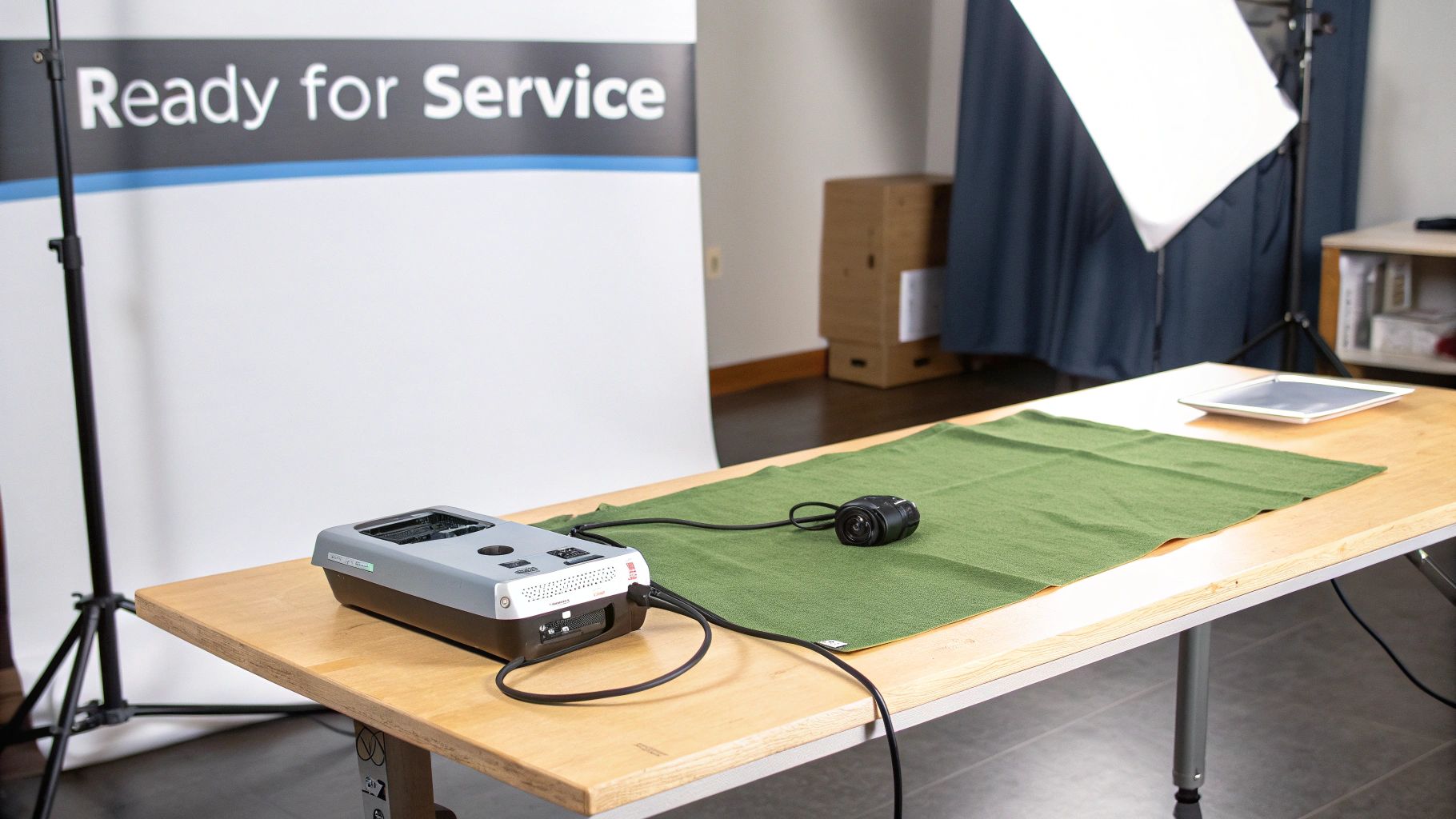
Before you pack up your machine and head to the shop, a little bit of prep work can make a world of difference. Spending just a few minutes gathering the right accessories and information helps the technician pinpoint the problem much faster.
Think of it this way: the more clues you provide, the quicker and more accurate the diagnosis will be. It’s the best way to ensure a smooth, efficient repair.
What to Bring to the Repair Shop
When you've found a promising "sewing machine repair near me," remember that what you bring with you is almost as important as the machine itself. Forgetting a key component can cause frustrating delays and might even stop a technician from being able to properly test their work.
Here’s a simple checklist to make sure you have everything you need:
- Your Machine: Sounds obvious, but make sure it’s packed securely for the trip!
- Power Cord and Foot Control: These are absolutely essential. The tech can't run or test the machine without them.
- The Bobbin Case: Even if you don't think it's part of the problem, the bobbin case is a critical piece of the puzzle for forming a proper stitch.
- A Standard Presser Foot: Bring the general-purpose foot that came with your machine.
- A Sewing Sample: This is your secret weapon. A small scrap of fabric that clearly shows the issue—whether it's skipped stitches, tangled threads, or wonky tension—is worth a thousand words.
Your story is one of the most valuable diagnostic tools a technician has. The more details you can share about what was happening right before the problem started, the quicker they can pinpoint the cause.
Tell the Story of the Problem
Before you drop off your machine, try to recall the exact circumstances when the issue started. A good technician is a bit like a detective; they’ll listen closely to your experience to understand the context behind the malfunction.
Jot down a few notes or just be ready to answer questions like:
- What kind of fabric and thread were you using? (Heavy denim? Silky rayon?)
- Did you hear any strange noises, like a new clunk, grind, or click?
- Was the machine sewing perfectly one minute and then suddenly stopped the next?
- Is the problem happening on all stitches, or just one specific stitch, like the zigzag?
This kind of collaboration helps the technician get a complete picture of your machine's behaviour. It really does speed up the whole process, which means you get back to your projects that much sooner.
Choosing a Repair Partner You Can Trust
When you search for "sewing machine repair near me," you’re not just trying to solve a problem. You’re looking for a partner who understands your craft and can keep your machine running beautifully for years to come. It’s about finding a team that's as invested in your creativity as you are.
The best service centres are built on a solid foundation of trust and deep expertise. Top-tier technicians have gone through rigorous, brand-specific training. That means they know the unique quirks, mechanics, and electronics of your BERNINA, JUKI, or PFAFF machine inside and out, which guarantees a precise, reliable repair every single time.
More Than Just a Repair Shop
What really separates a good repair shop from a great one is the level of support they offer beyond just fixing a broken part. A true partner in your craft can help with so much more than a jammed-up motor.
Look for a shop that provides all-around care. This might include:
- Specialized Servicing: When a technician is an expert in complex machines like sergers and long-arm quilters, you know you're in good hands.
- Precision Tool Maintenance: Services like professional scissor sharpening demonstrate a genuine commitment to the entire craft of sewing, not just the machines.
- Community Engagement: Shops that offer classes, sell quality supplies, and give out friendly advice often become a hub for local sewers, building a fantastic and supportive environment.
A workmanship warranty is the ultimate sign of confidence. It's the technician's promise that they stand behind their work, giving you peace of mind that your investment is protected long after you’ve left the shop.
Choosing where to get your machine serviced is a big decision. In Ontario, the sewing and repair sector is a vital part of our local economy. A shop with 25+ years of experience has seen it all and is ready to handle everything from simple needle jams to frustratingly complex thread breaks on any machine you bring in.
Getting professional repairs can extend your machine’s lifespan by up to 50%, saving you hundreds of dollars compared to buying new. That’s a huge benefit, especially for the 65% of Canadian sewers who are hobbyists. You can learn more about Canada's appliance service industry right from the source.
Ultimately, by choosing a dedicated, experienced service centre, you’re not just fixing a machine—you’re joining a community that truly cares about your sewing journey.
Your Top Sewing Machine Repair Questions Answered
When you start looking for "sewing machine repair near me," you'll probably have a few questions pop into your head. It's totally normal. Let's walk through some of the most common ones so you can feel confident about getting your machine the care it needs.
How Often Does My Machine Actually Need a Service?
Think of it like a tune-up for your car. For most people sewing at home, bringing your machine in for a professional service every 12 to 18 months is a solid plan. This simple step keeps everything inside clean, properly oiled, and running smoothly.
If you're sewing every single day, or maybe even running a small business from home, you'll want to aim for an annual check-up. This proactive care is the best way to keep your machine in top form and avoid unexpected breakdowns.
Is It Worth Fixing an Older Sewing Machine?
In many cases, absolutely! This is especially true for those wonderful old mechanical machines that were built like tanks. They just don't make them like that anymore.
For a newer, more basic model, a simple rule can help you decide. Take a look at what the repair will cost. If it's more than half the price of buying a brand-new replacement, you might want to consider upgrading. Any good, honest technician will walk you through the pros and cons to help you make the right call.
A quick note on terms: A preventative service is like a wellness checkup. It's all about deep cleaning, lubricating, and making small adjustments. A repair, on the other hand, targets a specific problem—maybe a broken part or a timing issue that needs a direct fix.
Can Just Any Repair Shop Fix My Brand of Machine?
That's a great question, and the answer is not always. It's really important to ask if the shop has hands-on experience with your machine's brand.
Some machines, particularly complex computerized ones like a BERNINA or a high-speed JUKI, require special tools and know-how. Technicians who have gone through official brand training are your best bet for these, as they'll have the exact expertise needed to do the job right.
At All About Sewing, our technicians are brand-trained and have been at this for over 25 years. We've seen and serviced it all, making sure your machine gets the expert attention it deserves. Book your professional machine service with us today


