

The Uses for Liquid Starch in Sewing and Quilting
If you’ve ever fought with flimsy, uncooperative fabric, you know the feeling. It slips around, stretches out of shape, and frays at the slightest touch, making a clean cut or a straight seam feel like an impossible task. This is exactly where liquid starch comes in—it's a game-changer for your sewing kit.
Think of it as a temporary stabilizer for your fabric. It takes that limp, frustrating material and turns it into a crisp, stable surface that’s a dream to work with. For quilters and sewists, this simple product is often the secret to getting professional-looking results every single time. And when you're looking for where to buy liquid starch, a specialty shop like All About Sewing is your best bet for products specifically formulated for fabric arts.
Your Guide to Liquid Starch for Sewing and Quilting
Using liquid starch isn't just about making fabric stiff; it's about gaining control and precision from the moment you lay out your pattern to the final stitch. The advantages are real and can seriously elevate the quality of your work, making it an essential tool for both sewing garments and creating intricate quilts.
The Benefits for Every Sewist
Here’s what liquid starch can do for your projects:
- Prevent Frayed Edges: Starch works by binding the fabric threads together, which dramatically cuts down on fraying while you cut and handle your pieces.
- Ensure Precise Cuts: When your fabric is stiffened, it won’t shift or distort under your rotary cutter or scissors. The result? Perfectly accurate cuts.
- Achieve Flatter Seams: Starched fabric presses like a dream. This helps you get those incredibly flat, crisp seams that are so crucial for good-looking patchwork and professional garment construction.
- Stabilize Biased Edges: It’s fantastic for preventing that dreaded stretching and warping that happens when you’re working with pieces cut on the bias, a common challenge in both quilting and apparel sewing.
Across the Canadian crafting scene, liquid starch has become a go-to tool, especially for home sewists and quilters. In fact, since 2020, Canada's sewing supplies sector has seen a 25% increase in starch product sales, sparked by a huge resurgence in crafting hobbies. If you're curious, you can explore more data on starch market trends to see just how popular it's become.
This guide will walk you through everything you need to know about using this fantastic product.
Why Liquid Starch Is a Quilter's Secret Weapon
Ask any seasoned quilter for their secret to getting perfect results, and you might be surprised by the simple answer. Tucked away in their toolkit is a humble bottle of liquid starch, a true game-changer in the sewing room.
Think about trying to fold a piece of tissue paper into a sharp, precise origami crane. It’s a frustrating exercise, right? The paper is floppy, it won’t hold a crease, and it fights you the entire time. That's a lot like sewing with limp, untreated fabric. Now, imagine that same fabric transformed into something more like crisp, cooperative cardstock. That’s the magic of liquid starch.
Achieving Unmatched Precision and Stability
This simple step gives your fabric the body and stability it needs to behave. When your material isn't slipping and stretching all over the place, every cut you make and every seam you sew becomes exponentially more accurate.
The difference is something you can see and feel right away:
- Perfect Patchwork Points: For any quilter, getting those tiny points to meet perfectly is the goal. Stiffened fabric doesn't shift or warp, so your cuts are precise and your seams line up exactly where they should.
- Flawlessly Flat Quilt Blocks: Pressing starched fabric creates incredibly flat blocks that hold their shape. This makes piecing your quilt top together a breeze and ensures it lies flat for the final quilting.
- Superior Machine Embroidery: If you’ve ever fought with puckered fabric during machine embroidery, starch is your new best friend. It creates a stable foundation, so your beautiful, intricate designs come out looking clean and professional.
This boost in stability is a lifesaver beyond quilting, too. It’s fantastic for taming bias cuts, which are notorious for stretching out of shape. Even slippery fabrics like cotton lawn or silk become far more manageable and less frustrating to work with after a quick starch treatment.
By turning your fabric into a more predictable and stable material, liquid starch closes the gap between a frustrating sewing experience and a joyful, creative one. It's all about cutting down on mistakes and getting a finish you can truly be proud of.
From Frustration to Flawless Finishes
Ultimately, using liquid starch is about setting yourself up for success from the very first cut. It helps prevent common headaches like fraying edges and distorted seams that can throw an entire project off course.
Of course, starch provides temporary structure, but other tools are also essential for holding your project together. For instance, basting sprays are brilliant for temporarily bonding quilt layers without the hassle of pins. If you're looking to build out your sewing kit, a quality basting spray is an excellent addition.
By making starch part of your prep work, you’ll find the entire creative process becomes smoother and more enjoyable. And after you’ve created that beautiful quilt, you’ll want to know how to look after it. This ultimate guide to caring for your quilt has some fantastic advice for long-term care.
Whether you're just starting out or have been sewing for years, adding liquid starch to your routine is a simple step that delivers a world of difference.
Where to Purchase Liquid Starch in Canada
So, you're sold on the idea of using liquid starch to up your sewing game. The next big question is: where do you actually find the stuff? Finding the right liquid starch in Canada is pretty simple once you know where to look. While you might see some in the laundry aisle at the supermarket, your best bet for a high-quality, fabric-safe option is a dedicated sewing shop.
These specialty stores get it. They know what quilters and sewists need and stock products that won't harm delicate fabrics with harsh chemicals or overpowering perfumes. This is where you'll find real-world advice and supplies that are meant to work together.
Why a Specialty Sewing Shop Is Your Best Choice
When you’ve poured your heart, time, and money into a beautiful quilt or garment, you want to use products you can trust. A specialty sewing retailer like All About Sewing is more than just a store; it’s a community hub run by people who know their craft. The staff are sewists too, so they can guide you to the perfect starch for your project, whether you’re taming a slippery cotton lawn or adding structure to quilting cotton. You can purchase the liquid starch you need from them with confidence.
Shopping at a dedicated sewing store gives you a few key advantages:
- Expert Guidance: The team can break down the differences between various starch products and help you pick one that’s right for your fabric and technique.
- Curated Selection: You’ll find products made specifically for crafting, ensuring they are safe for your fabric and will wash out completely.
- One-Stop Convenience: Grab your starch while you’re picking up thread, needles, and fabric. It saves you an extra trip!
Recent trends in Canada show a clear shift toward these specialized retailers. Ontario, for example, is a major hub, accounting for 22% of the national craft supply volume. With over 20,000 sewing enthusiasts in Ontario alone, starch purchases jumped by 16% after 2022. Shops like All About Sewing in Barrie cater directly to this passionate community, offering Canada-wide shipping and loyalty programs that have earned them a 30% rate of repeat customers. For a deeper dive into these market trends, you can explore detailed research on the thinned starches market.
The image below really nails down the core benefits of using a quality liquid starch—it all comes down to precision, stability, and getting a better final result.
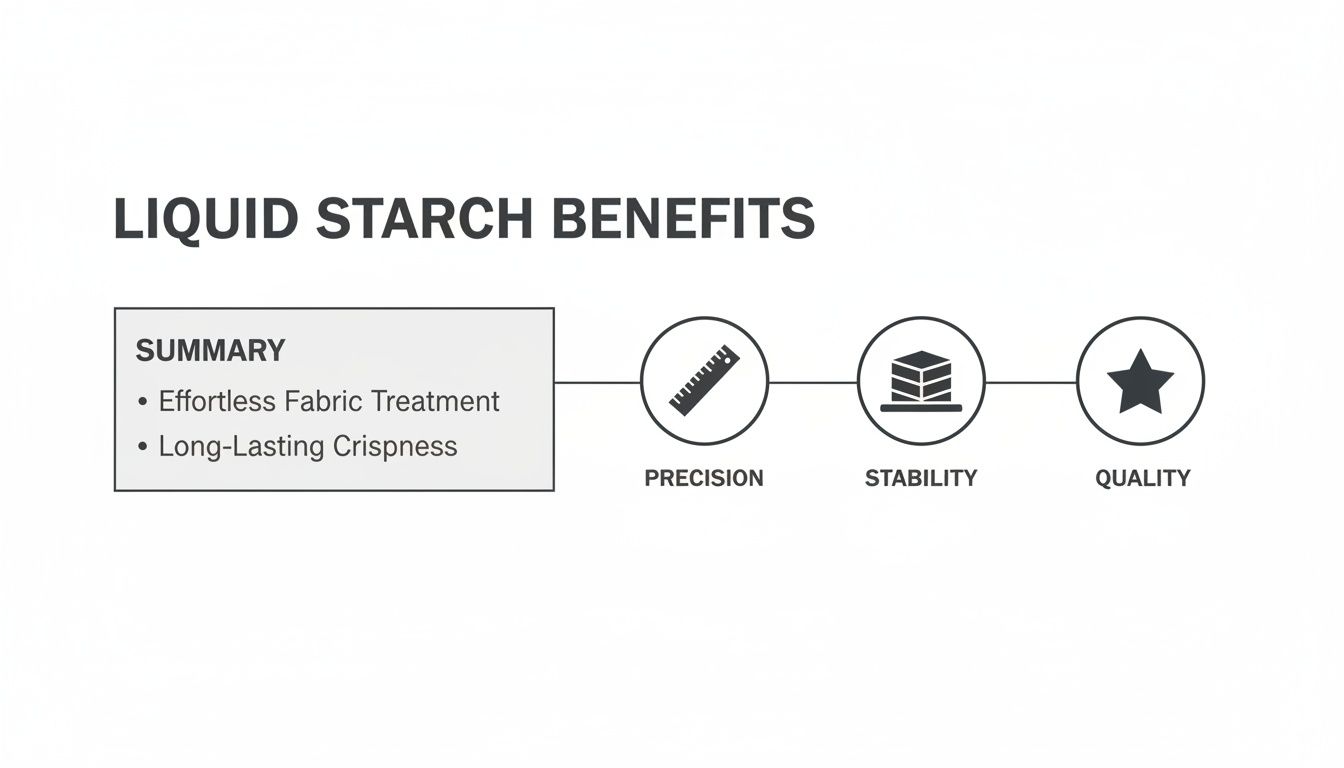
This visual shows how a simple treatment gives you much better control over your fabric, which is the secret to any successful sewing project.
Exploring Other Retail Options
While specialty sewing shops are my top recommendation, you can find liquid starch in other places. It’s good to know the pros and cons of each so you can decide what works best for you.
To help you choose, here's a quick comparison of the most common places to find liquid starch in Canada.
Comparing Retailers for Liquid Starch
| Retailer Type | Pros | Cons | Best For |
|---|---|---|---|
| Specialty Sewing Shops | Expert advice, curated fabric-safe products, one-stop shopping for all sewing needs. | May have fewer locations, potentially higher prices on some items. | Quilters and sewists who want high-quality, reliable products and personalized guidance. |
| Big-Box & Grocery Stores | Widely available and generally inexpensive. | Products are for laundry, may contain fragrances or additives that can damage fabric. | Quick, convenient purchases when you're in a pinch and not working with delicate materials. |
| Online Marketplaces | Huge selection of brands, convenient home delivery. | Shipping costs can be high, no expert advice, can't inspect the product first. | Shoppers who know exactly what brand they want or are looking for a specific product not available locally. |
| Hardware & Craft Stores | Sometimes carry specialty starches for crafting purposes. | Selection can be inconsistent and limited. | Finding multi-purpose craft supplies alongside your starch. |
Ultimately, the best place to buy depends on whether you value expert advice and product quality over pure convenience and price.
Big-Box and Grocery Stores
Large retail chains usually stock liquid starch in the laundry aisle. These products are easy to find and won’t break the bank, which is a huge plus. The catch? They are designed for your jeans, not your precious quilting fabrics.
A quick heads-up: laundry-grade starches often contain perfumes or other additives that could discolour your fabric over time. Always, always test on a scrap piece first!
Online Retailers
Marketplaces like Amazon offer a massive selection of liquid starch brands from all over the world. The biggest draws are the variety and the pure convenience of having it delivered to your door. On the flip side, shipping costs can add up, and you miss out on the valuable advice you’d get from a local shop. You also can't check the product out before you buy, which can be a gamble if you're trying a new brand.
For a reliable product you can trust, consider the Odif Fabric Booster available from All About Sewing. It provides excellent stiffness and is specifically designed for fabric arts.
How to Choose the Right Liquid Starch
When you're standing in the laundry aisle or scrolling through online shops, it’s easy to think all liquid starch is the same. But grabbing the first bottle you see isn't the best strategy. The secret is matching the right product to your project to get that perfect stiffness without any nasty surprises.
The most important thing to check is the formula. Many products meant for laundry have added fragrances, softeners, or other chemicals that can leave stains or damage delicate quilting cottons over time. To be safe, I always recommend sticking with a starch made specifically for crafting and sewing, like the ones we trust at All About Sewing.
Decoding the Product Label
Once you start comparing bottles, the label will tell you everything you need to know. A quick look at a few key details can save you a lot of guesswork and ensure you get consistent, reliable results every single time.
Here's what I always look for:
- Concentration: Is it ready-to-use right out of the bottle, or is it a concentrate you need to dilute with water? Concentrates are great because they give you control over the stiffness and are often more budget-friendly. Pre-mixed sprays, on the other hand, are all about convenience.
- Ingredients: Simpler is almost always better. The best liquid starches for fabric have straightforward, pH-neutral formulas and are unscented to avoid any chance of discolouration.
- Intended Use: Look for terms like "fabric stiffener" or "fabric booster." These are designed to give your fabric that crisp, almost paper-like feel that makes cutting and piecing intricate quilt blocks so much easier.
It's interesting to see how many options we have now. Canada's modified starch market is growing fast, and our country holds a solid second-place spot in North America with over 40% of the market share. This means more variety for us sewists, including non-GMO starches, which are a priority for about 25% of environmentally-conscious quilters. You can learn more about the expanding starch market and how it’s changing what’s available on the shelf.
Comparing Popular Brands and Types
You'll quickly find that different brands have their own unique quirks. Some formulas are lighter, perfect for giving a little body to flowy apparel fabrics like rayon or cotton lawn. Others are much heavier, built to give quilting cottons that firm, stable structure needed for precise seams and sharp points.
When in doubt, always test a new starch on a scrap of your project fabric first. It’s a simple step that lets you see exactly how stiff it will get and check for any weird reactions before you treat a whole yard of your favourite print.
Finally, consider the bottle size and your budget. If you only sew occasionally, a small spray bottle will probably do the trick. But for avid quilters who starch everything before they cut, buying a large jug or a concentrate is a much smarter and more economical choice in the long run.
Making Your Own Liquid Starch at Home
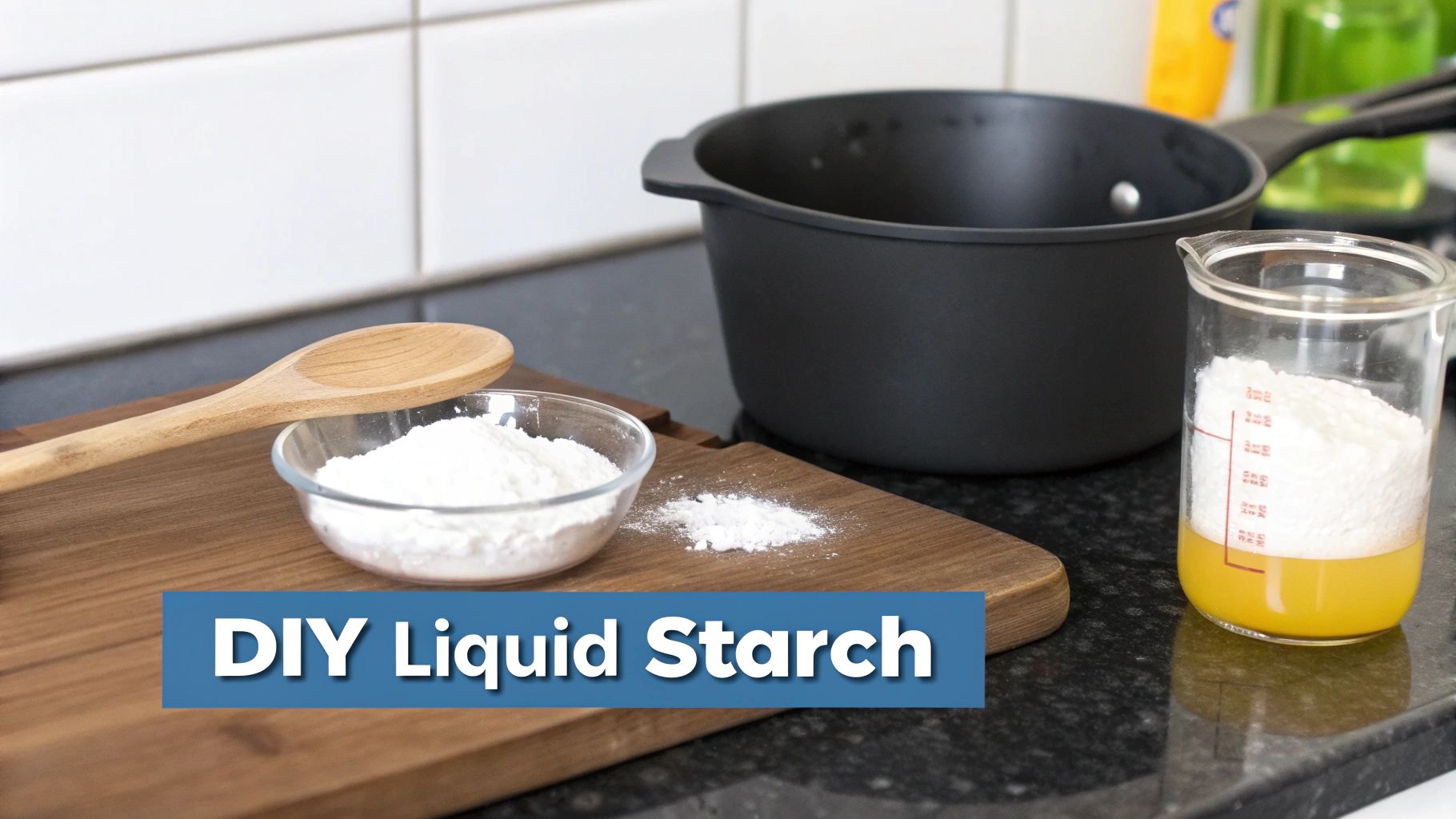
Sometimes the best solution is the one you can whip up right in your own kitchen. Whether you’ve run out mid-project or just prefer a DIY approach, making liquid starch is surprisingly simple. All it takes are two common household ingredients.
This homemade alternative can be a real lifesaver when you're in a pinch, giving you that essential crispness to stabilize fabric for precise cutting and piecing. Just keep in mind that while it's a fantastic temporary fix, commercial formulas generally offer better consistency and a much longer shelf life. For your most treasured projects, a store-bought starch might be the more reliable choice.
A Simple Recipe for Homemade Starch
Ready to give it a go? This recipe is quick, easy, and gets the job done. It uses the natural stiffening power of cornstarch to give your fabric the structure it needs.
Here’s how to do it, step-by-step:
- Mix the Base: Start by dissolving 1 tablespoon of cornstarch in about 2 tablespoons of cold water. Keep stirring until it forms a smooth, lump-free paste. Getting this first step right is key to avoiding clumps later on.
- Add Hot Water: Boil roughly 2 cups of water. Slowly and carefully pour the boiling water into your cornstarch slurry, stirring the whole time until the mixture becomes translucent.
- Cool and Strain: Let the mixture cool down completely. To get a perfectly smooth spray that won’t clog your bottle, it's a good idea to strain it through a fine-mesh sieve or a piece of cheesecloth.
- Bottle and Store: Pour your finished liquid into a clean spray bottle. That's it—your homemade starch is ready to use!
For the absolute best results, try to use distilled water. It's free from the minerals found in tap water that can sometimes leave little deposits on your fabric, ensuring a clean and professional finish every time you press.
Customizing and Storing Your DIY Starch
One of the best parts about making your own starch is that you can tweak the strength. If you need a really stiff, almost cardboard-like feel for a specific project, just add a bit more cornstarch to your initial paste. For a lighter hold, simply use less.
Proper storage is key. Because this is made from food-based ingredients, homemade starch can spoil. Keep it in the refrigerator, where it should stay fresh for about two weeks. Always give the bottle a good shake before you use it.
After pressing your starched fabric, using a quality pressing tool can make a world of difference. For instance, a Unique Tailor's Clapper is fantastic for setting seams and creating incredibly crisp edges.
Common Questions About Using Liquid Starch
It's one thing to hear about how great liquid starch is, but it's another to actually start using it. It’s completely normal to have a few questions before you dive in. Getting some clear answers will help you feel much more comfortable bringing this simple tool into your sewing space.
Let’s go over some of the most frequent questions that pop up for quilters and sewists. We'll get into the practical details to help you skip the common pitfalls and achieve those crisp, professional results you're aiming for.
Can I Use Laundry Starch for My Quilting Projects?
You can, but it’s not always the best idea. Laundry starch is built for things like dress shirts, so it often has fragrances and other additives that aren't great for delicate quilt fabrics. Over time, these extras could cause discolouration or even damage the fibres.
Your safest bet is always to grab a product designed specifically for fabric crafts. These starches are pH-neutral and formulated to wash out completely, which protects the colour and feel of your fabric for the long haul.
How Stiff Should My Fabric Be?
This really comes down to the job at hand. For most quilt piecing, you're just looking for a light, crisp feel. Think of it as giving the fabric a bit of a backbone—enough to stop it from wiggling around, but not so much that it feels like cardboard.
For more specialized techniques, though, you’ll want to ramp up the stiffness.
- Foundation Paper Piecing: Here, you want the fabric to feel almost like cardstock. That extra stability is a lifesaver when you're sewing on paper.
- Machine Embroidery: A firm base is crucial to prevent the fabric from puckering and distorting your beautiful stitch-outs.
- Taming Bias Edges: If you've ever fought with a stretchy bias edge, you know the struggle. A good dose of starch will keep it from stretching out of shape while you work.
The best advice? Always test on a scrap piece first. You have total control. You can build up stiffness with a few light coats or dilute a stronger starch with water until it feels just right. A quick test saves a ton of headaches later.
Will Liquid Starch Attract Pests to My Quilt?
This is a valid worry, but it’s easy to avoid. The myth that starch attracts bugs comes from a time when projects weren't always washed. Liquid starch is meant to be a temporary helper that gets washed out when you're done.
Once you launder your finished quilt, all the starch residue is gone. With nothing left to munch on, there’s nothing to attract any unwanted critters. Just be sure to give your project a thorough wash before storing it away or gifting it.
Can Using Liquid Starch Damage My Sewing Machine?
Nope, not if you use it correctly. The key is that the starch is applied and completely dried before you start sewing. In fact, a properly starched fabric often behaves better, gliding smoothly through your machine, which can lead to less needle friction and fewer skipped stitches.
The golden rule is to make sure your fabric is 100% dry before it touches your machine. This prevents any sticky buildup on your needle or feed dogs. Of course, regular machine cleaning is always a good habit, whether you use starch or not.
Ready to see what perfectly prepped fabric can do for your projects? Find fabric-safe liquid starch and all the other sewing supplies you need at All About Sewing. Check out our collection and get the right tools to make your next project your best one yet. Visit All About Sewing to learn more.


