

Your Guide to Finding the Best Quilting Classes Near Me
Typing "quilting classes near me" into a search bar is often the very first step on an incredible creative adventure. Finding a local, in-person class gives you something you just can't get from a screen: real, hands-on guidance and a community that gets just as excited about fabric as you do.
Let this guide help you find the perfect place to start learning this timeless craft.
Why Join a Local Quilting Class?
Walking into a quilting class is about so much more than just learning to sew—it's about becoming part of a rich, creative tradition.
Online tutorials are great, but they can't beat the immediate, personalized feedback you get from an instructor who's right there with you. They can see if your posture needs a tweak, show you how to guide fabric more smoothly, and catch little mistakes before they turn into frustrating habits. It’s like having a friendly expert looking over your shoulder, making sure you start off on the right foot.
This kind of supportive setting also gives you a chance to use specialized tools you probably don't have at home, like long-arm quilting machines or huge cutting mats. It’s the perfect way to test-drive professional-grade equipment and figure out what you really need before you spend any money.
Connect with a Creative Community
Beyond the skills and the fancy machines, quilting classes are where you find your people. You’ll be surrounded by others who share your passion, creating a space where everyone feels inspired and encouraged. For many, this social connection is one of the best parts of the craft.
The quilting world is a dedicated one, with 9 to 11 million active quilters in North America alone. These enthusiasts spend an average of six hours a week on their craft, which is why local classes are such a vital hub for quilters of all levels. You can discover more insights about quilting market trends and see just how much this community continues to grow.
A great quilting class doesn’t just teach you techniques; it connects you to a network of fellow creators who will celebrate your progress, share tips, and inspire your next project.
The Power of Structured Learning
A good class takes the guesswork out of learning. Instead of randomly searching for what to do next, a well-designed curriculum guides you from one skill to the next in a way that just makes sense. This step-by-step approach builds a solid foundation and gives you a real confidence boost with every new technique you master.
You'll learn all the essentials in the right order:
- Mastering the Basics: Get comfortable with precise rotary cutting and sewing that perfect quarter-inch seam.
- Building Blocks: Move from simple nine-patch blocks to more complex, beautiful patterns.
- Finishing Touches: Understand how to properly baste, quilt, and bind your project so it looks polished and professional.
Understanding the Different Types of Quilting Classes
When you start searching for “quilting classes near me,” you’ll quickly find a fantastic variety of options. It’s like walking into a big, welcoming house with lots of different rooms—there’s a perfect spot for everyone, whether you've never touched a sewing machine or you've been quilting for years.
The trick is knowing which door to open first.
Choosing Your Quilting Class Level
Finding the right fit starts with honestly assessing where you are on your quilting journey. Are you just starting out, or are you looking to polish a specific skill? Each level is designed to meet you where you are and help you grow.
Let's break down what you can expect from each type of class.
| Class Level | Core Skills Taught | Typical Projects | Ideal For |
|---|---|---|---|
| Beginner | Rotary cutting, ¼-inch seam accuracy, basic block construction, fabric selection, pressing techniques. | Simple patchwork projects like baby quilts, cushion covers, or table runners. | Absolute newcomers or those who need a solid refresher on the fundamentals. |
| Intermediate | Appliqué, free-motion quilting, paper piecing, working with triangles (like half-square triangles), sashing, and borders. | More complex quilts with intricate patterns, wall hangings, or quilted bags. | Quilters who are confident with the basics and ready to expand their creative toolkit. |
| Advanced | Advanced colour theory, intricate design work, art quilting techniques, custom quilt design, and heirloom quilting methods. | Large, complex quilts, original design projects, or show quilts requiring precision and artistry. | Experienced quilters looking to refine their unique style and master advanced techniques. |
This table should give you a clearer picture of where you might belong. The goal is to feel challenged but not overwhelmed, ensuring you have a fun and rewarding experience.
From First Stitches to Finished Quilts
Beginner classes are your launching pad. They’re all about building your confidence from the ground up. You’ll get comfortable with the essential tools of the trade, like learning how to handle a rotary cutter safely and mastering that all-important quarter-inch seam. The whole point is to nail down these fundamentals so your first projects turn out great.
Once you’ve got the basics down pat, intermediate workshops are the next logical step. This is where you really start to expand your creative horizons. You might try your hand at appliqué, which involves sewing smaller fabric shapes onto a background, or even dip your toes into the art of free-motion quilting to stitch beautiful, hand-guided designs.
This journey from learning the ropes to becoming part of a creative community is a well-trodden path.
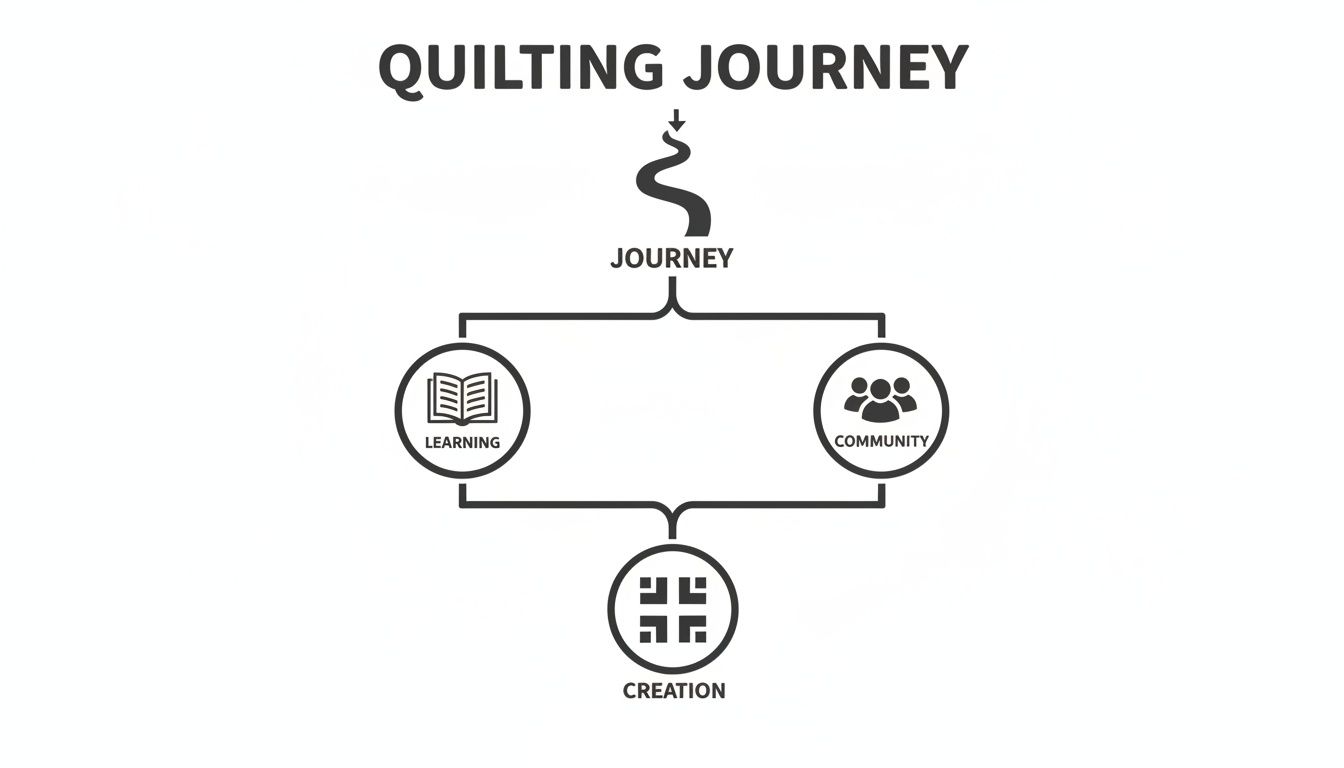
As you can see, each stage builds on the last, with community and shared learning playing a huge role along the way.
Specialized Workshops and Masterclasses
For those who have been quilting for a while, advanced classes and masterclasses are a chance to really dive deep. These sessions tackle complex designs, advanced colour theory, or niche skills like paper piecing for those perfectly sharp points. Often led by well-known instructors, they’re a fantastic way to push your boundaries and refine your artistic voice.
Beyond skill levels, think about the time you can commit. Classes come in a few different formats:
- One-Day Workshops: These are brilliant for learning a specific technique or finishing a small project in a single, focused session.
- Multi-Week Courses: Perfect for a more immersive experience, these courses guide you through a larger quilt from the first cut to the final stitch over several weeks.
- Project-Based Classes: Here, the focus is entirely on creating one specific thing, like a tote bag, a festive table runner, or a wall hanging.
The right class really comes down to matching the format and curriculum with what you want to achieve. Whether you’re looking for a quick creative fix or a long-term skill-building journey, there’s an option out there for you.
And remember, quilting is just one part of the wonderful world of textile arts. There are all sorts of hands-on creative outlets to explore, like a unique Kintsugi workshop. By understanding all the different types of classes available, you can pick the one that truly fits your goals and gets you excited to start creating.
What Makes a Quilting Class Truly Great?
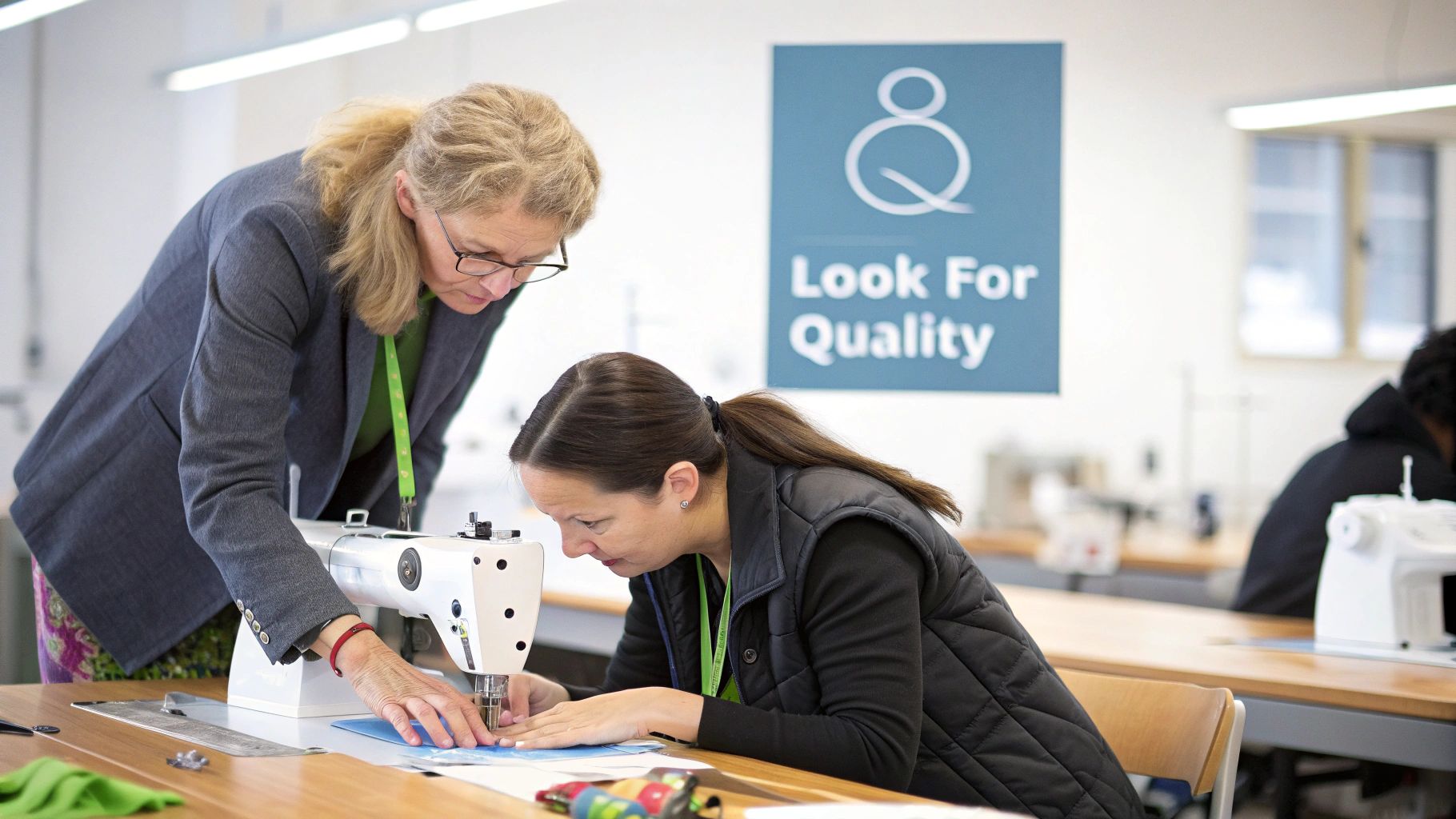
When you start searching for “quilting classes near me,” you’ll quickly see there are plenty of options out there. But how do you sort through them to find one that’s actually worth your time and money? A truly high-quality class is more than just a convenient time slot; it’s a perfect mix of an inspiring teacher, a great workspace, and a supportive atmosphere where your creativity can take flight.
Think of it this way: the instructor is the heart of the class. They aren't just there to show you how to do something; they're your guide, your troubleshooter, and your biggest cheerleader. A fantastic teacher can make even the trickiest techniques feel simple and will have the patience to give you a hand right when you need it most.
Finding the Right Instructor
So, what should you look for in an instructor? Experience is key—not just in quilting, but in teaching quilting. Someone who is genuinely passionate about their craft will make every class exciting and engaging.
When you're checking out a potential teacher, look into their background. Have they won awards? Do they have a unique style or method? The best in the business often have impressive credentials, and a little digging can tell you a lot about the quality of instruction you'll receive.
Checking Out the Classroom and Tools
The space itself plays a huge role in your learning experience. You want a studio that’s bright, clean, and has enough room for everyone to spread out their fabric without bumping elbows. Nothing kills the creative vibe faster than feeling cramped or working in poor light.
Here are a few things to keep an eye out for in a top-notch quilting studio:
- Plenty of Room to Work: You'll need large cutting mats and big tables to properly cut and lay out your quilt blocks.
- Good Quality Equipment: Access to well-maintained sewing machines is a huge bonus, especially if you haven't bought your own yet. Our guide on the best sewing machine for quilting can give you an idea of what makes a machine great for this craft.
- The Right Tools for the Job: A good studio should provide essentials like irons, ironing boards, design walls, and a good selection of rulers for everyone to use.
A well-equipped and inviting classroom removes barriers to learning. It lets you focus completely on your project and the techniques being taught, rather than struggling with inadequate tools or a poorly lit space.
Why the Size of the Class Matters
Finally, don't forget to ask about class size. While it can be fun to be in a big, bustling group, smaller classes almost always offer a better learning experience.
With fewer students, the instructor can give everyone individual attention, answer questions in detail, and offer feedback that’s specific to your project. For anyone just starting out, this kind of personalized guidance is incredibly valuable for building a solid foundation of skills and confidence.
How to Prepare for Your First Quilting Class
There's nothing quite like the feeling of walking into your first quilting class feeling organized and ready to go. A little bit of prep work can transform those first-day jitters into pure creative excitement, letting you focus on soaking up everything your instructor has to share.
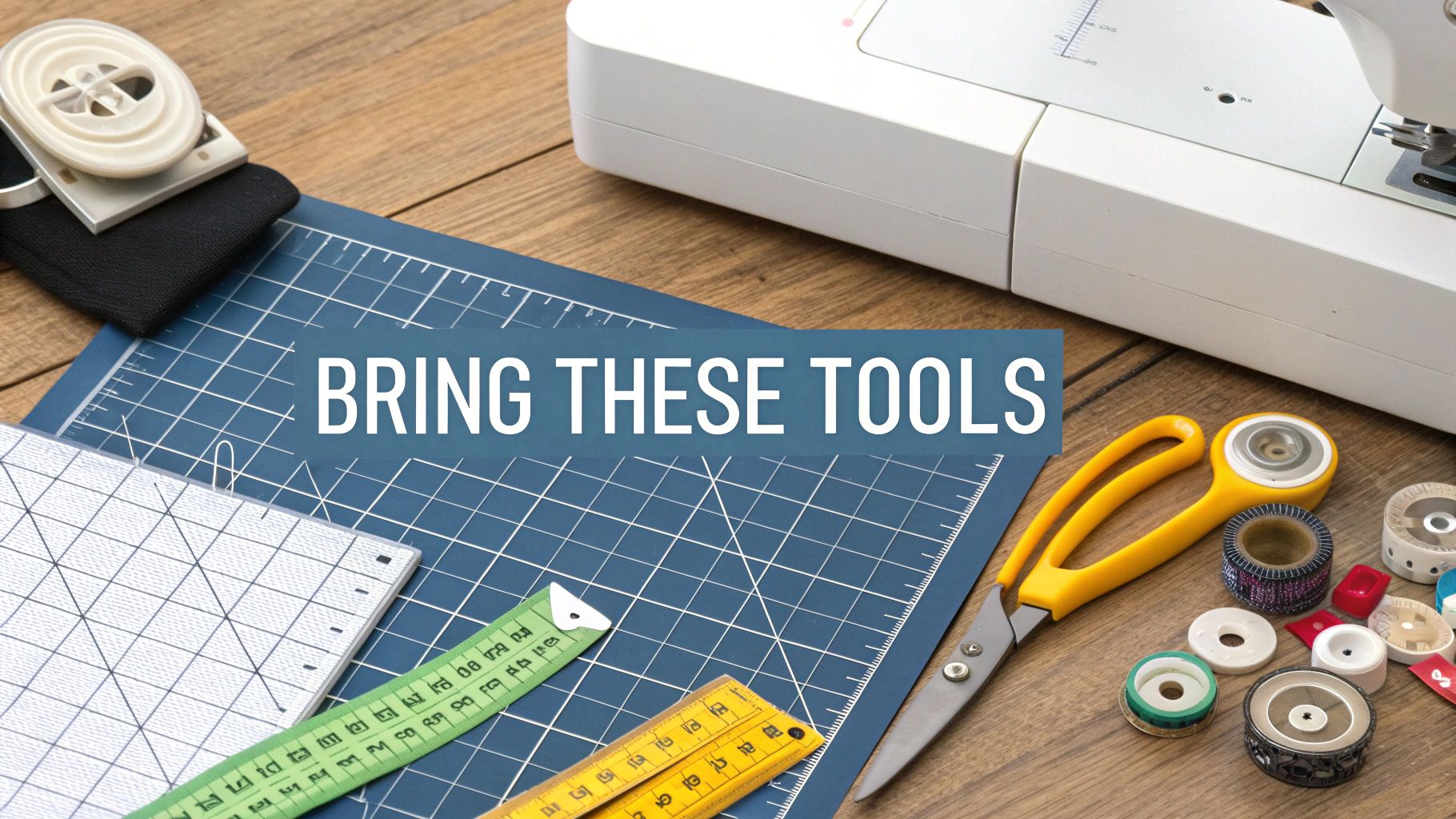
First thing's first: take a close look at the supply list you received when you signed up. This list is your best friend. I always recommend holding off on buying anything until you have that list in hand—it’ll save you from purchasing the wrong tools or materials.
Your Essential Toolkit
Most beginner classes will ask you to bring a core set of quilting tools. While the specifics might vary, you can almost always count on needing a few key items.
- Rotary Cutter & Mat: This pair is a quilter's non-negotiable for cutting fabric accurately and quickly. A sharp blade makes all the difference!
- Quilting Rulers: You’ll likely need a long ruler (a 6" x 24" is a common workhorse) and a smaller square one for squaring up your blocks.
- Quality Thread: A spool of good-quality, 100% cotton thread in a neutral colour like grey or cream is a safe bet for piecing.
- Basic Notions: Don't leave home without sharp fabric scissors, straight pins (or sewing clips, which are fantastic!), and a seam ripper. Trust me, every quilter, new or old, needs a seam ripper.
Preparing Your Sewing Machine
What about your sewing machine? The class details should tell you whether machines are provided or if you need to bring your own. If you're bringing yours along, make sure it’s running smoothly before you get to the classroom.
A quick check-up can save you from a lot of frustration. Pop in a fresh needle, wind a few bobbins, and make sure you have the right presser foot—a ¼-inch foot is a quilter’s best friend.
If you and your machine are still getting acquainted, it's a great idea to practice the basics at home first. For a bit more guidance, you might find our guide on sewing machine classes for beginners helpful for building that confidence.
Adopting a Beginner's Mindset
Honestly, the most important thing you can bring to class has nothing to do with your sewing kit. It's your mindset. Come with an open mind, a willingness to learn, and the understanding that you will make mistakes. That's part of the process!
Quilting is a journey, and even the most seasoned experts were beginners once. Get curious, ask all the questions you can think of, and remember that your instructor is there to guide you. Your first quilting class should be fun and inspiring, and a positive attitude is the best tool you can possibly bring.
Finding a Class That Fits Your Budget and Schedule
Let's talk about the practical side of things: money and time. Figuring out the financial and time commitment is a huge part of finding the right quilting class. Once you know what to expect, it’s much easier to pick a high-value class that fits neatly into your budget and your calendar.
Quilting class prices can look a little different depending on the format. A single-session workshop, which might focus on a specific skill like free-motion quilting, usually has a simple one-time fee. On the other hand, a multi-week course that walks you through an entire quilt from start to finish will have a higher price tag, but it spreads the learning and the cost over several weeks.
What's Included in the Price?
When you see a price listed, it's smart to ask what it covers. Almost always, the fee pays for the instructor's expertise and the use of the classroom space, which is great for accessing those big cutting tables and ironing stations. Materials, however, are often a separate purchase.
Keep an eye out for these potential extra costs:
- Fabric Kits: Many classes offer kits with all the fabric you need for a project. They’re super convenient, but they do add to the total cost.
- Patterns: Sometimes the pattern for the class project needs to be bought separately.
- Specialty Tools: You might need to pick up a specific ruler or a new-to-you notion if you don't already have it in your stash.
Professional instructors price their classes based on their experience and the type of class. For instance, a small, focused three-hour class with only two to four students might run about $35 per person. A full-day workshop for a larger group, like a quilt guild event, could be priced anywhere from $300 to $500 for the whole group. If you're curious, you can read more about how quilting teachers structure their fees to get a feel for the industry.
Fitting Quilting into Your Life
Finding a class that works with your schedule is just as critical as finding one you can afford. The good news is that most sewing studios get it—life is busy! That's why you'll usually find a few different scheduling options.
The best schedule is the one that lets you relax and really sink into the creative process without feeling rushed. Think about when you're at your best and have the brain space to soak up something new.
Weekday morning classes are a big hit with retirees and anyone with a flexible daytime schedule. Evening sessions are a fantastic choice if you work a 9-to-5, offering a wonderful way to unwind and switch gears after a long day. And for many people, weekend workshops are the perfect solution, giving you a solid block of time to dive deep into a project without the usual weekday hustle. With a little looking, you'll find the perfect quilting class near you.
Join Our Quilting Community at All About Sewing
Have you been searching for "quilting classes near me"? Your search can stop right here in Barrie, Ontario. At All About Sewing, we see quilting as so much more than just a hobby—it’s a chance to connect with others, bring beautiful ideas to life, and share a common passion. We've worked hard to create a warm, welcoming space for everyone, whether you're picking up a needle for the very first time or you're an experienced quilter ready to tackle a new challenge.

The heart of our community is our team of talented and genuinely friendly instructors. With years of quilting under their belts and a true love for teaching, they foster a supportive, fun atmosphere where no question is too small. They’ll be right there with you, guiding you through every stitch and seam of your project, helping you build both confidence and skill.
A Modern and Inspiring Classroom
The moment you walk into our bright, modern studio, you’ll feel your creative energy spark. We’ve designed the space to be inspiring and equipped it with everything you need for a fantastic learning experience, so you can just relax and focus on your craft.
- Top-of-the-Line Machines: You’ll get hands-on time with premium BERNINA and Brother sewing machines. They're all expertly maintained and ready to go when you are.
- Small Class Sizes: We deliberately keep our classes small. This means you get plenty of personalized attention and one-on-one guidance from your instructor.
- Ongoing Support: Our connection with you doesn’t just end when the class is over. Our team is always here to offer advice and support for whatever projects you dream up next.
Joining a class at All About Sewing isn't just about learning a new skill; it's about becoming part of a local family of creators who will cheer you on every step of the way.
Getting signed up is simple. You can check out our full schedule of upcoming classes and register directly on our website. Whether you're thinking about a "Quilting 101" course or a special workshop on advanced techniques, there’s a spot waiting for you. For some great project ideas, get inspired by our guide to beautiful layer cake quilt patterns you could create.
Expanding your creative horizons can be a wonderful thing. Beyond quilting, our community has other great craft opportunities, like the local expertise at Capital Pottery Supplies and Studio.
It's time to stop searching and start sewing with us today
Got Questions About Quilting Classes? We've Got Answers
Stepping into a new creative hobby like quilting is exciting, but it's natural to have a few questions before you dive in. To help you feel confident as you search for "quilting classes near me," we've put together some straightforward answers to the questions we hear most often from new students.
Getting these little details sorted out first means you can focus on the fun part: learning, creating, and connecting with fellow quilters.
Do I Need My Own Sewing Machine to Take a Class?
Not always! Many studios, including us here at All About Sewing, have excellent sewing machines ready and waiting for you to use in class. This is a brilliant way to test the waters of quilting without committing to buying a machine right away.
That said, if you already have a machine at home, bringing it along is a fantastic idea. There's no better way to get comfortable with its quirks and features than by learning on the exact machine you'll be using for your projects. Just be sure to check with the studio or instructor beforehand to confirm you can bring your own.
What’s the Difference Between a Workshop and a Course?
Great question. The main difference really comes down to time and depth. Think of it as the difference between reading a single, focused chapter versus an entire book.
- A workshop is usually a one-off session, maybe a single afternoon or a full day. It’s designed to zero in on one specific skill or project, like mastering free-motion quilting or making a quilted tote bag.
- A multi-week course unfolds over several sessions. It’s structured to build your skills from the ground up, guiding you through a larger project—like a complete quilt—from the very first cut to the final binding stitch.
If you want a quick hit of knowledge or want to tackle a specific technique, a workshop is perfect. If you’re looking to build a solid, well-rounded foundation in quilting, a course is the way to go.
The Bottom Line: Your choice depends on your goal. Workshops are for a targeted skill boost, while courses offer a more complete learning journey.
How Much Fabric Do I Need to Buy for My First Class?
This is one of the most common questions we get, and the answer is always: it depends on the project! It's absolutely crucial that you wait until you receive the class supply list before you head to the fabric store.
That list, which you'll get after registering, will tell you exactly how much fabric you need and what kind to look for. Waiting for it saves you the headache of buying too little (or way too much!). For nearly all beginner classes, you'll be asked to get 100% cotton fabric. It’s stable, doesn't stretch much, and behaves predictably, making it the perfect material to learn on. Once you have that list, our team would be more than happy to help you pick out the perfect fabrics for your project.
Ready to start your quilting adventure with friendly, expert guidance? At All About Sewing, we have a class with your name on it. Explore our class schedule and register today!


