

Finding the Best Sewing Machine for Quilting
If you're a quilter, you know your sewing machine isn't just another tool—it's the heart of your craft. While plenty of great machines can get the job done, a model built specifically for quilting from brands like BERNINA, PFAFF, or JUKI is a completely different experience. They come with special features like massive throat space and sophisticated feed systems that make wrangling a king-sized quilt feel less like a wrestling match. Finding the right one is all about balancing those game-changing features with your budget and what you dream of creating.
Your Guide to the Perfect Quilting Machine
Picking out the best sewing machine for quilting is a big decision, one that sets the stage for your entire creative journey. This guide is here to cut through the noise and help you find a machine that not only fits what you need today but will be ready to grow with you as your skills evolve.
We'll walk through the real differences between a standard sewing machine and one designed with quilters in mind. You'll see why certain features aren't just "nice-to-haves" but absolute essentials for success and, just as importantly, for your enjoyment of the craft. Let's make sure you invest wisely in something you love.
Why a Specialized Machine Matters
Sure, a standard sewing machine can handle piecing a quilt top. But the real test comes when you sandwich the backing, batting, and top together. That’s where a purpose-built quilting machine proves its worth.
- Managing Bulk: Quilting means guiding multiple, thick layers of fabric smoothly. A machine with a small workspace quickly becomes a major source of frustration, causing your quilt to bunch up and your stitches to go wonky.
- Ensuring Even Stitches: Without a feed system designed for quilting, the top layer of your project can shift and "creep" as you sew. The result? Unwanted puckers and ripples that can ruin the look of your finished quilt.
- Precision and Control: Whether you're doing intricate free-motion designs or precise stitch-in-the-ditch work, you need absolute control over your speed and needle placement. These are features you just won't find on most basic models.
Understanding the Investment
The Canadian quilting scene is bigger than ever. With the North American quilting industry pulling in about $4.5 billion annually—a 150% jump over the last 25 years—it's clear that quilters are serious about their craft. This incredible growth means there's a huge demand for reliable machines that can handle the high thread counts and tight weaves of modern quilting cotton. For anyone looking for the best sewing machine for quilting, it highlights just how important it is to invest in a durable, trusted model. You can discover more insights on the quilting market to see just how much it has grown.
A good quilting machine is more than just a purchase; it's a long-term partner. Here’s a quick look at what truly separates a standard machine from one built for quilting.
| Feature Comparison | Standard Sewing Machine | Dedicated Quilting Machine |
|---|---|---|
| Throat Space | Typically 5–7 inches | Often 8.5–11+ inches |
| Feed System | Basic drop-feed dogs | Advanced dual feed or walking foot |
| Speed Control | Limited or basic options | Variable speed slide for precision |
| Included Accessories | General-purpose feet | Quilting table, free-motion foot |
In the sections ahead, we’ll break down these differences in much more detail. The goal is to give you the confidence to choose a machine that truly empowers your creativity, rather than holding it back.
The Quilting Features That Genuinely Matter
When you start looking for a new quilting machine, the spec sheets can be overwhelming. But after years of quilting, you learn that only a handful of features truly make or break the experience. These are the things that take you from fighting with your project to actually enjoying the creative flow.
Sure, a basic sewing machine can piece together a quilt top just fine. The real test, though, comes when you’re trying to stitch through that bulky quilt sandwich. That’s where a machine built for quilting really shines, helping you create something smooth, beautiful, and pucker-free.
Why You Need More Throat Space
If there's one feature I tell every new quilter to prioritize, it's the throat space (sometimes called the harp). This is simply the open area to the right of your needle. A standard sewing machine gives you maybe 5-7 inches, which is fine for sewing a shirt, but it’s a recipe for frustration when you’re quilting.
For quilting, a generous throat space isn't a luxury; it's a necessity. Think about it: as you quilt towards the middle, you have to stuff the entire bulk of your project into that small area. A cramped space means you’re constantly wrestling a tightly bunched-up quilt, which almost always leads to wonky stitches and puckering.
Honestly, look for a machine with at least 8.5 to 11 inches of throat space. It's the single biggest upgrade you can make to your quilting life. It gives you the breathing room to comfortably manage anything from a lap quilt to a king-sized beast without a fight.
Taming Your Layers with a Good Feed System
A quilt sandwich has at least three layers: your top, the batting, and the backing. Your machine's standard feed dogs only pull the bottom layer through. This can easily cause the top layers to shift and bunch up, ruining your beautiful piecing. This is exactly why specialized feed systems were invented.
- A walking foot is a quilter's best friend. It’s a presser foot attachment with its own set of feed dogs on top, moving in sync with the ones below. This simple device grabs all three layers and pulls them through together, keeping everything perfectly aligned. It’s a must-have for straight-line quilting and attaching binding.
- Integrated dual feed systems are the next level up. Brands like PFAFF and BERNINA have this built right in. A small mechanism engages from the back of the machine, acting just like a walking foot but without the bulky attachment. It's incredibly slick.
Whether it's a trusty walking foot or a built-in system, having a way to evenly feed your quilt sandwich is non-negotiable for professional-looking results.
The Little Details That Give You Total Control
Beyond managing the sheer size of a quilt, quilting is all about precision. The best modern machines have a few clever features designed to give you pinpoint control over every stitch.
A needle up/down function is one of those small things you’ll wonder how you ever lived without. You can set the needle to always stop in the down position, deep in your fabric. It acts like a third hand, pinning your work in place so you can lift the presser foot and pivot perfectly for sharp corners or tricky curves.
Another game-changer is variable speed control. This lets you set a maximum speed, no matter how hard you press the foot pedal. When you're deep in the zone with some detailed free-motion work, you can slow things right down to maintain accuracy. When you’re just chugging along on a long, straight seam, you can set it to a faster, more consistent pace.
And for the free-motion quilters out there, stitch regulation is the holy grail. A stitch regulator uses tiny sensors to match the machine's speed to how fast you're moving the fabric. The result? Every single stitch is the same length, every time. It helps quilters at any level get that polished, professional look without years and years of practice. It's these kinds of thoughtful features that separate a good machine from the best sewing machine for quilting.
Comparing Quilting Machines for Every Skill Level
Choosing the right quilting machine isn’t about picking the one with the most bells and whistles. It's about finding a partner for your creative journey, a tool that matches your ambition and skill level. A beginner needs a machine that builds confidence, not frustration, while a seasoned quilter demands the power and precision to bring complex visions to life.
This comparison goes beyond spec sheets to offer real-world advice. Whether you're piecing your first nine-patch block or tackling intricate free-motion designs on a king-sized quilt, the right machine makes all the difference. Let’s find your perfect match.
This flowchart can help you start thinking about what you truly need from a machine, based on the kinds of quilting you plan to do.
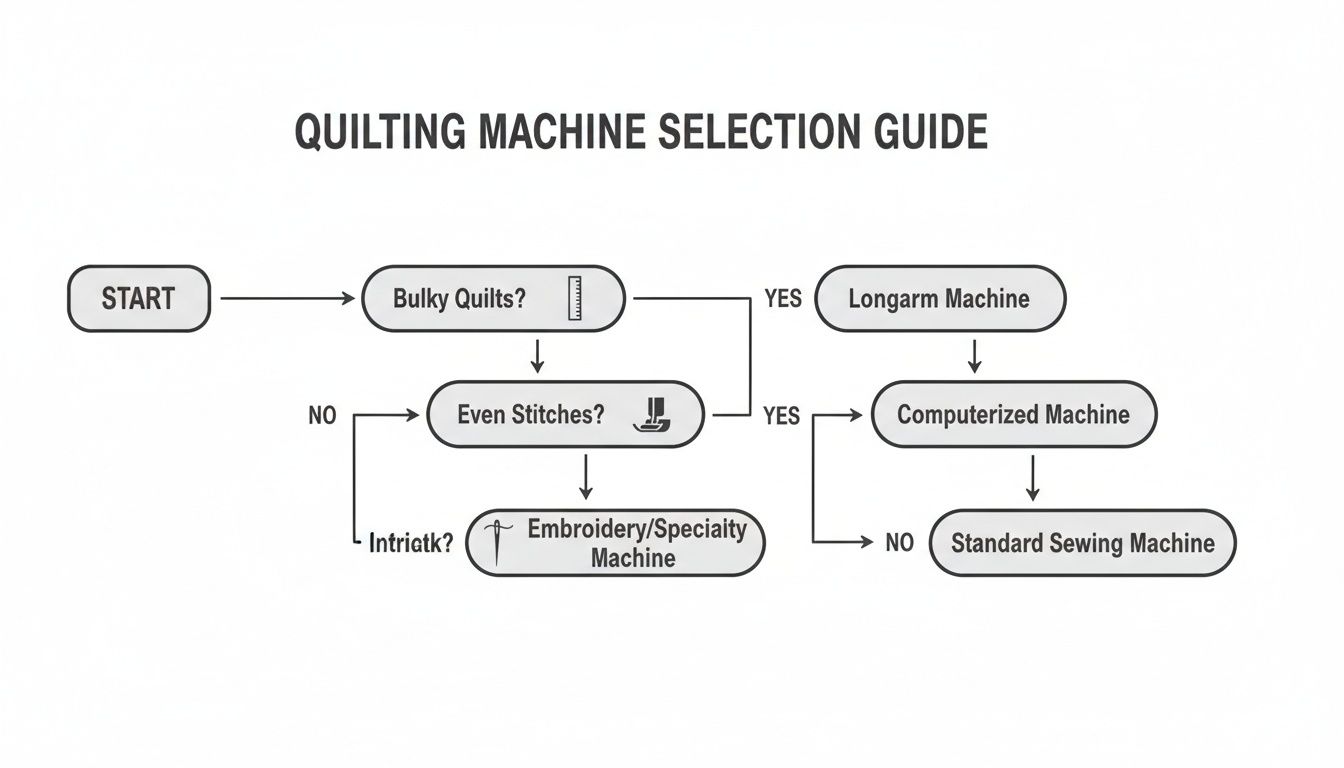
As you can see, specific goals like managing bulky quilts or achieving perfectly even stitches point directly to essential features you should look for.
Quilting Machine Feature Comparison by User Level
To make sense of the options, it helps to see how features stack up across different levels. This table breaks down what you can typically expect, from your first machine to a professional setup.
| Feature | Beginner Quilter (e.g., Brother, Singer) | Intermediate Quilter (e.g., PFAFF, JUKI) | Advanced/Professional (e.g., BERNINA, Handi Quilter) |
|---|---|---|---|
| Throat Space | 5–7 inches | 8–11 inches | 10–18+ inches (or full frame) |
| Feed System | Standard drop-feed, add-on walking foot | Integrated dual feed or advanced box feed systems | High-performance feeding, stitch regulation systems |
| Speed Control | Basic speed slider | Advanced speed control, programmable start/stop | Precision speed control, often with foot pedal options |
| Stitch Regulation | Not available | Rare, sometimes available as an add-on | Standard feature (e.g., BSR) on high-end models |
| Included Feet | Basic feet, sometimes a walking foot | A wider array including a ¼” foot and free-motion foot | Extensive collection of specialty quilting feet |
| Motor Power | Standard | Stronger, designed for thicker layers | High-power, high-speed industrial-grade motor |
| Budget (Approx.) | $300 - $800 | $1,000 - $4,000 | $5,000 - $25,000+ |
This comparison gives you a clear picture of how your investment translates into tangible features that directly impact your quilting experience.
For the Beginner Finding Their Footing
When you're just starting out, the main goal is to master the fundamentals—good piecing habits and straight-line quilting. You need a machine that’s reliable and easy to use, with features that help you learn without getting in your way.
Brands like Brother and Singer often hit that sweet spot. Their machines give you a solid foundation with essential quilting stitches, a decent work area, and often include a walking foot, which is a must-have for preventing fabric layers from shifting. The whole point is to let you focus on your technique, not on deciphering a complicated menu. A good beginner machine should feel like an encouraging partner.
Little things make a big difference here. Think of a simple dial for picking stitches or a clear bobbin cover that lets you see how much thread you have left. These features reduce anxiety and help you build good habits from the very start.
For the Intermediate Quilter Ready to Grow
Have you mastered the basics? Do you feel like your current machine is holding you back? If so, it's probably time for an upgrade. Intermediate quilters are usually branching out into more ambitious projects—larger quilts, more complex patterns, and maybe dipping their toes into free-motion work. Your needs shift from basic functions to a real need for more power and precision.
This is where brands like PFAFF and JUKI really shine. Their mid-range models offer huge upgrades that solve common quilting headaches. You'll find machines with a much larger throat space, often 9 inches or more, which is absolutely critical for wrestling with bigger quilt sandwiches. Their more powerful motors can punch through multiple layers without a single complaint.
A key differentiator at this level is the introduction of advanced feed systems. PFAFF's Integrated Dual Feed (IDT) system, for instance, provides perfectly even fabric feeding from both the top and bottom. This means you get incredibly flat seams and pucker-free quilting lines without needing a bulky walking foot.
These machines also bring in quality-of-life features that speed up your workflow, like an automatic thread cutter and a needle up/down function for perfect pivots at corners. They give you the space and control you need to take your craft to the next level. If you're curious, our guide to the best sewing machine brands offers more detail on what makes each one unique.
For the Advanced Hobbyist and Professional
For the truly dedicated quilter, this is more than just a hobby—it's a passion. At this level, you’re tackling intricate free-motion designs, creating custom patterns, and maybe even quilting for others. Your machine needs to be a high-performance workhorse that delivers flawless results, every single time.
High-end domestic machines from a brand like BERNINA are a top choice for serious quilters. These machines are engineered for absolute precision, offering game-changing features like the BERNINA Stitch Regulator (BSR). The BSR uses optical sensors to ensure every single free-motion stitch is perfectly uniform, no matter how fast or slow you move the fabric. They also boast powerful motors, rock-solid construction, and a huge ecosystem of specialized presser feet.
Of course, this is also the point where many quilters start dreaming of a long-arm quilting system. Brands like Handi Quilter offer machines on dedicated frames that completely transform the quilting process. Instead of pushing a heavy quilt under the needle, you glide the machine head over the stationary fabric. It’s a whole different world.
So, which path is right for you? A high-end domestic machine offers incredible versatility for both piecing and quilting. But if your true joy is in finishing large quilts with speed and professional-grade quality, a long-arm is an investment that pays for itself in efficiency and stunning results.
Understanding the Long-Arm Quilting Machine
If you've ever dreamt of finishing large quilts with those beautiful, intricate, professional-looking designs, a long-arm machine is the ultimate tool. They can look a bit intimidating at first, but making the switch is a massive leap forward in both your quilting speed and creative freedom. Let's break down what they are and how they work so you can figure out if one is right for you.
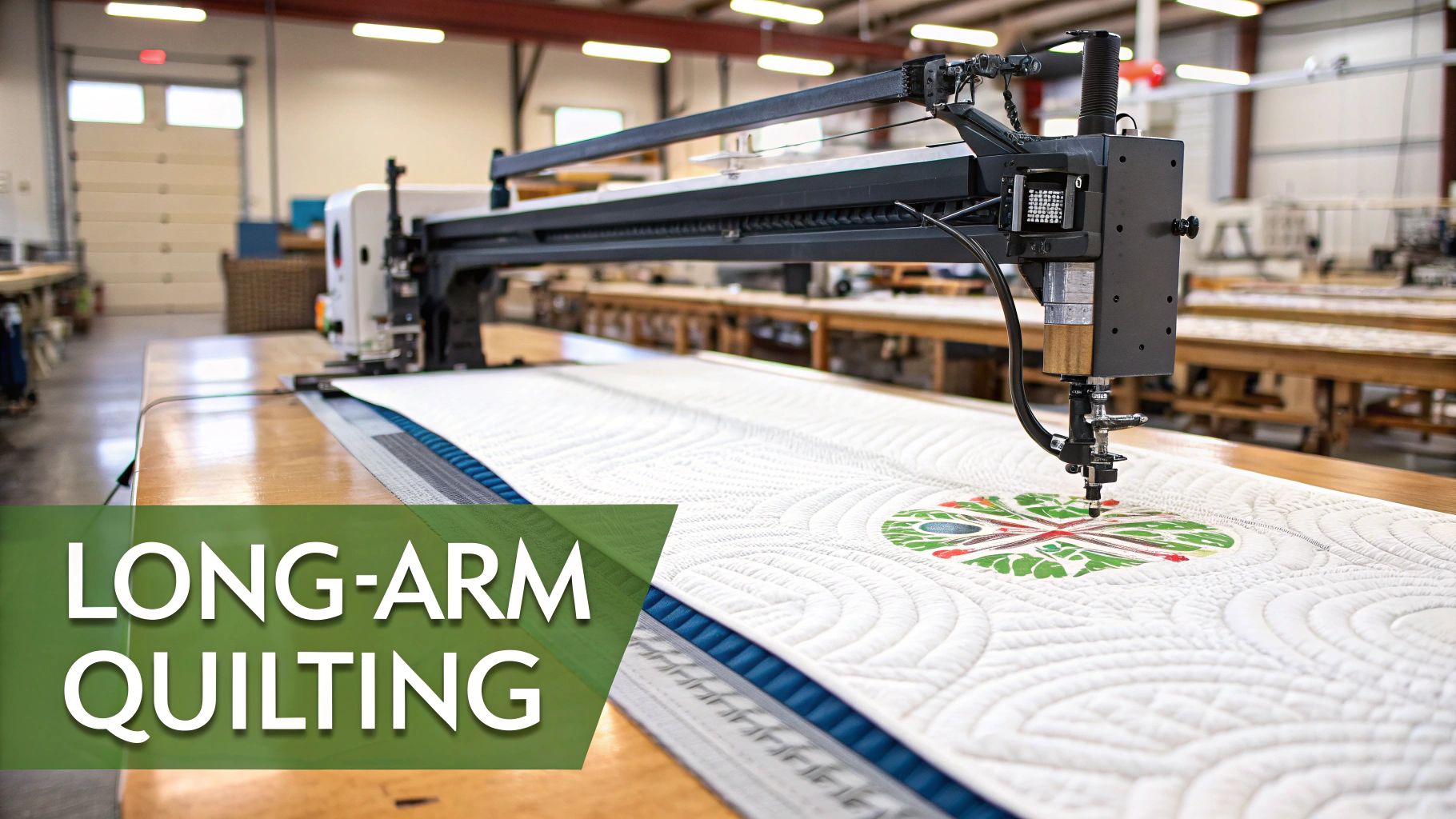
Think about quilting on your home machine: you're constantly pushing and pulling a bulky quilt sandwich under a needle that stays in one place. A long-arm system completely flips that around. The quilt itself is stretched tight on a big frame, and you move the machine's head—the "long arm"—across the fabric. This one difference is an absolute game-changer for both comfort and control.
The Frame System and Its Impact
The frame is really the heart of any long-arm setup. It's a system of rollers and rails that holds your quilt backing, batting, and top perfectly flat and tensioned. This setup means you can say goodbye to basting with pins or sprays, which can save you hours of prep time that used to be spent on the floor.
Since the quilt stays put, you get to guide the machine using handles, almost like you're drawing on the fabric. This freedom allows for smooth, sweeping motions that are next to impossible when you're wrestling a heavy quilt through the small throat space of a regular machine.
A long-arm machine fundamentally changes the quilting process from a physical struggle against fabric bulk to an artistic act of drawing with thread. It’s the difference between wrestling a project and dancing with it.
It's this freedom of movement that makes those stunning, complex quilting designs on show quilts possible. The whole system is designed to get the physical barriers out of your way, letting your creativity flow right through the needle.
Key Components That Define a Long-Arm
Beyond the frame, a few key parts are what truly make a long-arm perform. Getting to know these will help you see why they're often called the best sewing machine for quilting on a grand scale.
- Massive Throat Space: Long-arm machines have huge throat spaces, typically from 16 to over 30 inches. This incredible amount of room gives you a clear view of your work and the space to quilt large, detailed patterns without constantly stopping to reposition everything.
- Stitch Regulation: This is probably the single most important feature. Onboard computers and sensors track how fast you're moving the machine and adjust the stitching speed in real time. This ensures every single stitch is perfectly even and consistent, whether you're zipping along a curve or slowing down for a precise point.
- Handlebar Controls: Everything you need is right at your fingertips. The start/stop button, needle position controls, and thread trimmer are all located on the handlebars. You can control the entire machine without ever letting go of your work, keeping your quilting flow smooth and uninterrupted.
Practical Considerations Before You Invest
While the creative possibilities are endless, a long-arm is a serious commitment, both in terms of money and space. A typical frame setup needs a dedicated spot in your home, often 10 to 14 feet long, and it's not something you can easily pack up and put away.
The price tag is also a big consideration, with systems running from several thousand dollars to well over $30,000. It's an investment that makes the most sense for dedicated quilters who finish a lot of large projects each year or are thinking about starting a quilting business.
Finally, you should expect a bit of a learning curve. The movement feels natural, but it takes practice to really master the control. The results, however, are more than worth the effort. For anyone ready to take that leap, getting it set up right from the start is crucial. Looking into professional long-arm assembly services can ensure your machine is perfectly calibrated for top performance from day one.
Why Buy Your Quilting Machine from All About Sewing?
Choosing the right quilting machine is a big step, but where you buy it is just as important. Think of it less as a one-time purchase and more as the beginning of a relationship. Here at All About Sewing, we’re committed to building that relationship on a foundation of honest advice, solid support, and a genuine love for quilting.
Instead of throwing a massive catalogue at you, we’ve carefully chosen a lineup from the industry’s most respected brands. You'll find innovators like BERNINA, PFAFF, and JUKI, plus long-arm specialists like Handi Quilter. We only carry machines we’d use ourselves—ones that meet our high standards for performance and reliability. You can be sure your investment is a good one.
Advice You Can Actually Trust
With over 25 years of hands-on, brand-trained experience, our team does more than just read off a feature list. We understand the small details that make one machine a dream for a certain quilter and a poor fit for another. We’ll chat with you about the quilts you want to create and help you find a machine that truly matches your creative style.
This practical knowledge means you get the right advice from day one. We’ll help you compare features in a real-world context, so you can feel confident you’re choosing a machine that won’t just work for you now, but will keep up as your skills grow over the years.
When you invest in a quilting machine, you're also investing in the support system behind it. A reliable dealer provides peace of mind through expert service, ongoing education, and a community you can turn to for help.
Real Service and Support When You Need It
Our relationship doesn't end once you walk out the door. We're a full-service centre, and we're here to keep your machine humming along beautifully.
Our brand-trained technicians handle professional servicing and repairs to maintain your machine’s performance. Every tune-up or fix we do is backed by our own workmanship warranty, so you can trust the job was done right. This commitment to quality care protects your investment and keeps you quilting without frustrating interruptions.
We also believe in helping you get the most out of your machine. We offer a variety of classes designed to help you master everything from the basics to advanced quilting techniques. Our goal is to make sure you feel confident and inspired every single time you sit down to sew.
Programs That Actually Help Quilters
We believe great support should be accessible, so we've created programs that add real value and make your quilting life a little easier.
- Flexible Financing: We've partnered with Affirm to offer flexible payment plans. This makes it easier to get the high-quality machine you’ve been dreaming of without breaking the bank.
- A Loyalty Program That Pays: Our loyalty program is our way of saying thank you for being part of our community. You'll earn rewards on the fabric, thread, and accessories you’re already buying for your projects.
- Free Shipping Across Canada: We make it easy to get the best tools, no matter where you live. We offer free shipping on qualifying orders over $149, anywhere in Canada.
Choosing All About Sewing means you’re not just buying a machine; you’re gaining a partner who is as passionate about your craft as you are. We’re here with the tools, service, and support you need to bring your creative ideas to life.
Maintaining Your Quilting Machine for Peak Performance
Your quilting machine is a serious investment. Like any high-performance tool, it needs regular care to keep it humming along and doing its best work. A little bit of maintenance goes a long way—it not only stops frustrating problems like skipped stitches and thread nests before they start, but it also dramatically extends the life of your machine. Think of it as protecting your creative partner for years to come.
These simple, routine tasks only take a few minutes but pay off massively in performance and longevity.
Essential Routine Maintenance
Keeping your machine in top shape is easier than you might think. Just work these simple habits into your quilting sessions, and you’ll see a huge difference.
- Clean Out Lint Regularly: Lint and thread dust are the biggest culprits when it comes to performance issues. Every few bobbins, pop off the needle plate and use a small brush to clear out any buildup around the bobbin area and feed dogs. It's a quick job that keeps everything running smoothly.
- Change Your Needle Often: A fresh needle is your best friend for clean, even stitches. Once a needle gets dull or bent, it can cause skipped stitches, shred your thread, and even damage your beautiful fabric. A great rule of thumb? Start every new quilt with a new needle.
- Follow Oiling Guidelines: Some machines need oiling, and some don't. Always check your manual to see if, where, and how often your machine needs a drop of oil. Using the wrong kind or putting in too much can create a real mess and cause serious damage.
A clean, well-oiled machine with a sharp needle is the secret to beautiful quilting. Honestly, neglecting these three simple things is the root cause of most common and frustrating sewing machine problems.
Knowing When to Call a Professional
While you can handle the daily upkeep, some things are best left to an expert. A professional tune-up is like a deep clean and a full diagnostic for your machine’s intricate parts. An experienced technician can spot wear you might miss, recalibrate the timing perfectly, and adjust tensions in ways that just aren't possible at home.
For Canadian quilters, having a reliable machine is everything. Canada holds a 19.70% share of the North American quilt market, and local guild data shows that a whopping 40% of members say machine reliability is their number one priority. This is precisely why professional servicing is so critical for protecting your investment. You can learn more about the four seasons quilt market and see just how much it's growing.
As a general guideline, plan on getting your machine professionally serviced every one to two years, depending on how much you quilt. But if you start hearing strange noises or notice the stitch quality just isn't right, don't wait. Our guide on finding sewing machine service near you can walk you through what to expect from a professional tune-up. Here at All About Sewing, our 25+ years of brand-trained expertise and workmanship warranty mean your machine gets the exact care it needs to perform flawlessly.
Your Quilting Machine Questions, Answered
Stepping into the world of quilting machines can feel a bit overwhelming. You're suddenly faced with a whole new language of features, and it's tough to know what you really need. Let's clear up some of the most common questions we hear from quilters every day.
We want to help you find the best sewing machine for quilting for you—one that matches your projects, your budget, and your creative goals.
How Much Throat Space Do I Really Need for Quilting?
For piecing quilt tops or working on smaller projects like cushions and baby quilts, a standard machine with 6 to 7 inches of throat space is perfectly fine. You’ll have enough room to manoeuvre without too much hassle.
But the minute you try to quilt anything bigger than a lap quilt, you'll start to feel cramped. To save yourself the headache of bunching and wrestling with fabric, a machine with at least 8.5 inches of throat space is a game-changer. And if you have dreams of creating intricate designs on queen or king-sized quilts, you'll want an 11-inch throat or even a long-arm machine. It’s all about giving yourself the space to work comfortably.
Can I Use a Regular Sewing Machine for Quilting?
Of course! A standard sewing machine is where most of us start. It's more than capable of handling all the piecing for a quilt top, which is a massive part of the quilting process.
The real test comes when it's time to actually quilt the layers together. To do this well on a regular machine, you'll need a couple of key accessories. A walking foot is an absolute must-have for straight-line quilting, and a darning or free-motion foot is essential for anything more creative. Quilting-specific machines just build these features in and add things like a bigger throat and a stronger motor to make the whole experience smoother.
What Is a Stitch Regulator and Is It Worth It?
Think of a stitch regulator as a cruise control for your stitches. This clever feature, usually found on higher-end machines and long-arms, syncs your machine's speed with how fast you move the fabric. The result? Perfectly even, consistent stitches, whether you're racing around a curve or slowing down for a tight corner.
For anyone serious about free-motion quilting, a stitch regulator is a lifesaver. It takes the guesswork out of getting that professional, polished look and flattens the learning curve dramatically. It's an investment, but for many dedicated quilters, it's one they'd make again in a heartbeat.
What Is the Difference Between Mechanical and Computerized Machines?
A mechanical machine is all about hands-on control. You turn physical knobs and dials to select your stitch, change the length, and make other adjustments. They're known for being incredibly durable and easy to understand.
Computerized machines bring in technology with an LCD screen and push-button controls. They open up a huge world of built-in stitches and add features that quilters love. Things like an automatic thread cutter, a programmable needle up/down setting, and pinpoint speed control can make your quilting process faster, easier, and more precise, especially on complex projects.
At All About Sewing, our job is to help you find the right machine to bring your quilting ideas to life. Explore our collection of quilting machines and let's get you set up with a creative partner you can count on.


