



A Parent's Guide to Receiving Blankets Size and Use
If you've ever wondered what makes a receiving blanket different from any other baby blanket, it really comes down to size. The standard size for a receiving blanket is a neat square, usually somewhere between 30x30 inches and 40x40 inches.
This specific size range isn’t an accident. It's been perfected over time to be the ideal first wrap for a brand-new baby, giving them a snug, comforting swaddle without a bunch of overwhelming, excess fabric. It’s the perfect do-it-all blanket you’ll find yourself reaching for constantly.
Your Guide to Receiving Blanket Dimensions
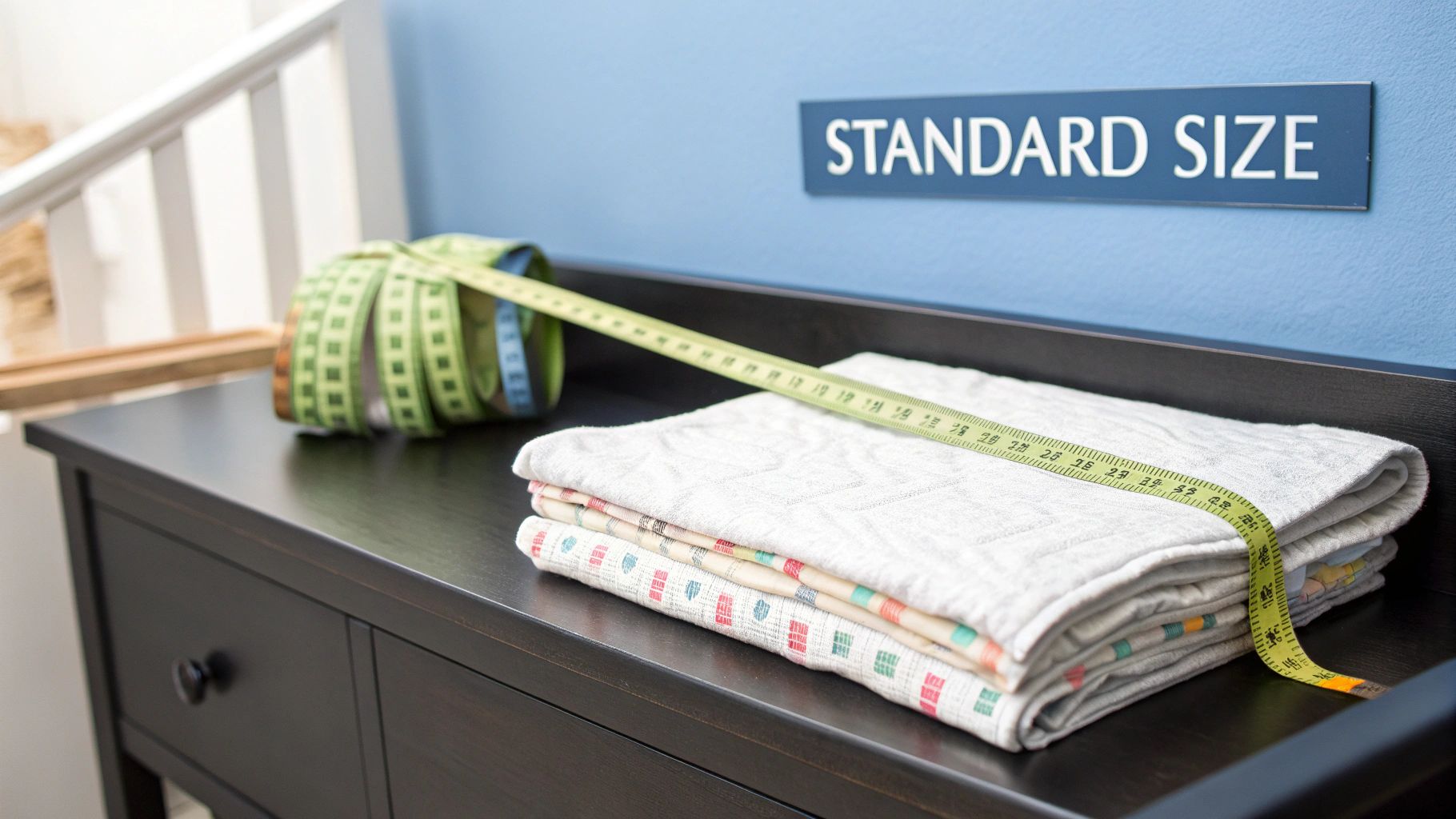
When you're getting ready for a new baby, you hear the term "receiving blanket" all the time. But what's the big deal about its size? It's all about practicality. The dimensions are deliberately designed to be just large enough for a secure swaddle but small enough that they don't swamp a tiny newborn.
Think of it as the Goldilocks of baby blankets. If it were much smaller, you wouldn't have enough material to tuck and fold for a proper swaddle. Go too big, and you've got too much loose fabric, which can be a safety concern. This perfect balance is precisely why hospitals have used them for generations to "receive" newborns—which is, of course, how the blanket got its name.
Common Measurements at a Glance
Whether you're sewing your own or just trying to visualize the scale when shopping, it helps to know the measurements in both inches and centimetres. If you plan on making a few yourself, a good measuring tape for sewing projects is a must-have for getting those cuts just right.
To make things simple, here’s a quick guide to the sizes you’ll see most often and what they’re best for.
Quick Guide to Common Receiving Blanket Sizes
| Size (Inches) | Size (Centimetres) | Primary Use |
|---|---|---|
| 30" x 30" | 76 cm x 76 cm | Perfect for smaller newborns, works great as a burp cloth, and is easy to pack for travel. |
| 34" x 36" | 86 cm x 91 cm | A super versatile rectangular option for swaddling, a light stroller cover, or a tummy time mat. |
| 40" x 40" | 102 cm x 102 cm | Excellent for larger newborns and gives you more room to grow, extending its use as a swaddle. |
As you can see, each size has its sweet spot, though all of them are incredibly useful.
The key thing to remember is that these dimensions aren't random. They've been fine-tuned through decades of practical, hands-on use by parents and nurses to offer the most versatility.
With this basic understanding of the standard receiving blanket size, you're ready to see why it's one of the most useful and beloved items you’ll have for your new baby.
Why the Right Size and Fabric Matter for Your Newborn
Finding that perfect receiving blanket feels a bit like tucking your baby back into the gentle embrace of the womb. A swaddle that’s too large risks excess fabric near tiny airways, while one that’s too small can slip loose and lose its calming effect. Aim for the sweet spot between 30×30 inches and 40×40 inches for a cosy, secure wrap.
Understanding Size and Swaddle Safety
A 30×30 inches square works beautifully for dainty newborns, offering enough room to fold snugly without overwhelming them. On the other hand, a 40×40 inches blanket grows with your baby, letting you adjust tucks around hips and shoulders for a safe, snug fit.
- Allows secure tucks around shoulders and hips for proper swaddle alignment
- Balances coverage without sacrificing mobility during awake, playtime moments
- Reduces loose fabric crowding airways, meeting safe-sleep guidelines
“Hospitals have fine-tuned these dimensions over decades to blend ease of swaddle with peace of mind,” notes a neonatal nurse.
Choosing the Right Fabric for Your Baby
Next, think about how your blanket feels and breathes. That soft weight around a newborn matters more than you might guess.
- Warm Cotton Flannel: Insulates on cooler evenings and feels plush to the touch
- Breathable Muslin: Keeps air flowing, perfect for warmer days
- Ultra-Soft Bamboo: Gentle on delicate skin and wicks moisture away
Always pre-wash flannel before stitching or first use. It prevents unwelcome surprises in size and ensures that initial snugness stays constant.
Beyond size and fabric, every new parent needs a few extra essentials. Check out this essential baby items list to round out your nursery must-haves.
Fabric Construction Tips for Sewists
When you’re at the cutting table, small details make a big difference in the finished blanket.
- Pre-wash fabrics to manage shrinkage and lock in accurate dimensions
- Align prints with grain lines so patterns stay straight after washing
- Use a double-fold hem for a neat, durable edge that won’t fray
- Reinforce corners with backstitching to withstand nightly tugs
“A simple double-fold hem can increase durability,” says Jane Doe, a long-time fabric expert.
You might be interested in our Comfy Flannel Multi Dinos fabric to start your project.
From Swaddle to Stroller Cover: Versatile Uses for Every Blanket
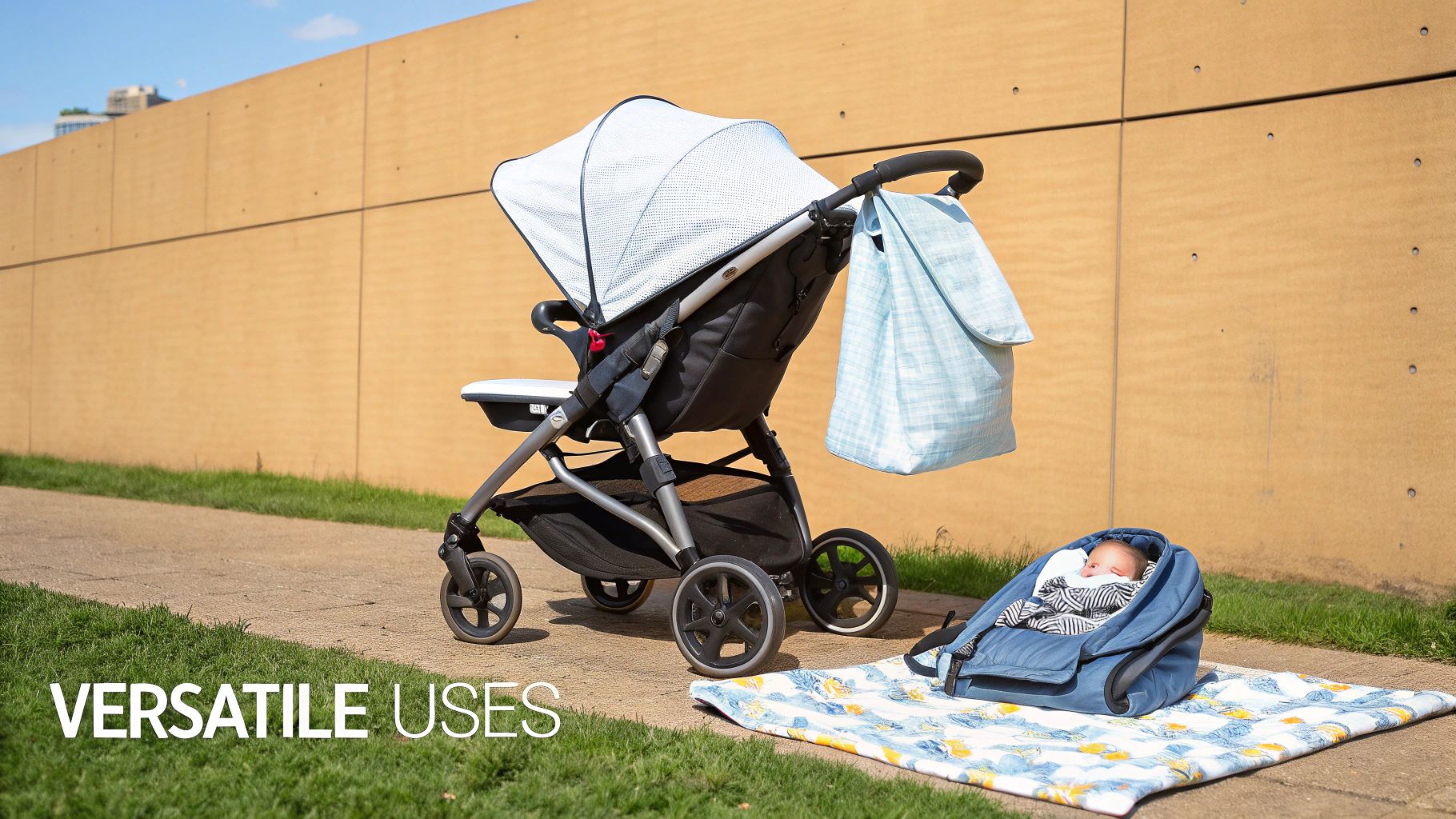
The real beauty of a receiving blanket is just how useful it is for, well, everything. They might get their name from the tradition of "receiving" a newborn, but their job lasts much longer than that first hello. The standard receiving blankets size is the key to their magic, making them the ultimate multi-tool for new parents.
Think of it as the Swiss Army knife you’ll keep in your diaper bag. It's big enough to be useful but small enough to pack away without a fuss. This simple square of fabric effortlessly shifts from one task to the next, proving its worth over and over again.
The Everyday Workhorse of Baby Gear
A receiving blanket is rarely just a blanket. In a single day, it can wear a dozen different hats, making it one of the most practical things you'll own. Because they're so lightweight, you can easily stuff one into your bag without adding any real bulk.
You’ll be amazed at all the things it can do:
- Impromptu Burp Cloth: Just sling it over your shoulder to protect your outfit from that inevitable spit-up.
- Clean Surface for Tummy Time: Pop one on the floor, and you’ve got a soft, clean spot for your baby to play and build those little muscles.
- Makeshift Changing Mat: When you’re out, it creates a handy barrier between your baby and a public changing station.
- Lightweight Stroller or Car Seat Cover: It's perfect for shielding your little one from a light breeze or the bright sun without making them too warm.
More Than Just a Simple Cover
Beyond all its day-to-day uses, the receiving blanket truly shines when it comes to comfort and security. Its size is just right for creating that snug wrap that can instantly soothe a fussy newborn.
The goal is to create a gentle, womb-like hug that helps a baby feel safe and secure. The standard receiving blanket size gives you just enough fabric to get a good wrap without any bulky, excess material getting in the way.
That brings us to swaddling, a time-tested technique for helping newborns feel secure. If you want to master this essential skill, check out this fantastic guide on how to safely wrap a baby. Getting the technique right is so important for keeping your little one both comfortable and safe.
This incredible adaptability is exactly why seasoned parents will tell you to stock up. You’ll find yourself reaching for one all the time, making this simple piece of fabric an absolute must-have.
Comparing Receiving Blankets with Other Baby Blankets
Walking into the baby section of a store can feel a little overwhelming. You're faced with a wall of blankets labelled as swaddles, quilts, receiving blankets, and security blankets. It’s easy to assume they’re all basically the same thing, but they each have a specific job to do.
The real differences come down to their size and what they’re designed for. A receiving blanket is your go-to, all-purpose workhorse. Other blankets? They're specialists. It’s like having a set of kitchen knives: the receiving blanket is your classic chef's knife that handles almost everything, while a swaddle is more like a paring knife, perfectly shaped for one specific task.
Receiving Blankets Versus Swaddles
At a quick glance, receiving blankets and swaddles look pretty similar. Both can be used to wrap a newborn up snug and tight, but a purpose-built swaddle is made just for that.
Swaddles are usually bigger, often 40x40 inches or even larger, giving you plenty of fabric to get a secure wrap as the baby grows. You’ll also find they’re frequently made from super stretchy fabrics like bamboo or cotton jersey, which helps create that tight, comforting, womb-like feeling.
Receiving blankets are fantastic for swaddling tiny newborns, but their smaller size means babies outgrow them for that purpose pretty quickly. Many dedicated swaddles also come with handy features like velcro wings or specific shapes that make wrapping a wiggly baby much easier and more secure.
Quilts and Security Blankets
Then you have quilts and security blankets, which serve entirely different purposes.
-
Baby Quilts: These are the heavyweights. They're much larger, thicker, and not meant for swaddling or for a newborn to sleep with due to safety recommendations. A quilt's main job is providing warmth for an older baby or toddler in their crib. They also make beautiful decorative nursery pieces or comfy tummy time mats. If you're a crafter, exploring some different jelly roll quilt ideas is a lovely way to create a family heirloom.
-
Security Blankets: You might know these as "lovies." They are very small, easily portable, and all about comfort and cuddling. Typically no bigger than 12x12 inches, they often have a little stuffed animal head attached. Their purpose is pure emotional support, not swaddling or warmth.
To give you a clearer picture, here's a quick breakdown of how these blankets stack up against each other.
Receiving Blanket vs Other Baby Blankets
| Blanket Type | Typical Size Range | Common Materials | Primary Purpose |
|---|---|---|---|
| Receiving Blanket | 30" x 30" to 30" x 40" | Cotton flannel, muslin | Multipurpose: swaddling newborns, burp cloth, light cover |
| Swaddle Blanket | 40" x 40" to 47" x 47" | Stretchy jersey, bamboo, muslin | Specifically for swaddling a baby securely for sleep |
| Baby Quilt | 30" x 45" or larger | Cotton, polyester fill | Warmth for older babies, play mat, decoration |
| Security Blanket | 12" x 12" to 17" x 17" | Minky, plush fabrics, fleece | Emotional comfort and soothing for a baby or toddler |
This comparison really highlights how each blanket is designed with a unique role in mind, helping you pick the right tool for the right job.
The baby blanket market, especially in Canada, shows a strong preference for these kinds of specialized products. There's a noticeable trend toward high-quality, eco-friendly materials like organic cotton, which aligns with a growing desire for sustainable options. You can read more about the baby blanket market on deepmarketinsights.com.
By knowing the specific job of each blanket, you can put together a really practical collection. A few versatile receiving blankets for all the day-to-day tasks, some dedicated swaddles for good sleep, and a cozy quilt for when they're a bit older makes for a perfect toolkit.
How to Sew Your Own Receiving Blankets
There's something incredibly special about a handmade gift, and a receiving blanket is a perfect project for anyone wanting to add a personal touch. Whether you're an experienced sewist or just starting out, making one is surprisingly straightforward and deeply satisfying.
The key is getting your materials and measurements right from the get-go. A good rule of thumb is to start with a square of fabric somewhere between 30x30 inches (76x76 cm) and 40x40 inches (102x102 cm). This size range is wonderfully versatile, perfect for swaddling a tiny newborn but also useful as a light cover in the pram or cot.
Choosing Your Fabric
The fabric really sets the stage for your blanket. You’re looking for something soft, breathable, and tough enough to handle lots of love and washing.
- Cotton Flannel: This is the go-to for a reason. It's snuggly, warm, and seems to get even softer every time you wash it.
- Muslin: With its open, airy weave, muslin is a fantastic choice for warmer weather or for babies who run a bit hot. It’s lightweight and super breathable.
- Bamboo Rayon: If you want something with a bit of a luxurious feel, bamboo is it. It’s exceptionally soft, has a little stretch, and is incredibly gentle on delicate skin.
Here's a pro-tip that you absolutely cannot skip: always pre-wash and dry your fabric before you even think about cutting it. Flannel is especially notorious for shrinking, and this one simple step ensures your finished blanket stays the size you intended it to be.
Simple Sewing Techniques for a Polished Finish
Once your fabric is prepped, you're ready to sew. You don't need fancy stitches to create a beautiful and durable blanket. The goal is to make clean, strong edges that won’t fall apart after a few trips through the laundry.
A double-fold hem is a classic and reliable technique. Just fold the raw edge of the fabric over by about half an inch, give it a good press with an iron, and then fold it over one more time to hide the raw edge. A quick stitch along the inner fold gives you a tidy, tough finish that won't fray.
If you have a serger, you've got an even quicker option. A simple serged edge is fast, clean, and looks incredibly professional, especially if you play around with decorative thread. It works particularly well on fabrics like muslin that tend to fray easily.
You can think of the basic receiving blanket as the foundation for more complex baby blankets, like specialized swaddles or intricate quilts.
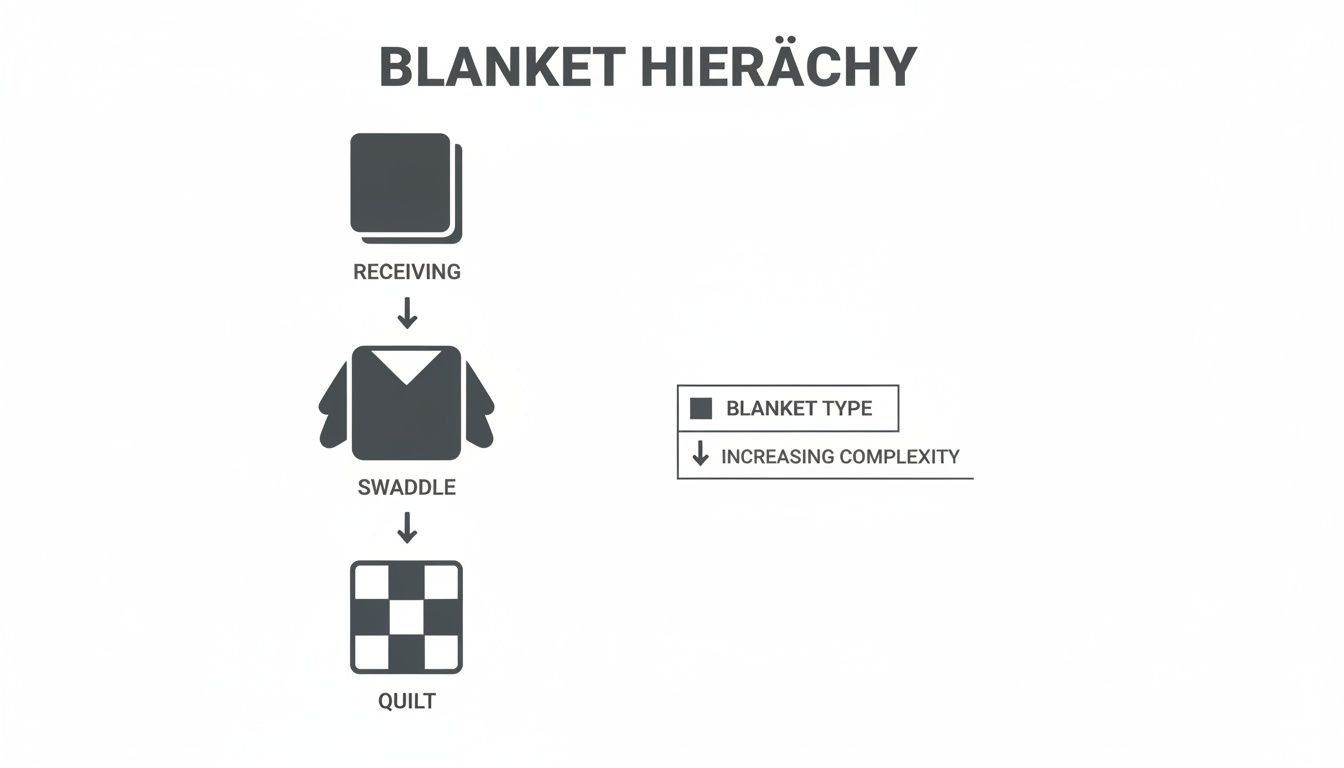
Starting here builds the skills you need for those more ambitious projects down the road.
Adding a Professional Touch
Want a simple trick to make your handmade blanket look even better? Round the corners. Sharp, pointy corners can look a little severe and can be fussy to get just right.
It’s easy to do. Just grab a round object from your kitchen—a small plate or a large mug works perfectly. Place it on one corner of your fabric square, trace the curve with a fabric marker, and then snip along the line. Repeat for the other three corners, and you're done! Hemming a gentle curve is often much easier than pivoting at a sharp 90-degree angle, and it gives the finished blanket a soft, professional look that’s made with love.
Keeping Your Blankets Soft and Safe
Let's be honest, receiving blankets are going to see a lot of action. From spit-up to spills, they're destined for a life of frequent trips through the washing machine. The trick is to keep them soft, clean, and safe for a baby’s delicate skin, which is easier than you might think.
Your best bet is to start with a gentle, fragrance-free detergent made specifically for babies. The strong chemicals and perfumes in regular detergents can be too much for a newborn's sensitive skin. When you toss them in the wash, stick to a gentle cycle with cold or warm water to keep the fabric happy and the colours bright.
Washing and Drying Best Practices
If you want to keep that wonderful, cozy flannel softness, the number one rule is to avoid high heat. Heat is the enemy of soft cotton fibres, causing them to shrink and feel scratchy over time.
- Washing Temperature: Always opt for cold or warm water. Hot water is a fast track to shrinking and fading.
- Drying Method: Tumble dry on a low heat or delicate setting. Even better, line-drying them in the fresh air is a fantastic way to keep them soft and smelling great.
- Fabric Softeners: It's a good idea to skip the liquid softeners and dryer sheets. They often leave a residue that can make the blankets less absorbent and potentially irritate your baby's skin.
For those inevitable, stubborn stains, a little pre-treatment goes a long way. Just dab a bit of your baby-safe detergent or a baby-friendly stain remover on the spot before it goes into the wash.
Good care does more than just keep your blankets feeling soft. It ensures they stay a safe, comforting wrap for your little one. A well-loved, well-cared-for blanket can last for years, ready for whatever you need it for.
Storing Your Blankets
When they're not in use, storing your blankets properly keeps them fresh. Simply fold them neatly and tuck them into a clean, dry drawer or onto a closet shelf. Try to keep them out of direct sunlight to prevent the patterns from fading.
Following these simple tips will make a huge difference in how long your receiving blankets last, keeping them soft, safe, and ready for every cuddle.
Answering Your Receiving Blanket Questions
When you're getting ready for a new baby, the list of "must-haves" can feel endless. Let's clear up some of the common questions you might have about receiving blankets, so you can feel confident you've got what you need.
How Many Receiving Blankets Do I Actually Need?
If you ask any seasoned parent, they'll likely tell you to stock up! A good starting point is somewhere between 8 to 12 receiving blankets. These little workhorses get used for everything from swaddling and burping to emergency play mats, so they get soiled pretty fast. Having a decent stash means you’ll always have a clean one ready to go.
When Should My Baby Stop Being Swaddled?
This one is all about safety. The moment your baby starts showing signs of trying to roll over, it’s time to stop swaddling. This usually happens around the 2 to 4-month mark. They need their arms free to push themselves up if they happen to roll onto their tummy. But don't pack those blankets away! Their usefulness is far from over.
While the swaddling phase feels so short, a good receiving blanket will serve you well into the toddler years. It effortlessly becomes a light stroller cover, a familiar comfort object, or your go-to cleanup cloth.
Are Receiving Blankets a Good Baby Shower Gift?
They're a fantastic baby shower gift! Honestly, they are one of the most practical and appreciated items any new parent can get. If you want to make your gift extra special, look for lovely, high-quality fabrics like organic cotton or buttery-soft muslin. A beautiful, versatile blanket is something parents will reach for every single day.
Looking for the perfect fabric to sew a memorable gift? Explore the beautiful collection at All About Sewing to find just the right material for your project. You can find us at https://all-about-sewing-canada.myshopify.com.


