

A Guide to singer sewing machines for beginners in Canada
Thinking about buying your first sewing machine? For a lot of people just starting out in Canada, a Singer is the perfect choice. They’ve managed to hit that sweet spot between being easy to use, built to last, and genuinely affordable. A Singer gives you a straightforward way to get started, whether you're just fixing a hem or diving into your first big project.
Your First Stitch: Why Singer Is a Beginner's Best Friend
Jumping into a new craft like sewing is exciting—you're probably already imagining all the cool things you'll make. But picking your first machine can feel a little overwhelming. With so many models and features, it’s easy to feel lost. This is where Singer really comes through for newcomers.
For over 170 years, Singer has been making machines that are both tough and easy to figure out. Think of a beginner Singer like a patient teacher; it won't throw too much at you at once, but it has enough capability to grow with you as you get better. They're designed to make learning fun, not frustrating.
A Rich Canadian Heritage
A neat piece of trivia that many Canadian sewists don't know is that Singer has a long history right here in our backyard. Back in the early 20th century, the company opened a huge factory in Saint-Jean-sur-Richelieu, Quebec, which became a major player in Canadian manufacturing.
This plant did it all, from making the cast iron machine bodies to building the wooden cabinets they sat in, eventually sending machines to over 48 countries. So, when you choose a Singer, you're also connecting with a little piece of our own industrial past. You can dive deeper into the Canadian sewing market and its history in this comprehensive outlook.
Why Singer Clicks with New Sewists
There’s a reason Singer has been a go-to for beginners for generations. They’ve really nailed down what a new sewer needs by focusing on features that help you build confidence from the get-go.
- Simple to Use: Singer machines are famous for their clear instructions and logical design. You get to spend your time learning to sew, not fighting with a complicated machine.
- Tough and Dependable: Made with a solid metal frame and quality parts, these machines are little workhorses. They're built to keep stitching for years without any fuss.
- Great Local Support: With experts like the team at All About Sewing, you’ve got access to real, hands-on advice, servicing, and help whenever you need it, right here in Canada.
When you're picking out your first sewing machine, it’s not about getting the one with the most bells and whistles. It’s about finding a reliable partner for your creative ideas. A beginner-friendly Singer is exactly that—a trusty tool that’s ready for your very first stitch and all the ones that follow.
Understanding the Features That Truly Matter for Beginners
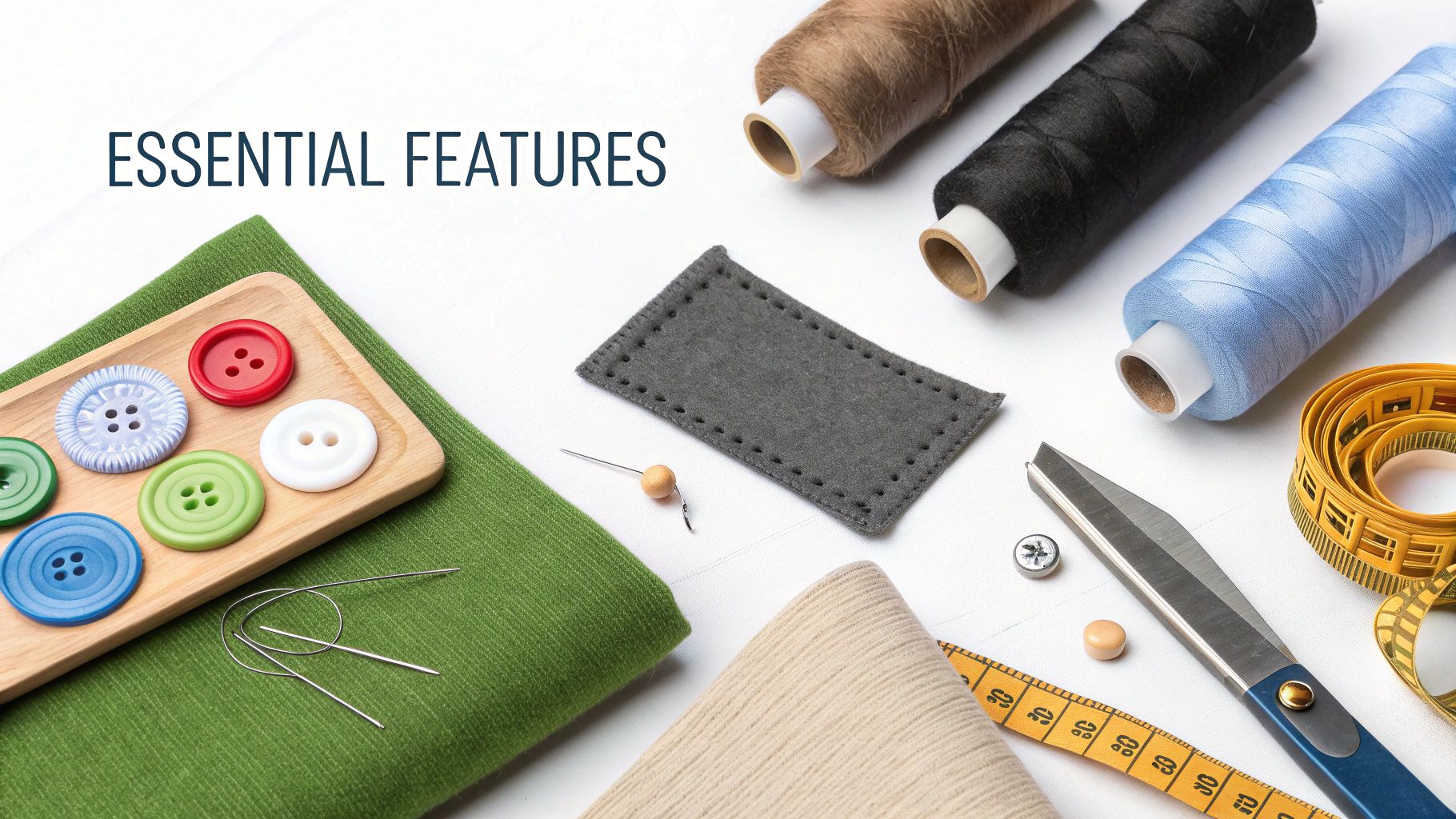
When you're staring at a wall of Singer sewing machines for beginners, the long list of features can feel a bit overwhelming. But here’s the secret: you can ignore most of them. The trick is to focus on the handful of functions that will actually make learning easier and, frankly, more fun.
Think of it like learning to drive. You need the steering wheel, pedals, and mirrors to get going. You don't need the fancy sound system or heated seats just yet. Let’s cut through the noise and look at what will really help you build a solid foundation.
Core Features You Don't Want to Live Without
Before we even get to stitches, a few key mechanical features can make or break your first sewing experiences.
The automatic needle threader is at the top of the list. Seriously. Squinting and trying to poke a flimsy thread through a tiny little hole is a classic sewing headache. An automatic threader does it for you with the press of a lever, saving your eyes and your patience.
Next up, look for a top-loading bobbin, sometimes called a "drop-in" bobbin. This design lets you pop the bobbin in from the top, and the clear cover means you can easily see how much thread you have left. It's so much simpler than the older front-loading systems, which can be fussy and hard to get to.
Finally, make sure the machine has a free arm. This just means you can slide a piece of the sewing bed off, leaving a smaller, free-standing arm.
A free arm is what lets you easily sew "in the round"—think hemming a pair of pants, attaching cuffs to a sleeve, or working on tiny kids' clothes. Without it, these common tasks become an awkward wrestling match with your fabric.
These three features aren't just nice-to-haves; they’re genuine time-savers that remove common points of frustration for new sewists.
To help you keep track, here’s a quick breakdown of the essentials:
Essential Features for a Beginner Singer Machine
| Feature | What It Does | Why It Matters for Beginners |
|---|---|---|
| Automatic Needle Threader | A small mechanism threads the needle for you. | Eliminates a major source of frustration and eye strain, letting you start sewing faster. |
| Top-Loading Bobbin | The bobbin drops in from the top of the machine. | Easy to see and access, making bobbin changes quick and jam-free. |
| Free Arm | A removable part of the sewing surface. | Essential for sewing cylindrical items like sleeves, cuffs, and pant legs with ease. |
| Adjustable Stitch Length/Width | Allows you to change the size of your stitches. | Gives you control for different fabrics and techniques, from basting to secure seams. |
| One-Step Buttonhole | Creates a buttonhole automatically in one go. | Makes a tricky task simple and ensures every buttonhole is perfect and consistent. |
These are the features that will support you as you learn, rather than overwhelm you with complexity.
The Only Built-In Stitches You Really Need
Don't be fooled by machines boasting hundreds of stitches. As a beginner, you'll use the same handful of stitches for 90% of your projects. Make sure any model you're considering has these three workhorses:
- Straight Stitch: The foundation of all sewing, used for seams and topstitching. Look for a machine that lets you adjust the length.
- Zigzag Stitch: This one is incredibly versatile. You'll use it to finish raw fabric edges to stop them from fraying and for sewing stretchy fabrics.
- Buttonhole Stitch: A one-step automatic buttonhole feature is a game-changer. It creates perfectly sized, consistent buttonholes every single time—a task that is notoriously difficult to get right by hand.
It’s no surprise that user-friendly machines are becoming so popular. In Canada, we saw a 14% jump in sewing machine imports last year alone. Hobbyists now make up over 60% of the global market, and Singer is often their first choice because of these straightforward, practical features. You can read more about the booming home sewing market and see just how many people are picking up this amazing skill.
Mechanical vs. Computerized: Finding Your Perfect Singer
When you start shopping for a Singer, you’ll quickly see machines fall into two main camps: mechanical and computerized. The best way to think about it is like learning to drive a car.
A mechanical machine is like a manual transmission. It’s all about direct control. You turn the knobs, you feel the machine respond, and you learn the absolute fundamentals of how everything works together. A computerized machine is like an automatic. It handles some of the more complex tasks for you, letting you focus on steering and enjoying a smoother ride.
Neither one is better than the other; they just suit different people and different ways of learning. It all comes down to whether you want a more hands-on, traditional experience or if you’d rather have a little modern tech helping you out.
The Reliable Mechanical Workhorse
Mechanical sewing machines are the classic, no-fuss models that have been the backbone of sewing for generations. You control everything with physical knobs and dials—one for your stitch type, another for the length, and another for the width.
This hands-on approach is an amazing way to learn. You’re not just pressing a button; you’re actively making the adjustments, which helps you build a deep, intuitive understanding of how sewing actually works.
They're famous for their durability and are usually a bit friendlier on the wallet, which makes them a fantastic starting point. With fewer electronic components, they also tend to be simpler and cheaper to service down the road. If your goal is to truly master the craft from the ground up, a mechanical machine is an unbeatable teacher.
The Smart Computerized Assistant
Step into the modern era with a computerized sewing machine. Instead of dials, you get a small LCD screen and simple push-buttons that open up a huge library of stitches. These machines are designed to take the guesswork out of some of the trickier parts of sewing.
Here’s where they really shine for a beginner:
- Automatic Stitch Settings: Pick a stitch, and the machine often suggests the best length and width for it automatically. No more fiddling around!
- One-Step Buttonholes: This is a game-changer. It creates flawless, perfectly matched buttonholes every single time, all with one easy step.
- Speed Control: A simple slider lets you cap your maximum sewing speed. This is a huge confidence booster, as it prevents you from accidentally flooring it when you're trying to be careful.
There's no doubt that more and more home sewists are choosing these smarter machines. Canada’s sewing machine market is seeing a projected 7.4% annual growth, largely driven by people upgrading to computerized models. In fact, machines with over 200 stitch options made up 46% of the 5.6 million units sold worldwide in 2023. You can read more about the growing sewing machine market on cognitivemarketresearch.com if you're curious.
Ultimately, it’s a personal choice. A mechanical machine builds a rock-solid foundation through direct, hands-on control. A computerized machine uses smart automation to help you get professional-looking results faster, simplifying the learning curve.
It’s also good to know how these differ from more specialized equipment. Think of your regular sewing machine as your trusty, all-purpose car. A serger, on the other hand, is like a high-performance sports car built for one specific job: creating strong, clean, and professional-looking seams and edges. If that piques your interest, we have a whole article explaining the differences between a serger vs a sewing machine.
Finding the Perfect Singer Model for Your Projects
Alright, now that you know what all those features do, let’s find your perfect match. Choosing your first sewing machine isn't about grabbing the one with the most bells and whistles or the fanciest-looking design. The real secret is matching the machine’s personality to the projects you're actually excited to make.
Forget the confusing spec sheets for a moment. Instead, we’re going to focus on who each machine is really for. Thinking this way helps you picture yourself at the sewing table, turning that pile of fabric into something amazing. It’s like trying on a new pair of shoes—you need the right fit for where you want to go.
This simple decision tree can help you start thinking about what you prefer. Are you a hands-on person who likes the feel of turning a dial, or do you prefer the simple ease of pushing a button?
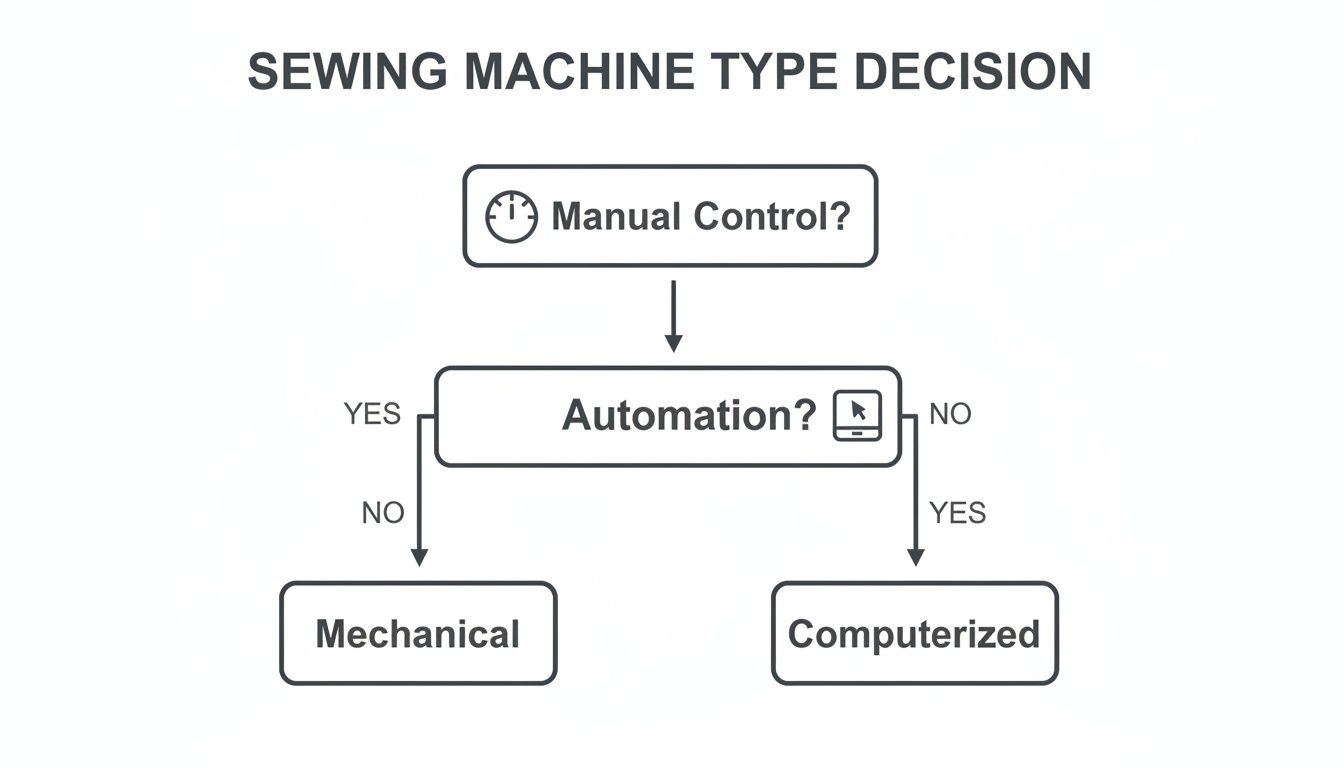
As you can see, your preferred working style—whether that’s tactile and manual or streamlined and automated—is what really separates a mechanical machine from a computerized one.
Top Singer Models for Canadian Beginners
To give you a better idea, here are a few of the most popular Singer sewing machines for beginners. Each one is built for a slightly different kind of sewist, so let's see which one sounds most like you.
1. The No-Fuss Starter: Singer Start 1304
This little machine is exactly what its name suggests: the perfect place to start. It’s a straightforward mechanical model with just six essential stitches that you select with a single, clearly marked dial. There are no complicated menus or settings to get lost in.
- Who it's for: The absolute beginner who just wants to learn the fundamentals. If your goal is to do simple mending, hem a pair of pants, or create basic projects like tote bags and pillowcases, this machine gets you sewing in minutes.
2. The Ambitious Workhorse: Singer Heavy Duty 4423
Don't let the "Heavy Duty" name scare you off. While this mechanical machine is a true powerhouse—built with a stronger motor and a faster sewing speed—it’s still incredibly easy to handle for a beginner. That solid metal frame means it won't shake or wobble, even when you're sewing quickly.
- Who it's for: The adventurous beginner who dreams big. If you see yourself tackling everything from quilting cotton to tough denim or even faux leather for bags, this machine is a fantastic investment that won't hold you back as your skills grow.
3. The Creative Powerhouse: Singer Confidence 7465
This model is a wonderful bridge into the world of computerized sewing. It gives you the best of both worlds: the simplicity of push-button stitch selection for its 50 built-in stitches, plus helpful automated features like a perfect one-step buttonhole every time.
- Who it's for: The hobbyist who loves having creative options. If you're excited about quilting, adding decorative stitches to clothing, or just want a machine that makes things a little easier, you can explore the Singer Confidence 7465 sewing machine to see all it can do.
Your first machine should feel like an encouraging partner, not an obstacle. By matching the model to your project goals, you ensure that every time you sit down to sew, you feel empowered and ready to create something wonderful. It's less about the machine's limits and more about its ability to unlock your potential.
Setting Up Your First Singer for Success
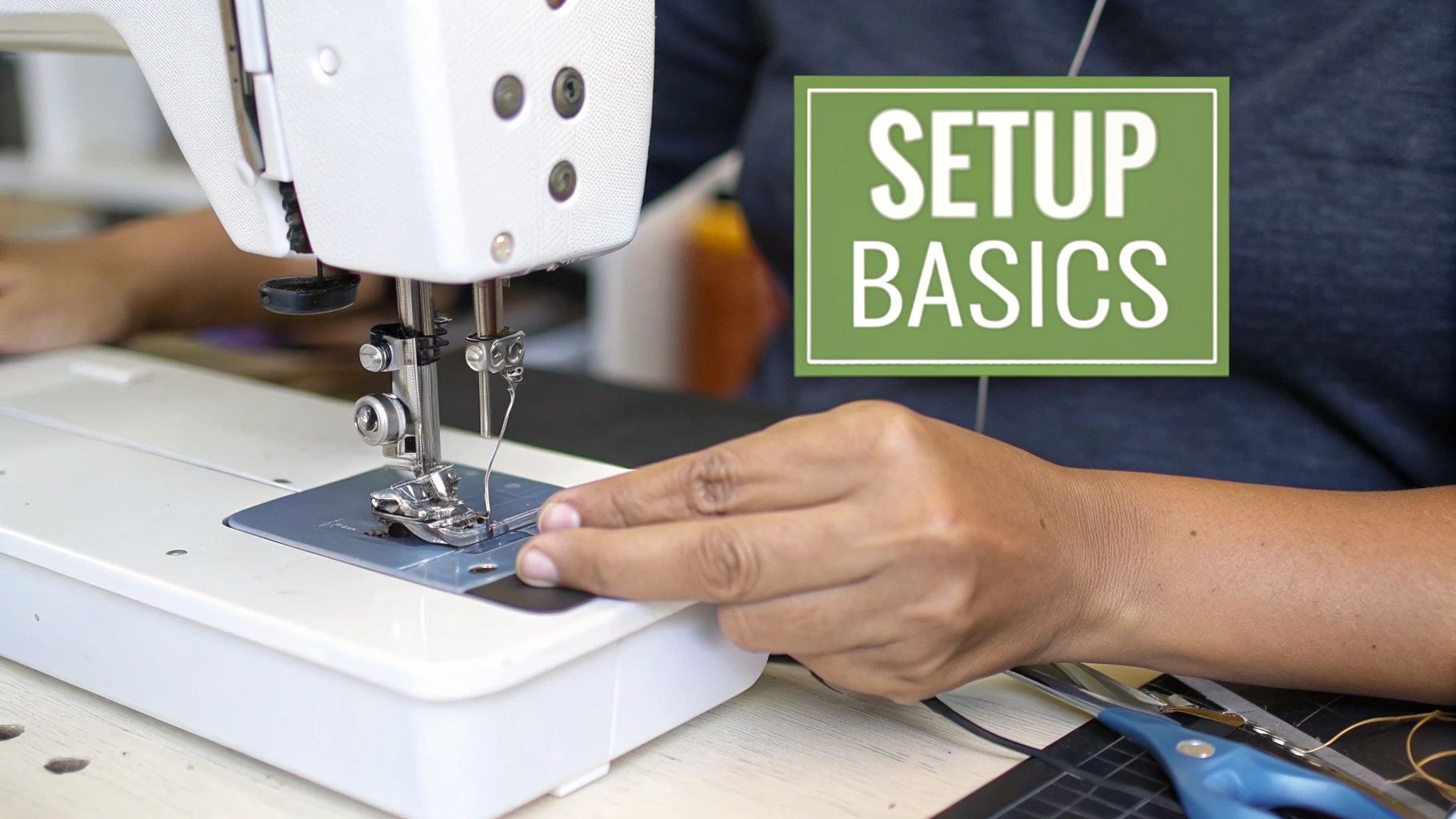
Okay, your new machine is out of the box. The real fun is about to start! That first unboxing is a special moment, but I know the initial setup can feel a bit daunting. Don't worry—getting a handle on a few basics right away is the difference between frustration and feeling that amazing spark of creative confidence.
Think of it like learning the alphabet before you can write a story. These first steps are the absolute foundation for every single thing you'll ever sew. Let's walk through the three core skills you'll want to get comfortable with from day one.
The Three Pillars of Sewing Prep
Before you can make a single stitch, your machine needs thread in two places: one thread coming down from the top spool, and another coming up from the bottom bobbin. Honestly, getting this right is 90% of the battle when you're just starting out.
-
Winding the Bobbin: The bobbin is that tiny spool that holds your bottom thread. Modern Singers make this super simple. You just pop your big thread spool on its pin, guide the thread over to the bobbin winder, and step on the foot pedal. The trick is to get a bobbin that's wound tightly and evenly. A loose, messy bobbin is a recipe for tangled thread nests under your fabric.
-
Threading the Machine: This looks way more complicated than it is, I promise! Singer prints numbered guides right on the machine's body. All you have to do is follow the path in order. It’s like a connect-the-dots puzzle designed to get you sewing fast. You'll have it threaded in under a minute with a little practice.
-
Changing the Needle: Needles don't last forever! In fact, a dull or slightly bent needle is the number one cause of skipped stitches and snagged fabric. Make it a habit to start every big project with a fresh needle. It's easy: just loosen a little screw, slide the old needle out, and pop a new one in, making sure the flat side of the needle top faces the back of the machine.
Mastering these three simple tasks—winding, threading, and changing the needle—is the key that unlocks a smooth, enjoyable sewing experience. Just practice them a few times until you don't even have to think about it.
Keeping Your Machine Happy
Just like any great tool, your Singer needs a little TLC to keep doing its best work. You don't have to be a mechanic—a few good habits will keep it humming along for years and help you dodge the most common sewing headaches.
The biggest culprit for machine trouble is plain old lint. Tiny fibres from your thread and fabric love to gather around the bobbin area and the feed dogs (those little metal teeth that pull your fabric along). After you finish a project or two, just unplug the machine and use the little brush it came with to gently sweep that area clean. This one simple step prevents so many jams and keeps your stitches looking perfect.
Another easy win is to keep your machine covered when it's not in use. This protects it from dust, which can work its way into the gears and cause issues down the road.
Finally, don’t be afraid to call in a pro. If you're sewing fairly often, getting a professional tune-up every 18 to 24 months is a fantastic idea. At a dedicated service centre like All About Sewing, an expert can give it a deep clean, oil all the internal parts, and make sure every setting is calibrated perfectly. Think of it as preventative care to protect your investment and keep your sewing journey a happy one.
Beyond the Box: Your Sewing Partner in Canada
Buying your first Singer sewing machine isn't just about getting a new tool; it’s really the start of a whole new creative journey. And let's be honest, having someone in your corner right from the beginning can make all the difference, turning those "uh-oh" moments into "aha!" moments. This is where finding a dedicated Canadian expert truly shines.
Imagine trying to figure it all out on your own versus having a team with over 25 years of experience to guide you. Here at All About Sewing, we don't just move boxes. We get to know you and your sewing ambitions, making sure you walk away with a machine that feels like it was made just for you.
More Than Just a Sale
Our relationship doesn't end when you walk out the door. As you start sewing, questions will pop up. New projects will challenge you. That's why having access to hands-on classes and friendly advice is so important—it’s how you build real confidence, one stitch at a time. You're not just a customer; you're joining a community that's rooting for you.
And just like a car, every sewing machine needs a good tune-up now and then to keep it purring along. Knowing you have a reliable, warranty-approved place to take it brings real peace of mind.
Choosing where you buy your machine is just as important as the machine you choose. A good local shop gives you the ongoing support, expert care, and encouragement you'll never find at a big-box store.
From helping you pick the perfect thread to providing professional maintenance down the road, we're here to make sure your sewing adventure is smooth and fun. If you're curious about what quality local support looks like, check out our guide on finding a trusted sewing machine service near you.
We’re here to support you for the entire life of your machine, from your very first seam to your most ambitious masterpiece.
Your Top Singer Questions, Answered
Jumping into the world of sewing brings up a lot of questions, especially when you're trying to pick your first machine. It's totally normal! Getting straightforward answers is the best way to build your confidence, so let’s tackle some of the most common questions we hear from new sewists.
Are Singer Machines Good for Making Clothes?
They absolutely are. In fact, many Singer models are fantastic for making clothes, particularly the ones that have a free arm. This feature is a lifesaver for getting around tight spots like sleeves and pant legs.
If you dream of making your own wardrobe, keep an eye out for machines with a few key stitches: the basic straight stitch, a zigzag stitch, and a stretch stitch for knits. A solid, all-around model like something from the Heavy Duty series is a brilliant choice because it can sew everything from delicate cotton to tough denim.
How Much Should I Budget for My First Singer?
For a reliable, entry-level mechanical Singer in Canada, you can expect to spend somewhere between $200 and $400. If you've got your heart set on a computerized model with push-button features, the starting point is usually around $350 and goes up from there. Think of it as an investment in a new skill, and don't forget that many retailers offer payment plans.
Remember, the best machine isn’t always the most expensive one. It’s the one that has the features you need to get started without overwhelming you, fitting comfortably within your budget.
What Basic Accessories Do I Need to Start?
You don't need to buy out the entire store to get started! Besides the machine itself, a few simple tools will get you a long way.
Here’s what your beginner’s toolkit should have:
- Good quality, all-purpose thread
- A pack of universal machine needles in a few different sizes
- A pair of sharp scissors dedicated just for fabric
- A seam ripper (trust me, it will become your best friend!)
- Pins or sewing clips to hold your fabric pieces together
- A flexible measuring tape
How Often Does My Singer Machine Need Servicing?
If you're sewing now and then for fun, getting a professional cleaning and tune-up every 18 to 24 months is a great idea. But if you’re sewing a few times a week or tackling really heavy fabrics, you might want to bring it in for a check-up once a year. Just like a car, regular maintenance keeps your machine humming along happily and helps it last for years.
Ready to find the perfect Singer and start your sewing adventure? The expert team at All About Sewing is here to help you choose the right model and get all the accessories you need. Explore our collection of beginner-friendly sewing machines today!


