

Finding the Best Sewing Machine Canada A Complete Guide
Trying to find the best sewing machine in Canada really comes down to what you want to create. Are you just fixing a few things around the house, or are you dreaming up a complex quilt? A powerhouse machine like a BERNINA 5 Series is a dream for a serious hobbyist, while a beginner might just need a tough, no-fuss model like a Singer Heavy Duty. If you're running a small business from home, you'll be looking at something with more muscle, like a JUKI. The perfect machine for you is out there—it just depends on your projects and your budget.
How to Choose the Best Sewing Machine in Canada

Walking into a sewing shop or browsing online can feel like a lot. With so many brands, models, and features all vying for your attention, it's easy to get lost. The best way to cut through all that noise is to start with one simple question: what are you hoping to sew?
Your answer instantly starts to narrow the field. If you’re patching up denim jeans, you need a machine that can punch through thick fabric without a fuss. A quilter, on the other hand, is going to be looking for a generous throat space to wrestle with big, bulky projects. And if you’re diving into embroidery, you'll need the precision that only a computerized machine can offer.
Understanding the Machine Types
The first real choice you'll make is between the three main types of sewing machines. Each is built for a different kind of user and a different set of tasks. It's less about which is "best" and more about finding the right tool for the job. You can think of it as a trade-off between manual control and automated convenience.
Choosing a machine isn't just about features; it's about finding a partner for your creativity. The right machine feels intuitive and empowers you to bring your ideas to life without frustration.
Here’s a quick breakdown to help you see where you might fit.
| Feature | Mechanical Machines | Electronic Machines | Computerized Machines |
|---|---|---|---|
| Control | Fully manual knobs and dials | Push-button stitch selection | Touchscreen or LCD interface |
| Best For | Beginners, basic repairs, simplicity | Hobbyists, garment sewists | Quilters, embroiderers, experts |
| Stitch Options | Limited (usually 10-30) | Moderate (50-100+) | Extensive (hundreds to thousands) |
| Key Advantage | Durability and affordability | Ease of use and convenience | Automation and creative potential |
In the end, finding the best sewing machine in Canada is a balance. You have to weigh your creative ambitions against your budget while also thinking about the long term. Buying from a trusted Canadian dealer like All About Sewing means you're not just getting a box—you're getting access to the service, parts, and expert advice that will keep your machine running beautifully for years.
Decoding the Canadian Sewing Machine Market
Finding the right sewing machine in Canada is about more than just comparing features; it's about understanding the lay of the land. The sewing world isn't what it used to be. It’s buzzing with energy from a whole new wave of designers, small business owners, and passionate hobbyists who expect a lot more from their equipment. What was once a simple household chore has blossomed into a sophisticated craft, and the machines have evolved right alongside it.
This shift completely changes what we mean by the "best" machine. Not too long ago, a sturdy mechanical model with a dozen or so basic stitches was the gold standard for most homes. Today, the conversation is all about computerized precision, time-saving features like automatic needle threaders, and the power to tackle specialty fabrics that used to be off-limits for home sewing.
The Two Worlds of Sewing in Canada
Here in Canada, the sewing machine market is really split into two camps: the industrial world and the home or hobbyist world. They serve very different masters, but you’d be surprised how much the technology and trends from one side bleed over into the other.
Figuring out where you fit is the first step to a smart purchase. Demand for what we think of as the “best sewing machine” is massively influenced by this divide. On a global scale, industrial machines make up a huge chunk of the market, and here in Canada, experts predict the entire sewing machine market will surpass US$170 million by 2028. A lot of that comes from small-scale apparel makers and upholstery shops.
But the real story is where the growth is happening: right in the residential and hobbyist corner. People are ditching their old, basic machines and upgrading to computerized models that can do so much more. You can dive deeper into the numbers in the full research report. This tells us something really important about the Canadian buyer today—the market is finally catering to skilled home sewists who want professional results.
We're seeing a huge shift. Thanks to online tutorials, digital patterns, and creative communities on social media, people at home aren't just mending socks anymore. They’re crafting beautiful garments, designing complex quilts, and running small embroidery businesses from their living rooms. They need machines that can keep up.
What This Means for You
So, how does all this market talk help you choose a machine? It's simple: brands are no longer making one-size-fits-all models. They're designing machines with specific creative paths in mind, which is fantastic news for you. It means there’s a machine out there that feels like it was built just for what you love to do.
Here’s how you can see these trends in action on the showroom floor:
- For Quilters: The explosion in modern quilting has pushed manufacturers to create machines with huge throat spaces (the area to the right of the needle), beefier motors for punching through thick layers, and a whole library of specialized quilting stitches.
- For Garment Makers: Features that were once high-end, like perfect one-step buttonholes, a wide array of stretch stitches for knits, and adjustable presser foot pressure, are now common on many mid-range machines.
- For Embroiderers: The rise of the home-based side hustle has led to more affordable, powerful, and user-friendly embroidery machines. The software is getting better and easier to use, too.
At the end of the day, the Canadian market rewards a buyer who knows what they want. If you can identify your creative niche, you can cut through the marketing jargon and zero in on the features that will actually help you grow and enjoy your craft.
Comparing Sewing Machine Types for Your Projects
Choosing the right sewing machine isn't about finding one that does everything—it’s about matching its strengths to the kinds of projects you can't wait to start. To really get a feel for the differences, let's move past feature lists and look at how mechanical, electronic, and computerized machines actually behave when the needle hits the fabric.
The Reliable Workhorse: Mechanical Machines
Picture this: you need to hem a pair of seriously thick denim jeans. This is where a mechanical sewing machine feels right at home. Its biggest advantage is its straightforward, powerful design. You've got manual dials giving you direct control over a handful of essential stitches, and its heavy-duty metal frame keeps everything stable enough to punch through tough material without skipping a beat.
A classic example is the Singer Heavy Duty. It won’t wow you with hundreds of fancy stitches, but its beefy motor and no-nonsense operation make it a go-to for repairs, upholstery, and basic sewing. There’s no screen to navigate or complex settings to program—just pure, reliable stitching power.
Taking the Leap to Electronic Convenience
Now, let's switch gears. Imagine you're sewing a dress from a slinky, knit fabric that loves to stretch and misbehave. A mechanical machine might chew it up, but an electronic sewing machine is built for this kind of challenge. With simple push-button controls, you can select special stretch stitches designed to move with the fabric, which means no more popped seams.
Electronic machines are a huge step up in user-friendliness. They bring in those little features that make sewing so much more enjoyable:
- Automatic Needle Threaders: Honestly, this feature alone is a game-changer. It saves time and frustration, getting you started on your project that much faster.
- One-Step Buttonholes: Forget the fussy four-step process. The machine makes perfect, identical buttonholes every single time with one simple action.
- Speed Control Sliders: This is fantastic for beginners learning to guide fabric or for experts navigating tricky curves. You just set the max speed and go.
These machines hit the sweet spot between hands-on control and helpful automation. They’re perfect for dedicated hobbyists ready to expand their skills in dressmaking or crafting, without needing the full complexity of a computerized system.
Precision and Creativity Unleashed: Computerized Machines
Finally, let’s talk about quilting and embroidery. You want to free-motion quilt a gorgeous stipple pattern or stitch a custom monogram onto a set of towels. For that level of detail, you’ll need a computerized sewing machine. These machines represent the peak of home sewing technology, offering precision and creative possibilities that were once unthinkable.
A computerized model, like a BERNINA 5 Series, is essentially run by a small internal computer, often with an LCD touchscreen interface. This opens up a world of hundreds of built-in stitches, lets you create and save your own custom stitch patterns, and—on combo machines—allows you to load intricate embroidery designs right from a USB stick.
A computerized machine handles all the technical minutiae so you can focus on the fun part: being creative. It takes care of things like automatic thread tension, cutting the thread for you, and keeping the needle in the up or down position.
This level of automation is why quilters and embroiderers swear by them. A quilter gets perfectly even stitches thanks to stitch regulation, and an embroiderer can set up a complex design and trust the machine to execute it flawlessly. It's no wonder the market is shifting this way. While electronic machines make up 44.7% of global sales, computerized models are the fastest-growing segment, especially here in North America where creative hobbies are booming. You can dig deeper into these sewing machine market trends to see how technology is shaping our craft.
To make it even clearer, here’s a quick breakdown to help you see where you might fit.
Machine Type Comparison for Canadian Sewists
This table lays out the core differences, helping you pinpoint which machine type aligns best with your creative goals, whether you're just starting out or are a seasoned pro.
| Feature | Mechanical Machines (e.g., Singer Heavy Duty) | Electronic Machines (e.g., Brother CS6000i) | Computerized/Embroidery Machines (e.g., BERNINA 5 Series) |
|---|---|---|---|
| Best For | Mending heavy fabrics, basic alterations, and simple projects. | Garment sewing, crafting, and general hobbyist use. | Advanced quilting, machine embroidery, and complex garment construction. |
| Stitch Control | Manual dials with a limited, core set of utility stitches. | Push-buttons for a wider variety of stitches, including decorative options. | LCD touchscreen with hundreds of stitches and full customization. |
| The Big Draw | Durability and Simplicity. A tough build with fewer things that can go wrong. | Convenience. Features like an automatic needle threader and one-step buttonholes. | Automation and Precision. Perfect stitch regulation and advanced embroidery. |
| Who Should Buy It? | A beginner who values reliability or anyone needing a tough secondary machine. | The growing hobbyist who wants to tackle more varied and delicate projects. | The serious creator who demands pixel-perfect results and total creative freedom. |
At the end of the day, the best sewing machine for you is the one that gets out of your way and lets your ideas come to life. By understanding these fundamental differences, you can find a machine that not only fits what you’re doing now but also gives you plenty of room to grow.
Matching Your Machine to Your Creative Goals
Choosing the right sewing machine is a pretty personal decision. It all comes down to what you dream of making. It's not about chasing the machine with the most stitches or the fanciest screen; it's about finding the one that gets out of your way and lets your vision come to life.
Let's skip the abstract comparisons and talk about real-world projects that Canadian creators tackle every day. Once you understand the "why" behind certain features, you'll be able to pick a machine that feels like a true partner in your craft.
For the Aspiring Quilter
Picture this: you're wrestling with your first queen-sized quilt. The sheer amount of fabric, batting, and backing can completely overwhelm a standard sewing machine. In this scenario, one feature becomes an absolute must-have: throat space.
Throat space is simply the area to the right of the needle. Your basic machine might only have five or six inches, which is fine for small stuff but becomes a real headache when you're trying to stuff a massive quilt through that tiny opening.
- What You Need: Look for a machine with at least 8.5 inches of throat space. Most dedicated quilters I know prefer 11 inches or even more.
- Why It Matters: Having that extra room lets you comfortably guide your quilt for free-motion stitching or straight-line quilting without constantly fighting the fabric.
- Key Feature to Look For: An extension table. This add-on gives you a large, flat surface that supports the quilt's weight, stopping it from pulling on the needle and causing skipped stitches.
A quilter’s work also demands consistency and endurance. A machine with a powerful motor, a stable build, and features like a needle up/down function for easy pivoting will make the whole process smoother and way more enjoyable. To get into the nitty-gritty, check out our detailed guide on the best sewing machine features for quilting.
This is a great way to think about it—your project type really does point you to the right machine, whether you're mending, crafting, or embroidering.
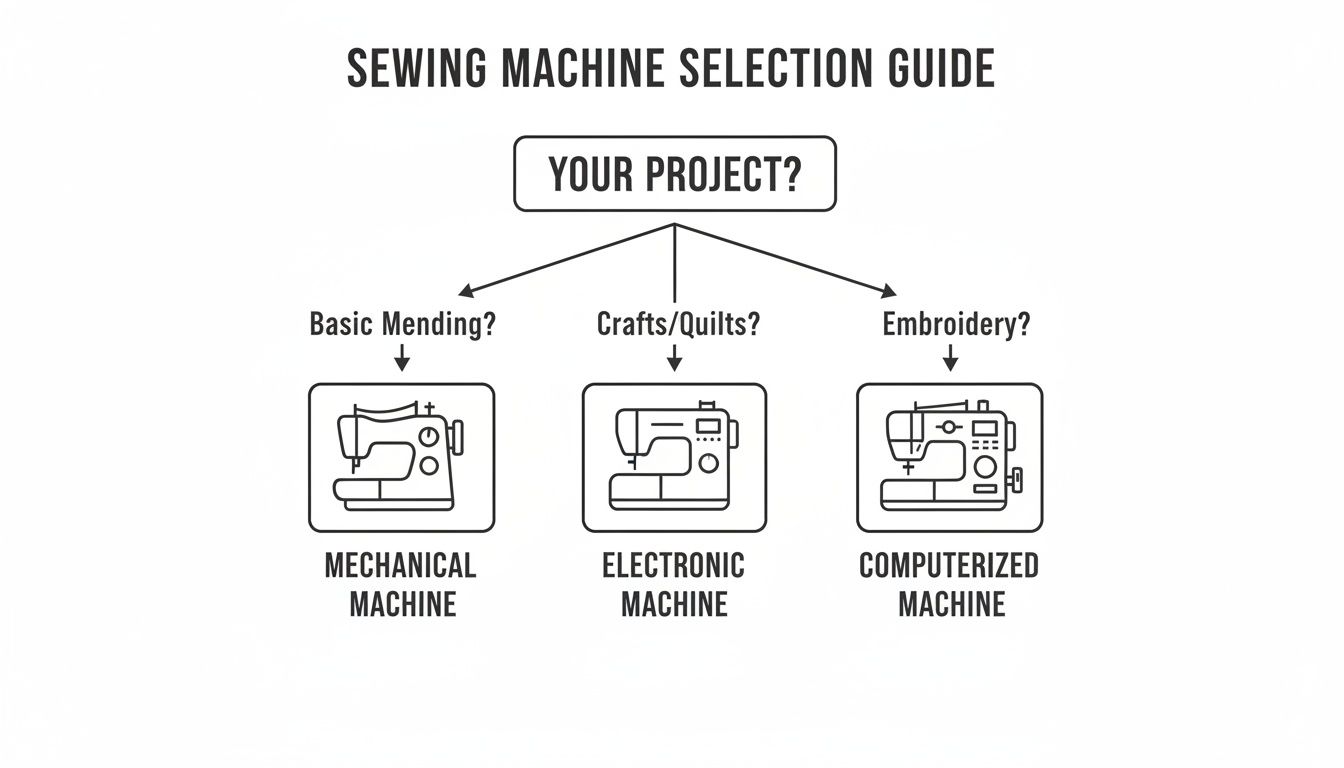
As you can see, matching your main creative goal to a machine type is the most direct way to narrow down your search for the best sewing machine in Canada.
For the Etsy Entrepreneur
Now, let's switch gears. Say you run a small Etsy shop selling handmade baby clothes or custom tote bags. Your priorities are worlds away from a quilter's. You're thinking about speed, efficiency, and—most importantly—durability for those production runs.
When you're sewing for a business, time is money. Features that are just minor conveniences for a hobbyist become absolutely essential for your productivity.
For a small business owner, the best sewing machine is one that works as hard as you do. It needs to produce professional, repeatable results day in and day out, without complaint.
Here’s a quick checklist for the small-business sewist:
- High Stitches Per Minute (SPM): You'll want a machine that can sew at least 1,000 SPM. That kind of speed makes a huge difference when you're powering through long, straight seams.
- Automatic Thread Cutter: This feature snips both the top and bobbin threads with a quick press of a button. It saves you a few seconds on every single seam, which really adds up over a full day of sewing.
- Durability: A machine with a full metal frame and a heavy-duty motor is non-negotiable. It ensures the machine can handle hours of continuous use without overheating or vibrating all over your table.
For this kind of work, a robust electronic or an entry-level computerized machine hits that sweet spot between speed and specialized functions, like creating flawless one-step buttonholes for professional-looking clothes.
For the Creative Customizer
Finally, let's think about the person who loves to personalize everything. Maybe your passion is adding monograms to towels, creating unique patches for jackets, or embellishing home décor. Your goals are all about detail and artistry, which makes an embroidery or a combination sewing-and-embroidery machine your perfect tool.
These computerized machines open up a whole new world of creativity. You're not just stitching seams anymore; you're literally painting with thread. If your goals involve customizing items with detailed work, you might get some great ideas from this guide to graduation sash embroidery, which really shows what's possible.
- What to Look For: A machine with a large embroidery hoop area, USB connectivity to import your own designs, and user-friendly on-screen editing tools.
- Why It Matters: These features give you the freedom to bring just about any digital design to life on fabric. The potential for personalization and unique projects is practically endless.
By figuring out your creative ambitions first, you can easily filter through the countless options and find the best sewing machine Canada has for your specific needs. Whether you're a quilter, an entrepreneur, or a customizer, there's a machine out there built to help you bring your ideas to life.
A Look at Canada's Top Sewing Machine Brands

Trying to figure out which sewing machine brand is right for you can feel like a huge task, but it gets a lot easier when you understand what each one does best. Every brand has built its reputation on something specific, whether that's Swiss precision, industrial-strength power, or clever, user-friendly features. The real secret is matching your own creative goals with the brand whose philosophy fits you best.
The sewing scene in Canada has really blossomed. Between 2019 and 2024, the market for home sewing machines grew into a surprisingly strong category, hitting a value of around US$24 million. This isn't just about more people sewing; it's about how they're sewing. We're seeing a big shift from basic mechanical models to more advanced computerized machines for quilting and embroidery, which shows a real appetite for quality and capability. You can read more in this Canadian sewing machine market analysis.
Precision and Heritage Brands
When you ask seasoned sewists about top-tier quality, BERNINA is a name that always comes up. This Swiss brand is legendary for its flawless engineering, incredible stitch quality, and machines built to last a lifetime. For serious quilters and garment makers, a BERNINA is more than a tool; it’s a long-term investment in their craft.
In the same vein, the German-engineered PFAFF is a powerhouse of precision. Their exclusive Integrated Dual Feed (IDT) system is a total game-changer, especially when you're working with slippery fabrics like silk or thick quilt sandwiches. By feeding the material from both the top and bottom simultaneously, it eliminates any shifting and gives you perfectly matched seams, every single time.
For creators who demand meticulous results and want a machine that will perform flawlessly for decades, BERNINA and PFAFF are the gold standard. These are the kinds of machines you pass down through generations, not just replace.
Innovation and Accessibility
On the other end of the spectrum, you have Brother, which has cornered the market on accessible technology, particularly in embroidery. They’re fantastic at packing their computerized machines with tons of features while keeping them incredibly easy to use. This makes them a go-to for hobbyists who want to dive into digital creativity without a frustratingly steep learning curve.
Husqvarna Viking, a Swedish brand, is another key innovator. They’re known for introducing smart, thoughtful features designed to make sewing more intuitive and enjoyable. Their focus on ergonomics and clever design really resonates with sewists who appreciate the little details that elevate the entire creative process.
Workhorse and Industrial Power
If what you need is pure, unadulterated power and day-in, day-out reliability, JUKI is the brand that commands respect. With its deep roots in industrial manufacturing, JUKI brings that same heavy-duty mentality to its domestic machines. They are true workhorses, celebrated for their high speeds and ability to plow through tough materials like leather and canvas without breaking a sweat. It's no wonder they're a top choice for small business owners.
And of course, there's Singer. As one of the most recognizable names in sewing, Singer offers a massive range of machines, from solid mechanical models perfect for beginners to more feature-rich computerized options. Their core strength is providing dependable, accessible machines at nearly every price point.
Once you understand what makes each brand tick, you can more easily find the one that speaks your language. For an even closer look, check out our complete guide to the best sewing machine brands available in Canada.
The Importance of Local Service and Support
Choosing the best sewing machine Canada has to offer is a huge step, but your journey is just beginning once you get it out of the box. A quality machine is a real investment in your creativity. Like any valuable tool, it needs expert care to keep it performing at its best for years.
This is where buying from a dedicated Canadian dealer truly shines. Big online marketplaces might flash tempting prices, but they simply can’t offer the kind of hands-on support that turns a one-time purchase into a lasting partnership.
Protecting Your Investment with Expert Maintenance
A sewing machine is a complex piece of engineering, packed with dozens of moving parts. With every project, lint builds up, timing can shift ever so slightly, and tension settings can drift. Soon, you're dealing with frustrating skipped stitches or tangled thread. Regular professional maintenance isn't just a good idea—it's essential.
Think of a sewing machine tune-up like an oil change for your car. It’s preventative care that keeps everything running smoothly, extends the machine's lifespan, and protects the quality of your work.
An authorized dealer with brand-trained technicians knows your specific model inside and out. They have the specialized tools and genuine parts to clean, lubricate, and calibrate it back to factory specifications, making sure it runs as beautifully as the day you first plugged it in. To get a better feel for what goes into a professional tune-up, check out our guide on finding sewing machine service near me.
More Than Just a Sale: A Creative Partnership
Beyond maintenance, a great local dealer offers a whole support system to help you grow. It's about building a relationship, not just making a sale. This includes things like:
- Accessible Financing: Let's be honest, premium machines can be a big purchase. Flexible payment options like Affirm make them much more attainable, so you can get the features you need now and pay over time.
- In-Person Education: There's nothing like hands-on learning. Classes and workshops help you truly master your new machine, build your confidence, and pick up advanced techniques from people who know their stuff.
- Responsive Support: When you hit a snag mid-project, having a friendly, knowledgeable team just a phone call or a short drive away is priceless. No more endless searching for answers online.
This kind of ongoing support gives you peace of mind. You know you have a trusted local expert in your corner, ready to help you get the absolute most out of your machine for years to come.
Your Questions, Answered
Jumping into the world of sewing machines can feel a little overwhelming, especially when you're trying to figure out the best fit for your projects here in Canada. To help clear things up, I've put together answers to some of the questions we hear most often from fellow creators.
What's a Realistic Budget for a Good Sewing Machine in Canada?
You don't have to break the bank to get started. For a solid beginner machine that will last, a realistic budget in Canada is anywhere from $300 to $500. In this range, you'll find great mechanical or basic electronic models that can handle all the essential stitches beautifully.
If you're already sewing and looking to upgrade for quilting or more complex garment making, you'll likely be looking in the $800 to $2,500 range for a good computerized machine. For the really fancy sewing and embroidery combo machines, prices start around $3,000 and can climb past $15,000. It's always a good idea to think about the long-term value—investing a bit more upfront often gets you superior stitch quality and features you'll be grateful for down the road.
Don't forget, financing can make a premium machine much more attainable. It's a great way to get the right tool for your creative vision now, instead of settling for a machine you might outgrow in a year or two.
Should I Buy My Sewing Machine Online or From a Local Dealer?
I get it, online prices can be tempting. But buying from a certified Canadian dealer like us offers benefits you just can't get from a big box website. You get real, human guidance to help you choose the perfect machine, a chance to actually try it out in the store, and—most importantly—support after you take it home.
That local support means you have a go-to place for warranty service, professional repairs, and even classes to help you master your new machine. Think of a local dealer as a long-term partner in your sewing journey; we're here to make sure your investment is protected and you absolutely love using it.
How Important Is Throat Space for Quilting?
For quilting, throat space is everything. It's the distance between the needle and the main body of the machine, and it determines how much room you have to work. A standard machine might only have five or six inches, which can make wrestling a big quilt an absolute nightmare.
A proper quilting machine should give you at least 8 to 12 inches of throat space, or even more. This extra room is what lets you glide your project through smoothly instead of bunching and fighting the fabric. If you have any plans to quilt anything bigger than a lap quilt, making generous throat space a top priority will save you a world of frustration.
Ready to find the machine that feels like it was made just for you? Come explore our hand-picked collection at All About Sewing and chat with our team—we’re as passionate about this stuff as you are.


